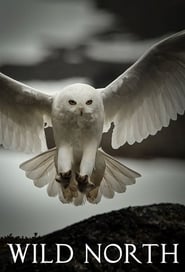
Wild North
Download English Subtitle
Release info
Tags
English subtitle preview
The first 200 lines.
From lush forests in the south,
through mountains and glaciers,
along the ruptured coastline of Norway,
up to the Arctic islands of Svalbard and the Barents Sea.
This is northernmost Europe.
Surviving here is for specialists who have cracked the code.
But the wild creatures of Scandinavia are shy and difficult to find.
Centuries of hunting and fishing have removed all trust in people,
and it is almost impossible to get up close to them.
But after spending months living and filming
in the harsh wilderness of northern Scandinavia,
two Norwegian filmmakers have managed to capture the hidden lives
of these shy creatures, in intimate detail.
Scandinavia has a long and incredibly varied coastline.
Throughout the ages, the people here have had close contact with the sea
and with the animals linked to the sea and coastline.
To earn a living, they have fished and hunted
whatever the sea and coasts could provide.
This has made it very difficult to get close
to the wild animals that live here today.
Nonetheless, the secret lives of the eagle-owl
and the white-tailed eagle will be portrayed.
The southern coasts of Scandinavia contain many sandy beaches.
Here, a little monster is hiding in the sand.
It spends most of its time making small cone-shaped traps.
Also right where people walk.
Or sit.
It has been digging traps, long before humans thought of the idea.
It is the antlions larva.
It is small, and deadly to ants.
The antlion larva is hidden in the bottom of the trap.
The sides of the trap are excavated at such an angle,
that just the weight of an ant will cause the sand to slide.
Even with six legs, an ant can't crawl up again.
The strike comes quickly from below.
One can hardly see it with the naked eye.
But at 1,000 frames a second, the attack is revealed.
The antlion larva bombards the ant with sand grains,
making the wall slide beneath it,
and the ant tumbles to the bottom of the trap where strong jaws await.
It is a battle of life and death, which the ant always loses.
It is dragged into the monster's lair.
In contrast to the south, the northern coasts of Scandinavia,
have an extraordinary landscape,
thousands of islands and huge cliffs that rise up out of the sea.
The people here still have strong bonds with nature.
On some of the outer islands, in the North Atlantic,
old houses can still be found, but nobody lives here permanently anymore.
Only a few bird tenders come here during the summer.
Here, in early spring they are getting nests ready for eiders,
sea ducks, which will soon arrive.
But they do so, not only for the sake of the eiders.
The bird tenders are interested in the eiderdown,
which the eider females pluck from themselves when they hatch their eggs.
It is an arrangement which benefits both humans and birds.
The eiders are coming in from the sea, where they've been all winter.
It's mating season for these large sea-ducks.
The white males do what they can, in order to impress the brown females.
It seems like the males flirt with all the females.
But most of them have already paired up during the winter.
Some have even stayed together for several years.
But there's always someone to be kept away from the chosen mate.
She lies flat.
A sure signal to the male.
Mating is no great act of love, and it is over quickly.
Many eiders make use of the time before egg laying to gain weight.
At the bottom of the sea, there are plenty of mussels,
clams, snails and crustaceans, which the eider ducks feed on.
The mussels are swallowed whole and shells are ground to pieces in the gizzard.
On the northern tip of the Scandinavian Peninsula is the North Cape.
It's a rugged coast, but it is full of life in the bright summer months.
At this bird cliff, large flocks of different bird species breed,
The sea just below is particularly rich in food.
Spring starts, almost empty of birds.
But then something happens.
Huge numbers of puffins gather.
They are the most numerous bird species here,
and they congregate in huge flocks.
Day by day, the urge to establish themselves on the cliff grows stronger.
Swarms of Puffins fly constantly, looking for a place to occupy on the cliffs.
In their hundreds-of-thousands, they swirl ever closer to the steep slopes.
The first land, and more follow.
But above them soars a constant peril.
The white-tailed eagle can cause widespread panic, but only momentarily.
Puffins have to get down to the rocks and get ready to breed.
Many of the birds will use the same nest hole as last year.
Only the ones breeding for the first time will have to fight for the vacant spots.
A partner must also be found.
For most of them it is simple, they have a mate from the previous year.
Puffins live long, up to 30 years, and the divorce rate is very low.
There are also other residents in this metropolis by the sea.
Everywhere, there is courtship and nesting.
The Cormorant is in its full breeding plumage.
All kinds of postures are used to impress, entice and seduce.
The pairs help each other build the nest.
The northern gannets are new arrivals in the community.
It was not until the 1980s,
that they began to breed on this high and exposed rock.
Now, this big bird has a colony of several thousand.
Gannet-ville.
Courting and nesting is also in full swing here.
When a couple meets up, they greet each other profusely.
New building materials are constantly arriving for gannet-ville.
Much of the material is natural, but human leftovers are dominant.
Fishing nets and net fragments are popular items,
which the gannets find floating on the sea.
In the colony, these bright, indestructible materials dominate.
Do the gannets strive to have the most beautiful nest.
Or does the debris just look like seaweed when floating out at sea?
Nobody knows.
But these nesting materials can be fatal.
This bird was eventually freed by the cameramen.
In gannet-ville it is a love hate relationship with the neighbors.
They all want to breed here, where the conditions are favorable,
but there is an almost constant battle with the neighbors.
These large birds with daggers-for-beaks
will quickly panic if a white-tailed sea eagle gets too close.
In a few seconds, the entire rock empties.
But the eagle does not attack the gannets.
Perhaps it is just testing them to see if there are any weak or sick individuals.
Here, up north, the summer nights are bright.
But the eiders still feel safe at this time of day.
They head towards the shore at night time.
Their priority is to check out the nesting sites.
The couples do it together, but there's no doubt who's in charge.
The bird tenders have a self-imposed ban on going out at night,
so the eider ducks are not scared away.
The possible nesting places are thoroughly investigated.
This nest seems popular.
And it's quickly occupied.
The female lets the other females know.
Out on the water, the males are squabbling.
But then, the enemy appears.
No luck this time for the white-tailed eagle.
More visitors arrive in the area from the south.
A huge flock of barnacle geese are on their spring migration.
They are not easily overlooked, or overheard.
They have flown, non-stop, all the way from Scotland.
Their first stopover is here, at the eider's breeding grounds.
They still have a long way go to their own breeding grounds,
which are located much further north, right up in Svalbard.
They are only stopping to feed here before they move on.
The barnacle goose was once an endangered species in Scandinavia.
It was protected in the mid-1950s and the stock has now recovered.
Some farmers believe, the stocks are now too big.
Geese and eider ducks enjoy a peaceful coexistence; there is plenty of food here.
The female eiders have started to lay eggs.
Now she has laid three eggs,
and after a couple more, it is time for the 25-day incubation.
The barnacle geese have refueled and are continuing their journey north.
Right up to the Barents Sea.
Beyond the North Cape, to the Arctic archipelago: Svalbard.
It seems barren here, filled with icy fjords, icebergs and mountains.
Not a single tree can be found.
One would not think that much lives up here.
But here are the barnacle geese.
They already have large goslings.
But these youngsters have enemies.
Up here, there are none of the usual birds of prey.
But the glaucous gull fills their role.
It keeps a constant eye on the flock of geese, looking for a weak point.
Or tries to provoke one.
The geese do not come to the youngster's aid.
Now, at least, they will have peace from the seagull for a while.
Svalbard is also a land of contrasts.
The distance is short from the barren and deserted to the green and lush.
The short legged and somewhat plump
Svalbard reindeer can survive on very little.
It is a hardy specialist, which lives off the meager plants that grow here.
In the rich seas, surrounding Svalbard, there are other specialists.
Big specialists.
A giant whale appears.
The mottled back and small dorsal fin are unmistakable.
It is a blue whale, the largest animal on the planet.
It can grow up to 33 meters long and weigh up to 200 tons.
Blue whales are normally rare visitors to Svalbard, but in recent years,
they have been observed more frequently,
possibly because there is less ice on the sea in summer.
They feed almost exclusively on krill,
small crustaceans which are plentiful in these cold waters.
The nutrient-rich seas also benefit the birds.
Svalbard has large bird cliffs.
There are hundreds of thousands of birds on this mountain,
but almost only one species, Brünnicks guillemot.
There are many arguments in the bird colony.
But there is also room for intimacy and affection.
All the pairs have young chicks in front of them, or under them.
They are hidden from the glaucous gulls, who are always ready to snatch a chick.
The guillemots dive for small crustaceans and fish.
Normally, they dive between 20 and 60 m down,
but they can reach depths of over 100 meters.
There is a constant array of seafood being brought back to the bird cliff.
Soon the chicks themselves will have to venture out to sea
and catch their own food.
Long before the chicks can actually fly, it happens.
The first bold jump.
Father escorts the chick down towards the sea.
Here, where the sea meets the cliff, it is quite safe to jump.
The chick will certainly land in the water.
At this bird cliff, things are different.
Comments
No comments yet. Be the first to leave one.