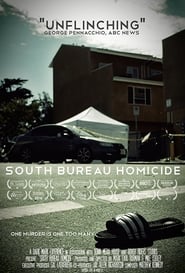
South Bureau Homicide
Download English Subtitle
Release info
Tags
English subtitle preview
The first 200 lines.
77th is only 12 square miles.
It has over 400 churches, but historically
it has the highest homicide rate in the entire city.
You're either aligned by circumstances
or aligned by choice, but you are aligned
based on the neighborhood.
You have those friends that you grew up with since
elementary school, those four friends are gone.
Three of them are dead, and one is in life without
possibility of parole in the penitentiary.
We all have to be educated regarding
this crime called murder.
We can't put it into the gang banger,
we can't put it into drugs,
we can't say it domestic violence,
no it needs to stand on it's own.
You don't have to add anything additional to it
like robbery, or anything like that.
It should be murder, and murder should be considered
the worst crime of all.
Homicide requires character.
It's not just goin' and arrestin' bad guys.
This job can be very tough, and can be very painful.
The main thing I think that makes us so effective
in this part of the city is the bond between
the detectives that work homicide,
specifically homicide, and the community.
Yes, this is Sal.
Sure.
Where at?
Is the body still at the scene?
Okay, I'm just yeah, I'm in bed, so just driving time.
Let me get ready.
All right, see you guys.
I've been touched by probably at least 7,000 homicide
investigations, whether they are cases I responded to,
cases I handled, cases where I've answered a telephone,
cases that have been discussed within my office.
So basically I look at it, as a homicide detective,
the units I've been assigned to,
we've handled a little over 7,000 homicides.
When that phone rings, whether it be for myself, or
especially the investigators that are
handling a particular case,
there is that frustrating sense that
one murder is one too many.
One murder just effects hundreds of lives,
whether it be the victim's families,
the detective's families, the neighborhood,
the community, the news media, the churches,
the hospitals, there's so many lives effected
with the loss of one person through violent death.
So when that gun shot rings out,
when that two inches that could have saved a life,
or taken a life, happens, there's that frustrating part
of, "Wow, we've done so much, and
"people still have this violent streak,
"or this, why are these two gangs goin' at it,
"why is this person goin' out
"committing a robbery, and a shooting?"
I hate when people say, "He was in the wrong place
"at the wrong time.
"She was in the wrong place at the wrong time."
There's no wrong place, and there's no wrong time.
Unless you're committing a robbery, and you're in a bank,
and you get shot, well guess what,
you were in the wrong place, at the wrong time,
because you were doin' somethin' bad.
You send your child off to school, you don't expect
him or her to get caught up in the cross-fire
of a shootout.
Your husband goes off to work, and is driving home
at 1:00, 2:30 in the morning, workin' three jobs,
and you don't expect him to get caught up in
a robbery gone bad where that person gets shot.
They're not in the wrong place, at the wrong time,
that's where they're suppose to be.
People often ask, myself or other detectives are
always asked the question, "What's your most memorable
"case, what's the most violent case, what case stands out
"with you over the years?"
It's difficult, at least for myself to answer,
and maybe it's because the many years that I've spent here,
the many years that I've seen so much violence in
such short periods of time.
I've seen everything, decapitations, mutilations,
shootings, stabbings, all kind a deaths,
all kind a manner a deaths, and it's not really
the gruesome ones particularly that stand out,
it may be the people involved, maybe the victims,
maybe the day, location, or the time of the year.
If you put the 80s and 90s in context in Los Angeles,
we averaged 1,100 homicides a year in the City of LA.
The large portion of those were in south LA.
We had a police department that was about 8,000 officers,
so we weren't staffed as heavily as we are now.
And everything we did was about suppression.
Years ago, there's no way I ever would have
dealt with the police department.
Back then, the police was a little bit more aggressive.
Far as, they'll do anything to you they want to.
Pull you over, talk shit to you, cuss you out,
hit you upside the head, whatever they wanted to do to you.
And this is a community under siege with drugs and
gangs and murder, and we have the worse police force
in our communities, tryin' to kill it.
They weren't tryin' to fix it,
they weren't tryin' to arrest it,
they were tryin' to suppress it by any means necessary.
In the 80s we would do what was referred to as
an Operation Hammer.
A Hammer Task Force.
And we were bringin' 2 to 300 extra police officers
on a Friday or Saturday night in south LA,
tryin' to do somethin' to stop the violence.
And they stereotype you real quick.
All you gotta do is be walkin' down the street,
one or two people, and they gonna pull you over,
an run your name, find out where you at
and what you're doin'.
And if you slip up and say you in a gang,
they gonna mark you down on that little card
and you'll be labeled a gang member from then on in.
It was somewhat effective, but what we didn't see
at the time, that suppression model,
alienated the community.
As a citizen in between the two,
there was no place for me.
They were gonna do what they were gonna do,
whether I liked it or not.
And the street was gonna fight back against them,
whether I liked it or not.
So they were butting heads with each other.
We didn't see the long-term impact of that,
so when Rodney King happened, we had no support,
we had no relationships.
He wasn't a member of this nightmare.
He wasn't a participant in this nightmare.
But they beat him like he was.
They beat him like he was a gang member
they were tryin' to suppress.
And so having lived through all of the 80s
and into the 90s and seeing that,
now everything I do, is based on my partnership
with people in this community.
And with those partnerships, we see a reduction in violence,
we see a tremendous increase in trust
in the police department.
And with that increase in trust, the relations get
stronger, and stronger, and stronger.
It's like anywhere else, it's like a family
or anything else, it works.
We went from a nightmare, to newness,
to the possibility of greater.
So are we done, no, no.
Last week, pretty amazing week, Glodster, Moore,
Butterworth, Cafgan and Turvy arrested a guy
on 198 and Main for the murder of a...
They coulda been anything else,
you coulda been in robbery,
you coulda been somethin' else,
but to decide that you're gonna be a homicide detective,
that takes a lot on.
As far as our numbers, our three respective divisions,
is down about 19% in murders, so that's real good.
Last year was a good year,
this year it looks like they might even be better.
You don't even have a clue who I am.
You don't know my child.
But you're willing to take a chance
to find out who killed him.
Doug.
Hey, I just want to think about yesterday to meet with
that family in southwest, that was really nice.
That lady drove all the way down to Vegas,
that murder occurred 17 years ago,
and we met with her yesterday,
she just wanted to thank them,
even though the case isn't even solved,
just for the diligence since they've worked on the case.
That says a lot.
The attributes that are best to have as a homicide
investigator is the passion for the job,
and the passion for the people.
The knowledge will come about crime scene management,
about crime scene investigation,
interrogation law, writing search warrants,
all those things can be taught.
What can't be taught is the passion for the job,
and the love of the people and the love of the job
and why you're doing it.
How you doin'?
What you doin' Bull?
Actually you said you was on my son's case.
How you all doin' today?
Hey, how you doin'?
Come here.
Hey sister, how are you?
He worked on, when my son, my son was killed.
Murder, ya'll helped me, 'member?
More English subtitles for South Bureau Homicide
- South Bureau Homicide 2016 1080p WEBRip x264-RARBG · 11 downloads · 2022-02-22
Comments
No comments yet. Be the first to leave one.