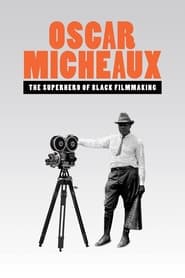
Oscar Micheaux - The Superhero of Black Filmmaking
Download English Subtitle
Release info
Tags
English subtitle preview
The first 200 lines.
Looked at Oscar Micheaux
as the originator of DIY...
Do-it-yourself, independent.
He means groundbreaking.
He means freedom and possibilities...
The possibility for me to exist.
Oscar Micheaux means you can do it.
No matter what your environment, no matter what your time,
you can simply do it.
Oscar Micheaux is the most important
black filmmaker who ever lived.
Period.
We do have an entry in black history...
...who made what personally amounts to his shovel.
He was Spike Lee before there was Spike Lee.
And this is the 70th anniversary of his passing.
This mule ain't from Moscow.
This mule ain't from the South.
But this mule's had some learning.
Mostly mouth-to-mouth.
It was very tough for most black families
and black people at that time, knew what they had to do.
We had come through the worst of being slaves.
Then there was a civil war.
So stand fast, young Romeo.
Soothe in contemplation
thy burning whole and aching thigh.
Your stubbornness is ever-living
and cruel anxiety is about to die.
So after the aftermath, it was like,
okay, either we're going to have to learn this well,
do for self, a do or die.
It was difficult for everybody,
but he was determined and quite successful.
You can make it if you try.
If you think Oscar Micheaux,
you think, put your head down
and go forward, and you'll get it done.
I wonder how many know him?
I discovered Oscar Micheaux by by accident.
I was at the Carbondale, Illinois, library
looking at the nonfiction section,
and there's this picture of him on the cover
that looks compelling.
I start reading that book and I can't put it down,
and I couldn't believe I hadn't heard about this man's story.
It's the greatest American story
that nobody knows anything about.
Well, his family came from Kentucky.
They were slaves.
They crossed into southern Illinois when slaves were freed,
and they started to tend farms outside a small town
called Metropolis.
Micheaux, because he was raised in a farm family,
really had this rugged individualism
and this hard work ethic.
He's five of 11 children.
His relationship with his mother was profound,
and it was profound because she probably had the ambition
of all of those who were enslaved,
which is one day, not only will we be free,
but we will be equal and have equity in this land.
His mother was a great admirer of Booker T. Washington.
Booker T. Washington's great philosophy
was that education would lift black people up in America.
At Micheaux's time, there's all these legal barriers
to stop black folks from moving forward.
And education was really the only thing you could use
to break through some of these barriers,
and Micheaux used it to his full advantage.
He believed in kind of pulling yourself up by your bootstraps.
He believed in the whole notion of learning a skill
and combining that with kind of education
and really moving forward with that.
His trajectory from being a young man, or a teenager even,
was to get out of Metropolis, head north,
where there was opportunity, better money,
and thousands of black people
living in the black belt of Chicago.
He wasn't a slave anymore,
so the fact that a lot of black folks
there were able to be nomadic and travel
and be able to get great experiences
away from being in one place.
That's what also galvanized a lot of this energy and talent.
Well, Chicago is kind of exploding at that time.
You know, it is part of the Great Migration,
a lot of black folks leaving the South
to find the American dream, really.
It was a really powerful community
in the sense that there formed the basis
for a kind of political mobilization
and the creation of vibrant black culture
and black artistic communities.
And so this was a really important space
in which Micheaux could start to imagine
where he can make a name for himself.
I think he was someone who looked forward.
And, you know, in many ways, the key experience for Micheaux,
I believe, was when he worked as a Pullman porter
on the American railroads.
Even though they were waiters
and sort of cabin people, people who made up rooms,
they did, in a sense, mingle
with very high-class white people
and talk to them and get to know them,
and I think Micheaux, in that experience, said,
"If these people can live like this,
I can live like this and African-Americans
can live like this."
It's no surprise to me that someone like Micheaux would,
like someone like Malcolm X, their early life,
their formative years be shaped by some degree
of working on the train, working on a railroad.
That's a defining sort of modernist impulse.
And so Micheaux is a part of that.
He is a part of this ebb and flow of culture and ideas
and imagination that the train really embodies.
He met people. He talked to them.
He got books from them.
He learned about society, about politics,
about entertainment in different cities.
It really made him a worldly man,
much more than a lot of people
who spend their lives entirely in the Midwest.
Pullman porters, at that point in time,
were both like the greatest job in the world for a black person,
but also the worst job in the world for a black person.
It's terrible because you have to pay for your uniform,
all your meals, laundering.
Eventually, you have no money out of your salary.
One of the things that all the Pullman porters did
was to sell tickets on board,
it was called, but not report that money
and then sometimes steal money.
He was, in fact, fired once for taking money.
They believed he took $5.
So what did he do, being Oscar Micheaux?
He went to St. Louis,
where there was another Pullman porter operation.
He went through the same school and got hired all over again.
There's no Internet, they're not checking on him,
and he starts running, you know, the southern route
in a different Pullman porter route.
He had tremendous American spirit of "start over again,
let's do it."
He preaches idealism and purity, and sometimes he's...
is a little tricky over here,
getting things done any way he can.
There was a vast expanse in which
one could imagine one's future was huge.
And then on top of that, Oscar Micheaux
was always a very observant person.
And so as he was working the terrain
and probably doing a lot of shucking and jiving
and the kind of, like, performance that one had to do
to get good tips from white passengers,
he was also listening to them,
and he was listening to the conversations
that white businessmen were having about the opportunities
out West to buy land.
And so he begins to formulate his plans
for becoming a homesteader.
Land was cheap on the roads,
but you had to get the option of bidding
because you were drawn in a lottery.
But if you did, you had a chance if you had money,
and he knew that, and so he took that chance.
Micheaux is really unique in that sense.
I mean, he wasn't afraid to be the only black person
in Gregory, South Dakota.
He wasn't afraid of that,
which a lot of black folks at that time
would have been very frightened about that.
I mean, this is a time of lynching where black folks
are being lynched all over the country.
Black life is not valued very high.
Land figures extremely prominently in his imagination
but in the life of black people of the time,
because many in the South were promised
their 40 acres and a mule and virtually no one gets that.
Micheaux, again, saw something, I think, different with that.
It was sort of running through some of the political theory
and some of the ideology of the time,
so I think land is symbolically important,
but to him, it embodied something more.
He must have been quite a sight
to his neighbors in South Dakota,
and I think at the core was his work ethic.
I mean, even if he was going to
face some kind of social discrimination,
the fact of the matter was that he put the money together
to buy that land and he worked that land every day.
Why, Mr. Baptiste,
I've been looking for you all morning.
I'd begun to think that you weren't coming.
I'm sorry, I intended to be here much sooner,
but something held me up and I couldn't make it.
I hope you'll pardon the delay.
That's quite all right, perfectly all right.
More English subtitles for Oscar Micheaux - The Superhero of Black Filmmaking
- Oscar Micheaux The Superhero of Black Filmmaking 2021 1080p WEB h264-OPUS · 15 downloads · 2022-03-09
Comments
No comments yet. Be the first to leave one.