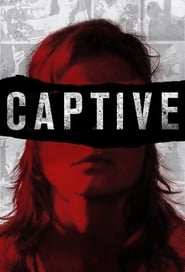
Captive
Download English Subtitle
Release info
Tags
English subtitle preview
The first 197 lines.
He was taken out to a site.
He was told to kneel down.
People went behind him.
He was told to run.
And then, he was shot several times with a Kalashnikov.
And it wasn't done on camera.
It wasn't done for propaganda reasons.
It was pure malevolence.
Pure violence.
Yeah...
I often-- I don't anymore. I used to think about that moment.
I used to think about...
"Could we? Should we? What if we had...
you know... did everything we could to get out of that?
To fight."
These are the only things I have, in a way,
that are the physical witness to that time period.
This box here includes the clothing
that I wore in...
those 118 days.
So these are the-- These are the pants.
Like, you could see the war clouds coming across the horizon.
And there was a global movement to try to stop this war from coming.
Major combat operations have ended.
In the battle of Iraq,
the United States and our allies have prevailed.
I was involved with the invasion of Iraq.
I was actually in Iraq days after Baghdad fell.
For the most part, Iraq was welcoming.
And, in fact, it was-- We were greeted as liberators.
I was given thumbs up signs and "USA Number 1"
from many of the locals on the ground in Baghdad.
They were very happy to have Saddam Hussein displaced.
I come back less than a year later, in July of 2004,
into a very different environment.
The insurgency was starting to act up...
and it broke loose.
I joined the Canadian Department of Foreign Affairs in 1980
and then ended up in Baghdad from 2005 to 2006.
Things were going as badly as many of us had thought might happen
when the invasion took place two years earlier.
The death rate in Baghdad was incredible. It was in the thousands per month.
Iraqi on Iraqi.
Never mind the coalition forces
and the casualties that they were both inflicting and taking.
For those of us who were there, it was a sense that...
If we really felt this strongly about it,
it wasn't enough to write letters to George Bush.
You had to do something else.
You have to walk the talk.
And that's how I ended up in Baghdad for three years.
I would call Christian Peacemaker Teams an experiment
in nonviolence.
How do we take the passivity out of pacifism?
If we were prepared to take the same risks that soldiers are prepared to take,
could we have an impact using the tools of nonviolence?
The work we ended up doing in Iraq was essentially
to be liaisoning between families who'd had
family members or friends detained by coalition forces.
Come on. Get up!
Simply to help them find those loved ones in prison.
We were living in an apartment in Baghdad.
People in the military discovered we were living just
in this apartment in Baghdad.
And they were terribly shocked to find just civilians living
in an apartment in Baghdad.
They were...
a bunch of do-gooders in a very bad part of the world,
doing very foolish things, in my humble opinion,
and they were extraordinarily naïve to the point of...
They were-- They were naïve, and their stupidity put lives at risk
for a lot of people, including their own.
We knew that they felt that we shouldn't have been there,
that we put people at risk.
We felt from the outset that US military shouldn't have been there
and that they were putting people at risk,
and the whole argument could have been flipped.
CPT offered delegations to Iraq
for people who were interested
in seeing the situation for themselves firsthand.
Jim was a delegation leader coming with the delegation.
Harmeet and Norman Kember had simply signed up to come to Iraq
to see for themselves what the situation was.
I was one of the million who turned out
to object to the Iraq War.
And I wondered if there was anything else one could do,
and then I learned about the Christian Peacemaker Team.
I thought it would be interesting to see how they worked.
So I only went out to Iraq for...
ten days, I think it was just
to discover what they were up to, what they actually did in Iraq.
We had appointments set up with a Shia cleric
and with the Muslim Scholars Association,
trying to give them both sides of the picture
as far as Shia and Sunni Muslims and how that played out in Iraq.
The delegation had gone off in the morning with a driver and a translator
and a team member, and it happened to be Tom Fox.
Tom was a regular core-team member.
Essentially, this was his job.
This was what he signed up for,
and he knew that the unexpected could happen.
The original plan had been for them to come back to the apartment,
trade team member for the afternoon meeting,
but they were running late 'cause traffic in Baghdad was horrible.
So they didn't come back and Tom ended up staying with them
for the Muslim Scholars Association in the afternoon.
Well, my understanding of the Muslim Scholars Association
is that it had links to the insurgency.
Going to talk to a very hardline Sunni group
about trying to ease the problems in Iraq is probably not the wisest thing.
It's a bit like going to see Al Capone in Chicago in the '30s
to see if, you know, "Can't you do something about the crime in this city?"
"Yes, I can control it all. You know, that's what I do."
We got there, and there was this mosque that Saddam built,
called the Mother of All Battles,
and the minarets were designed to look like scud missiles.
It's like a vast compound with this big, giant parking lot...
Empty.
Tom made some comment about somebody kind of observing us,
and it gave him a bad feeling.
And then we went in to the reception area.
We had to show our passports.
Which nobody, other than...
Like, no one asked us to see our passports.
We had to show them. And I was like...
I didn't like that.
So we met with this man. I don't remember his name,
but he was checking his watch.
And then the meeting was over in 20 minutes.
Like, that was it, time to go.
We tried to ask him questions and he just, like...
had kind of a flat, no-response answer,
and we realized, "Well, I guess our meeting's over."
We were in a van, and they were turning out into the street.
Sort of a lonely, on the edge...
kind of on the edge of a neighborhood, sort of.
A white car pulled in really in front,
and then it started slowing down and put on the brakes.
"What the hell?" Like, "What's going on?"
Four guys, they go right away to the driver and translator in the front,
and they pull them out.
And they had guns.
This is not good. This is not good.
I remember I was doing laundry that day.
Hanging laundry on our roof.
We got a call from our translator, who had been with the group,
to say that they had been kidnapped.
"Oh, you're joking? Really, this, you know--
Don't do that. Don't joke with us."
But he was very serious.
So then it was surreal because we were in gridlock.
We're stopped in traffic.
There was, like, a car, like--
like three feet away from me.
These women in this car and...
We are being taken, and you are three feet away from us.
Do I get your attention? Do I shout? Do I try to get out?
I don't know what's gonna happen. Is there gonna be gunfire?
Like, you know--
What's-- I just sat there.
And kinda observed it.
They took us one at a time into the-- into the house.
And they had us sit down.
Drink? Water?
I remember thinking...
there's no way I want your f-ing water.
But I just said...
"Yeah. Thank you. I would like a glass of water."
But Tom kinda sat with his leg up like this.
In Arabic culture, you never expose the sole
of your shoe to somebody.
That's not a done thing.
Tom holds his leg so that he can't knock it down.
And then Tom sort of put it down.
"I'm gonna do it when I'm good and ready" kind of thing.
Which is--
Which is kind of cool, in a way.
I mean, it's an expression of nonviolent resistance,
an expression of, like, you know...
It's kind of like, "F you."
The first call we made was to a contact at the UN
to say, you know, essentially, "Look, here's what's happened."
This was a person who knew us well.
We're kind of struggling with...
"What should we do here, exactly?"
And their advice was,
"Call the embassies of all these people who've been kidnapped.
Call them, now."
The report came in that there'd been a major kidnapping,
and it involved an American, a Brit, two Canadians.
So it obviously became our number one priority case.
I got word two Canadians had been kidnapped.
And the British ambassador had said,
"We are putting together a task force. We have people coming from London.
I assume that you will be having people coming from Ottawa."
I said, "Yes, I assume we will."
- -
Captive subtitles in other languages
More English subtitles for Captive
- CaptiveE07AllVersions · 12 downloads · 2016-12-14
- CaptiveE06AllVersions · 10 downloads · 2016-12-14
- Captive E05 All Versions · 10 downloads · 2016-12-14
- Captive E04 All Versions · 14 downloads · 2016-12-14
- Captive E03 All Versions · 11 downloads · 2016-12-14
- Captive E02 All Versions · 12 downloads · 2016-12-14
- Captive E01 All Versions · 12 downloads · 2016-12-14
- Captive S01E07 WEBRip {Al Qaeda Hostages, Yemen} · 23 downloads · 2016-12-09
Comments
No comments yet. Be the first to leave one.