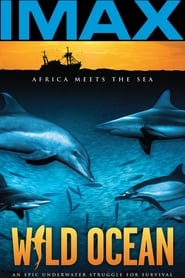
Wild Ocean
Download English Subtitle
Release info
Tags
English subtitle preview
The first 111 lines.
For centuries we have considered the ocean a vast limitless resource.
Why shouldn't we?
There were shoals of fish too big to imagine.
And we didn't just need to eat the fish and the whales we took...
...we needed their oil for fuel, for power and light.
Yet one by one, fisheries were depleted around the world.
In the Mediterranean, the north Atlantic, and the pacific.
The fish we took were at the centre of a delicate food chain
that connected the tiniest micro-organisms
to the largest animals on the Earth.
Break the food chain by taking too much from the sea,
and one by one, the other predators disappear.
But there is a place where man still shares the ocean,
where the food chain is still unbroken.
This is where Africa meets the Sea.
We are in the Transkei...
...on the Eastern coast of South Africa.
Each winter, the coastline becomes a battleground
where tropical predators meet cold water prey
in one of the greatest natural events on the planet.
Gigantic shoals of fish,
pursued by the highest concentration of ocean predators in the world,
will head here, to a place called...
the Wild Coast.
With no safe harbor for hundreds of miles,
it is a remote ocean wilderness.
Here we can have a glimpse
of what the oceans of the world
might have looked like hundreds of years ago.
Here, beneath the waves,
we will witness the circle of life.
These are the Sardines.
They are a valuable source of protein
for every predator at the top of the food chain.
They are central to the oceanic ecosystem.
For just a few weeks each winter,
millions of sardines find themselves drawn into the shallow water
creating shoals up to ten miles long.
From the air, they could be mistaken for an oil slick.
The sardines follow the cold water currents
sweeping northwards from the Southern Cape of Africa,
pursuing the plankton and nutrients they crave.
This can bring them as far as the Wild Coast,
and perhaps even further north to the beaches of KwaZulu Natal,
where another predator awaits them.
Passing northwards from the Wild Coast into KwaZulu Natal
is like entering a different world,
a different South Africa.
This is where Zulu and Western culture come together,
sharing a common link.
A connection with the sea.
Industry came to this region
from the land and the sugar cane fields,
but there is another kind of wealth in the ocean.
When the sardine shoals pass north of the wild coast,
opposing warm water currents can force the cold water,
closer to the shore.
If this happens, thousands and thousands of fish
can be literally swept up on the beaches
in a potential bonanza for the local fisherman.
Fishermen look for dolphins and gannets arriving from the south.
tell tale signs that sardines are on their way.
But for now they prepare their nets, and wait.
Not so far away, just beneath the waves,
another resident of this coastline is waiting for the shoals.
These Bottlenose Dolphins will work together in groups
using their sonar to track down the sardines.
The sardines begin their journey
hundreds of miles south of the Wild Coast
near the fishing ports Mossel Bay and Port Elizabeth.
It is also home to some of the predators
that will pursue them.
This is a colony of over 60.000 gannets,
many of whom will make the journey north.
They will be joined by Cape Fur Seals.
These seals have traveled only a short distance
from the Eastern Cape and have found a shoal,
not of sardines, but of a baitfish called Massbunker.
The school of fish has formed what is known as a baitball
in an effort to confuse the predators and protect itself.
The shoal moves and changes shape
allmost as if it is a single entity.
By swimming close together,
and only reacting to the movement of their neighbor,
every single fish contributes to this "shoal intelligence".
Another predator attacks the baitball:
the streamlining and speed of the African Penguin
is too much for the massbunker.
Nevertheless, this shoal is actually going to escape,
returning to the depths.
Many factors can affect the progress of the sardine shoals.
As global warming raises sea temperatures,
the fish may be forced further away from the coast
into deeper and colder water.
This far south, they face another hazard...
Fishing boats take thousands of tons of sardines each year.
The quantity of sardines taken
is strictly regulated by the South African government
in an effort to ensure the fishery is sustainable.
But there is allways the possibility that whatever is taken here,
may reduce the number of sardines heading north.
Back on the Wild Coast,
Common Dolphins begin to arrive from the colder waters
of western and southern South Africa.
They are not native to this warmer, subtropical waters.
In June and July, joining the sardine hunt,
they forget the territorial differrences
and gather in pods of up to 4 or 5000.
There can be as many as 20.000 of them here,
off the Transkei.
Their presence is a sure sign
Wild Ocean subtitles in other languages
More English subtitles for Wild Ocean
- IMAX Wild Ocean 2008 3D Half-SBS 1080p Bluray · 55 downloads · 2011-07-23
Comments
No comments yet. Be the first to leave one.