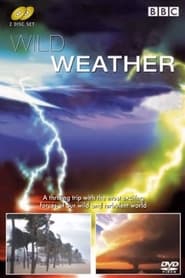
Wild Weather
Download English Subtitle
Release info
Tags
English subtitle preview
The first 200 lines.
Heat drives our weather.
From the rage of a tropical storm, the blinding heat of the deserts,
to the violence of a summer sky.
I'm Donal MacIntyre, and I'm about to take a journey with heat
from the equator to the poles
to see for myself the awesome power it can unleash around the world.
From its birth in the tropics, through the perfect summer,
into a hotter world -
one which could turn the weather of the future into a nightmare.
This is..."Wild Weather"!
Have you ever wondered, what's the power behind the weather?
What makes it tick?
In a few moments, we're going to see the true source of all weather.
And this is it. The sun. The fuse that lights the weather.
It's over a hundred times bigger than Earth,
and every second it releases enough energy
to power the USA for nine million years.
It takes one million years for the heat at its core to reach the surface.
Once it does, it makes its journey here in just eight and a half minutes,
a journey that ends in a blaze of glory every single day.
All that blinding heat and light is blasted out through space towards us.
As it homes in on our little planet,
it's at its most intense heading for the steaming jungles of the tropics.
The sun's rays hit the equator.
It's the start of heat's epic journey around the planet.
To find out what it does to the weather down here,
I'm heading to where the sun's energy is most intense.
Trapped beneath the jungle canopy,
all that heat creates one of the most extreme environments there is.
So to find out what all that heat does to the weather,
I'll spend the next 24 hours in the jungles of Belize.
If you're in the jungle and you don't know what you're doing, like me,
then you're already this close to death.
Sergeant Bob McCloud is an expert in jungle survivala handy man to know.
- Good morning. - You're looking after me.
- I sure am. - That's a heavy responsibility.
One second it's torrential rain, next it's a sauna.
That's right, so you're constantly wet.
And it'll go from one extreme to another in such a short time.
Within one day, hypothermia and dehydration. That's crazy.
Follow me. I'll show you.
For most of the year, the sun lies directly overhead,
so there are no conventional seasons here as we know them.
Just hot and wet, then a little less wet.
The daily weather is delightfully predictable.
There are clear skies in the morning, showers in the afternoon,
and clear skies again in the evening.
It's a weatherman's dream.
The one wild card in all this predictability
is the vast amount of energy being built up in this heat and humidity.
It's all that energy that makes this place as cloudy as it is.
The heat warms the land,
rainwater evaporates from the vast amount of vegetation, and rises.
The water vapour condenses into tiny droplets that create huge clouds.
The droplets collide, growing larger, until gravity pulls them down again.
The weather here is in a continuous cycle, fuelled by heat.
Whether you're in the water or on the river bank,
it doesn't make a lot of difference, because everything is permanently soaked.
Everything's just wet, wet, wet.
That's the big problem in the jungle.
It doesn't matter if it's hot or actually raining,
everything ends up wet, which is a big problem.
The only way round it is having a dry set of kit and a wet set of kit,
and at night the discipline is to get into your dry kit
to give you 12 hours when your body can recuperate.
In the morning you put on your wet gear?
Yeah. If you don't, things are going to start to rot.
Your boots will go and your clothes,
and your skin will start to rot away
and you end up with crotch rot and foot rot.
Bob has spent the last five years training the British Army
how to deal with life in this kind of heat.
God, I'm knackered.
As I struggle through the jungle, my body produces more heat.
My blood carries that heat away from the muscles
and is cooled when it finally reaches the skin.
Out here, that's never enough, so we sweat.
One drop of sweat can cool a litre of blood as it evaporates off the skin.
Get going. Get up there.
It's the process of evaporation that cools you down,
but it's not working here.
The hotter I get, the faster my heart beats and the tireder I feel.
Come on. Keep moving. Get up there.
I'm soaked in sweat, but the air here is so damp that it can't evaporate.
Stop moaning and keep going.
I'm a dangerous man with a weapon like this.
You're being a cowboy. There's a technique to using a machete.
This is crazy terrain.
But it is what every kid trained for, aged six, hacking through the jungle.
I'm just doing it a little late in life.
As the day wears on, it gets hotter and hotter.
More and more moisture fills the air until it becomes saturated with water.
Finally, it reaches a point where your sweat can't evaporate any more.
I'm pouring sweat, but it's not doing me any good.
You can't see heat or humidity,
but to appreciate it, you've got to imagine closing your bathroom door...
knocking the central heating up to full blast, turning the hot taps on,
and leaving it on for a couple of hours.
That gives you a sense of it.
- Give us a break, Bob. - Breaks are for losers. Keep moving.
Fortunately, this kind of weather is rare outside the jungle,
but occasionally, it reaches out beyond the tropics
and when it does, the results can be lethal.
In 1995, tropical weather descended on Chicago.
Even in a modern city like this, it brought chaos and death.
July, and the temperatures were already soaring
when heavy rains drenched the great plains outside the city.
The air mass above these fields became hot and steamy.
Days later, things took a turn for the worse.
A mass of warm moisture-laden air from the Gulf of Mexico forced its way north.
The 2.8 million inhabitants of Chicago were about to experience
the extremes of tropical weather.
That's when it really hit you.
You sat back and said, "Gosh, 600-700 people died because of this event."
Weathermen in the midwest were the first to realise something was wrong.
We're taking a look at temperatures well over 100 degrees.
Widespread, not just one or two places.
High pressure produced hours of uninterrupted sunshine,
and as the moist air from Mexico arrived in the area,
levels of humidity shot up to 90%.
This mass of sweltering tropical air
was then blown over Chicago by south-westerly winds.
It sat over the city like a steaming wet blanket.
Day two. Heatwave. The city is an oven.
All over Chicago, an invisible enemy takes hold.
It was like hitting a brick wall. It was...
It just totally surrounded you, like walking into a blanket.
You could put a bathing suit on, be in the water and it would still be hot.
It affected the sound too when you walked out.
For Gaby Kuhn, this freak tropical weather made life difficult...
but for Mabel, her elderly neighbour, it was deadly.
It was about the second day of the heatwave.
Mabel had done fine. We had set up fans for her.
She sat in this seat and we put a fan here that would blow on her face.
And the next day...
Normally she called me around two in the afternoon, and she didn't call.
Day three. The story's the same all over the city.
The emergency services are in freefall.
She's not alert?
The city's emergency warnings have failed to reach those most at risk.
As the heat increases, the emergency centre is swamped
with thousands of calls for help.
Back in the suburbs, Gaby still hadn't heard from Mabel.
I said to my daughter, "I think I need to check on Mabel."
She usually calls between two and three.
I tried to call her, but she didn't answer.
I tried a couple of times, so I thought I'd come over.
I came in, and when I walked into the house
I found her laying here in-between the dining room and the bathroom.
Apparently, she tried to get into the washroom and didn't make it
and collapsed here on the floor.
The ironic thing is this is my house right here.
It's probably three feet, a metre away.
And I didn't see her.
I often think about that.
Is the patient conscious and breathing?
By Saturday, 165 people lay dying all over Chicago.
Many would not be discovered for days. By then, it would be too late.
- "Stay home." - "Help is on the way."
When it hit us, we started watching television ourselves
and they were having pictures of the morgues -
they were hauling bodies into the morgues and they were piling up.
It was a shock.
Mabel was one of the first twenty to die of heat-related...
And then there were more.
Day four. Hospitals are at breaking point.
It started on a Thursday and it continued to build Friday.
By Saturday, we started having such a huge influx of patients
that where we had one cubicle, we'd now have 3A, 3B, 3C, 4A, 4B, 4C.
The death toll rose dramatically.
Most of the victims were elderly or impoverished,
who found it more difficult to cope with extreme temperature conditions,
leading to a deadly cycle of events.
First, the body's temperature rises to dangerous levels,
bringing about a state of confusion.
In this state of mind, we're less likely to seek shelter
or the aid of a cooling fan.
As the body dehydrates, we slip into coma.
In these super-heated conditions, our internal structure changes.
Our blood loses its ability to clot, leading to a cruel and bizarre fate.
Blood oozes from almost any orifice.
So out of your nose and your mouth and your bottom, from your stomach.
Anywhere in your body. People just die from that.
Day five. By the time all the victims had been discovered,
the heatwave had already left Chicago.
It's just unbelievable that so many people
can die so quickly just from the weather.
It was an awful week.
In the end, the tropical heatwave had claimed 525 victims in under a week.
The city and its people were simply not prepared
for the intense jungle weather that invaded their lives.
With only 12 hours left in the jungle,
I'm about to experience night-time weather in the tropics.
As the heat of the day subsides,
all the moisture in the air means nightfall can bring heavy rain or worse.
Bob and I are making sure we're ready for anything.
- Have you brought the duvets? - I'm afraid not.
We do have sleeping bags. Is that good enough?
I could do with a little Coke here and a mini-bar
and a phone here for room service.
Wild Weather subtitles in other languages
More English subtitles for Wild Weather
- 3of4 Cold DivX5 02-AC3 www mvgroup org ENG · 16 downloads · 2007-08-26
- 2of4 Wet DivX5 02-AC3 www mvgroup org ENG · 20 downloads · 2007-08-26
- 1of4 Wind DivX5 02-AC3 www mvgroup org ENG · 21 downloads · 2007-08-26
- -=complete=- DivX5 02-AC3 www mvgroup org ENG · 20 downloads · 2007-08-26
- All 4 episodes synced with the netuser rips · 23 downloads · 2005-05-18
Comments
No comments yet. Be the first to leave one.