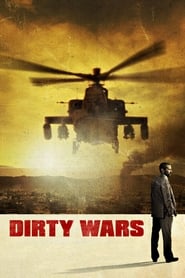
Dirty Wars
Download English Subtitle
Release info
Tags
English subtitle preview
The first 200 lines.
Greetings from Martin's Documentary Movies
Kabul, Afghanistan,
4:00 in the morning.
As an American journalist,
I was used to filing stories in the middle of the night.
But there's always something eerie
driving through the deserted streets.
A city of 3 million-
barely a streetlight on.
It was a familiar routine:
Waiting for the crew to light up the night sky
so you could see something in the background.
But could we really see?
Well, Keith, greetings from Kabul, Afghanistan,
where the U.S. Ambassador Karl Eikenberry...
This is a story about the seen
and the unseen...
And about things hidden in plain sight.
It's hard to say when this story began.
I'd been working as a war reporter
for more than a decade
in Yugoslavia, Iraq, and now Afghanistan.
After nearly ten years,
the war here wasn't exactly breaking news.
I think there's, like-
there's, like, eight rakes.
One, two, three...
We haven't been out here.
What's the name of this village out here?
Oh, I have no idea.
They all blend in for me.
Yeah.
What's the focus of your campaign here?
In southern Nangarhar,
we're dealing with the Ashkar-
Ashkael-
uh, Asherkeil tribe.
You know, the wording, uh, I'll get right
probably when we leave next year, but...
This was supposed to be the front line
in the war on terror.
From Kabul out on an exercise with the military
and back to Kabul,
the Afghan Press Corps was locked in a bubble.
We were told that the battle for hearts and minds
was being won
as soldiers dug wells
or drank tea with tribal elders.
But I knew I was missing the story.
There was another war,
hinted at in press conferences
and detailed in each morning's press release.
December 14th, Zabul Province,
a night raid.
Four Taliban killed,
three detained for questioning.
No civilians injured.
No one at NATO would give us anything more
than the lists of nighttime raids.
No one even seemed to know who was doing the raids.
And I wasn't going to find out if I stayed in Kabul.
POLICE HEADQUARTERS JALALABAD, AFGHANISTAN
This is the third raid in my district.
13 or 14 people have been killed in all.
They were innocent people.
So what you're saying
is that the Americans will come into a district
where you're the police commander,
and they won't inform you that they're gonna carry out
this kind of action in your district.
I've asked the American soldiers that come to my district.
But even the main NATO base here says
they don't know anything about the raids.
The troops came from another base.
So there's the two-
the two men in the guesthouse were the first people killed.
And then...
The farmer from here.
- Yeah. - And then another farmer.
Two. Two of his sons.
Two.
- Mm-hmm. - Two of his sons.
So there's, I think- so seven.
Or two-
- Two, two---four. One farmer---five.
Two these--- seven.
Two...
The Americans will say anything.
The Americans will say anything, everyone knows that.
If the Americans do this again,
we are ready to shed our blood fighting them.
We would rather die than sit by and do nothing.
The list of raids from NATO press releases
read like a map of a hidden war.
The military divided the roads in Afghanistan by color.
Green was safe.
Red was dangerous.
And black?
Don't even try it.
Most of the raids were happening
far beyond the green zone
in what the military called "denied areas"...
Places where journalists never show up
to ask questions.
NATO, the U.S. Embassy,
and my own better judgment
all advised against traveling there.
But I'd read about a raid in Gardez,
half a day's drive in Paktia Province.
I pushed as far as I could into the gray area
on the fraying edge of NATO's control,
past rusting Russian tanks
and bombed-out NATO supply convoys.
Two other journalists had been kidnapped on this road,
and after weeks
in the military's armored vehicles,
our Toyota felt thin-skinned and fragile.
I knew I had to be back in Kabul before sunset,
when the Taliban took control of the roads.
But I had no idea how far
my visit to Gardez would lead me.
GARDEZ PAKTIA PROVINCE
This is my son, and this is my son,
and this is my daughter-in-law,
and this is my granddaughter.
They killed them all on a single day.
Two of the women they killed were pregnant.
One was 5 months, the other was 4 months pregnant.
A child had been born in our home
and we had organized a party to celebrate.
We invited many guests and had music.
During the party, people were dancing
our traditional dance, the attan.
The American forces came between 3:30 and 4:00 am.
Daoud went to see what was happening.
He thought the Taliban had come.
They were already on the roof.
They shot Daoud as soon as he stepped outside.
All the children were shouting,
"Daoud is shot! Daoud is shot!"
We brought Daoud in here.
The women grabbed Zaher.
They told him not to go or he would be killed.
But they opened fire.
They killed three women, along with Zaher.
My wife, my sister, and my niece.
Look at these patched bullet holes.
Was Mr. Daoud killed immediately,
or did he live for a while after he was shot?
Daoud and my sister-in-law were alive until 7:00 am.
They didn't let us take them to the hospital.
The Americans used knives to dig the bullets out of their bodies.
They pulled out the bullets from their body.
You saw the U.S. Forces
take the bullets out of the body?
Ja.
They tied our hands and blindfolded us.
Two people grabbed us.
They pushed us one by one into the aircraft.
They flew us to another province.
To Paktika.
So he had just seen his wife killed by the American forces,
and then he himself was taken prisoner by the Americans.
What was going through his head when they took him?
My senses weren't working at all. I couldn't cry.
I was numb and didn't feel a thing.
I didn't eat for three days and nights.
My hands and clothes were caked with blood.
They didn't give us water to wash the blood away.
The interrogators had beards and didn't wear American uniforms.
They had big muscles. Sometimes they acted nice.
And sometimes they would shake us.
By the time I got home,
all our dead had already been buried.
Only my father and my brother were left at home. I didn't want to live anymore.
I wanted to wear a suicide jacket
and blow myself up among the Americans.
But my brother and my father wouldn't let me.
I wanted Jihad against the Americans.
MOHAMMED DAOUD 1:00 AM - FEBRUARY 12, 2010
MOHAMMED DAOUD 2:00 PM - FEBRUARY 12, 2010
The family had no idea
what led the Americans to their home.
MOHAMMED DAOUD POLICE COMMANDER, GARDEZ
They had long fought against the Taliban,
and Daoud was a police commander
who'd been through dozens of U.S. training programs.
This is my son, the Police Commander.
Was he Taliban?
They said they had information that 50 Taliban were here.
But they were all my relatives, and they worked for the government.
They killed my innocent sons, daughter, and daughter-in-law.
They had committed no sin and had no enemies.
As we prepared to leave,
Daoud's granddaughter spoke to us,
but only later would I know the meaning of her words.
Daoud's family told me it was time to go.
The sun sets early in the mountains,
and the night belongs to the Taliban.
The gunfire continued,
Dirty Wars subtitles in other languages
More English subtitles for Dirty Wars
- Dirty Wars 2013 1080p BluRay DTS x264-PHD · 59 downloads · 2022-05-31
- Dirty Wars (2013) · 42 downloads · 2015-06-25
- Dirty Wars 2013 720p BluRay x264-G3LHD · 90 downloads · 2015-02-28
- Dirty Wars 2013 720p Bluray x264 AAC - Ozlem · 82 downloads · 2014-03-25
- Dirty Wars 23 976 FPS DVD · 51 downloads · 2014-03-20
- Dirty Wars 2013 WEBRip 480p x264 AAC-VYTO [P2PDL] · 52 downloads · 2014-03-06
- Dirty Wars (2013) BluRay 720p 600MB Ganool · 50 downloads · 2014-03-03
- Dirty Wars 2013 WEBRip XviD AC3-RARBG · 60 downloads · 2014-02-28
Comments
No comments yet. Be the first to leave one.