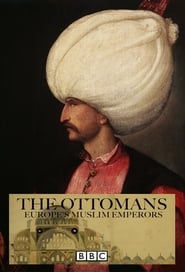
The Ottomans: Europe's Muslim Emperors
Download English Subtitle
Release info
Tags
English subtitle preview
The first 200 lines.
On the edge of Europe is a city that was once
the heart of a mighty empire.
From here in Istanbul, the glories of the Ottoman Empire
came to match those of Ancient Rome.
Wow!
Look at this!
This is the view that the Ottoman sultans would have seen
and it just simply takes your breath away.
For 600 years,
from the Middle Ages
to the 20th century,
one dynasty of Ottoman sultans, a single family,
ruled over huge swathes of the world.
The Ottomans were staggeringly wealthy.
This is an empire of a million square miles, it's a superpower.
The empire stretched south to Baghdad and Cairo,
controlling the holiest sites of Islam -
Mecca, Medina and Jerusalem.
But it also reached deep into Europe,
taking in Sarajevo
and threatening the gates of Vienna.
What's more, it was the world's last Islamic empire
and it collapsed less than 100 years ago.
In this series, I'll be discovering why the Ottoman Empire
seems to have vanished from our understanding
of the history of Europe.
Why its story is exciting global interest once more
and how, this year, struggles at the heart of the Ottoman story
have reignited on the streets they once ruled,
from Syria to Turkey and Egypt.
It's remarkable how some of the most important yet unresolved issues
confronting us today were also faced by the Ottomans -
the conflicts between the Christian West and the Muslim East,
the need to reconcile secular politics with religious ideology
and balancing the demands of the clergy
with the ambitions of the generals.
All this was faced by one dynasty who ruled for 600 years,
across three continents.
In this first episode,
I'll discover the surprising roots of the Ottomans,
the extraordinary speed at which nomadic horsemen
from a corner of what is today Turkey,
became powerful rulers across Europe,
the Middle East and Africa.
Across the continents, down the centuries,
I'll be getting to grips with what we all need to know today
about Europe's Muslim Emperors.
As a journalist,
I've been dispatched to many regions of the world
that were once part of the Ottoman Empire.
American armour is moving at will across whole swathes of Baghdad...
Now, with so much of the world they once ruled in turmoil...
..I want to uncover the Ottomans' forgotten story.
If you don't understand the Ottomans,
both the good and the bad,
you don't understand partly the modern transformations
of the Balkans and the Middle East. I think they are connected.
The roots of today's turmoil can be traced, in part at least,
to the break-up of the Ottoman Empire after the First World War.
Even before the war was over, the French and the British were already
planning on how they would dismember this remaining territory.
Many countries in the Middle East, whose names are in the news today,
only came into being after this post-war carve-up.
A list of the Ottoman successor states today reads like a catalogue
of the world's trouble spots - Iraq, Syria, Israel and Palestine.
The borders of these countries were not designed
according to any geographical reality. The border between
Turkey and Syria, for example, is a border that
just doesn't have any reason.
The two peoples on the same side
of the border are the same people, they still speak the same language.
Modern-day Saudi Arabia and Yemen
escaped control by the great powers of Europe.
Only one other major Muslim country would achieve this.
Remarkably that nation was the heartland of the Ottoman Empire -
modern-day Turkey.
Turkey looks very different from its Arab neighbours.
It's a confident, modern country whose economy and global importance
are both growing.
And for most of the past century,
it's turned its back on the Ottoman past.
Until now.
BATTLE CRY
In Turkey and across the world, 200 million people
are currently gripped by a TV drama about the Ottomans.
It's an epic story of power won and lost across three continents.
A great cultural force in history,
straddling the ancient and modern worlds.
And ruled from one of the world's
most strategically placed imperial capitals.
Istanbul is a city that spans two continents.
On this side is Europe,
but a short hop across the Bosphorus takes you to the Asian side.
It's always been a city where different beliefs
and different cultures meet.
Never more so than during the time of the Ottomans.
This place became the heart of the empire.
But the Ottoman story began across the water on the Asian shore,
somewhere much more remote.
The Ottomans first emerged over 700 years ago.
Their heartland is said to be around the small town of Sogut,
150 miles or so from modern-day Istanbul,
in rural Anatolia, the Asian part of modern Turkey.
Each year there's a festival here
to commemorate the empire's founding fathers.
The family that would become the Ottoman dynasty,
began as nomadic warriors alongside many other tribal clans.
They were excellent horsemen,
this is how they survived, how they lived.
And on account of their perhaps fearsome qualities,
they were used as hired mercenaries.
These guns-for-hire had moved across Central Asia
and fought for the powerful Muslim rulers based in Baghdad.
That's how they were introduced to Islam,
a religion that took its place alongside other beliefs.
The religion of the Ottomans
was the religion of a people on the frontiers.
They were absorbing as much spirituality from the people
they conquered as they were taking from their own hinterlands.
The Ottomans' nomadic ancestors settled around Sogut,
competing with other tribes to survive.
There were others who also settled down in neighbouring areas,
neighbouring territory.
And they were rivals for resources,
they were rivals for territory, they were rivals for grazing lands,
they were rivals for access to the sea.
And the Ottomans needed to overturn them.
By 1299, their leader in this ongoing struggle
was a man called Osman or Uttman.
His followers would become known as Osmanli, or in English, Ottoman.
And just as Rome had its story of Romulus and Remus
to give its origins a sense of divine authority,
so the later Ottomans developed a founding myth around Osman.
Osman dreamt that a tree came out of his navel,
a very wide, spreading tree,
which came to shade a very luscious and bountiful landscape under it.
In the morning, Osman told this dream to his leader
who gave him
the great news that he will be the head of a big empire
and his sons and grandsons will rule the state.
The story of how this legendary dream came true
is one that holds many surprises.
In the late 13th century,
no-one could have dreamt that, within a few generations,
these nomads would become mightier than
the imperial powers that surrounded them.
To the southeast were influential Arab cities
like Baghdad and Damascus,
home to earlier leaders of the Muslim world.
Further south was the great seat of learning in Cairo
and Islam's holiest sites of Mecca and Medina.
Closer to home was a crumbling Christian empire.
The capital of the Byzantine Empire
lay just across the water of the Bosphorus.
Modern Istanbul was at this time called Constantinople,
named after the fourth century Roman Emperor, Constantine.
It was the centre of the Eastern Christian world.
Constantinople stood for the empire
of the Christians on Earth.
One God in heaven,
one Emperor on Earth
and one imperial city.
The Byzantine world had total confidence that it had
the ideal constitution, the ideal system of justice,
they thought it was the perfect Christian empire.
But after a millennium in power, the Byzantines were in decline
and weakened by battles with Europe's Western Catholic crusaders.
It was still against all expectations, when in 1301,
Osman claimed his first victory over the Byzantine imperial army
and it made his name.
When the other emirates or other principalities saw that,
they started to join the Ottomans, to fight with them,
because they see a future in the Ottomans.
This meant that they were able to amass huge numbers of soldiers.
They could deploy fast-riding cavalry to killer effect.
MARCHING BAND PLAYS
Osman's memory still arouses passions.
At the climax of the Sogut festival,
everyone marches to the tomb of the Ottoman forefathers.
A scuffle breaks out
about who should be the first to pay their respects.
IMPASSIONED VOICES
Osman's successors seized on his legacy
and laid the foundations for empire.
HE SPEAKS IN TURKISH
Just two years into his reign,
Osman's son, Orhan, made his mark.
In 1326, he took the major Byzantine city of Bursa
after a long siege, converting it into his capital city.
He wasted no time creating the infrastructure of a settled state.
The earliest dated Ottoman coin is from this year.
These were no longer nomads.
The Byzantines were alarmed at the rise of this powerful
and warrior-like group and they tried to put this off with diplomacy.
The Christian Byzantine emperor
gave Orhan his daughter's hand in marriage.
It was always part of Byzantine diplomacy
to use the emperor's family for intermarriage.
Hopefully you kept your enemies as friends rather than as attackers.
The marriage did not stop the Ottomans
The Ottomans: Europe's Muslim Emperors subtitles in other languages
More English subtitles for The Ottomans: Europe's Muslim Emperors
- BBC The Ottomans Europe's Muslim Emperors 2 of 3 x264 AC3 · 32 downloads · 2013-10-19
Comments
No comments yet. Be the first to leave one.