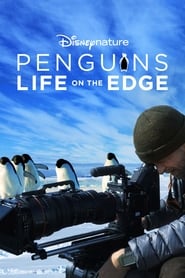
Penguins: Life on the Edge
Download English Subtitle
Release info
Tags
English subtitle preview
The first 194 lines.
The continent of Antarctica
is unbelievably vast and inhospitable.
It's the coldest place on Earth.
But each spring,
the warming sun draws life from the southern ocean
onto the edges of the continent,
and it becomes home to one of the toughest birds on the planet,
the Adelie penguin.
To chronicle the amazing story of these polar pioneers,
Disneynature mounted one of the biggest filming operations
Antarctica has ever seen,
assembling a unique team of filmmakers,
including some of the best cinematographers in the world.
They'll face the worst that Mother Nature can throw at them,
and still come back for more.
Whoo!
The penguins are on a mission of their own.
Ah, these penguins. Would you stand in the frame? They just...
Oh...
I can't believe this.
They can be wary of strangers.
I'm gonna be hiding in their colony like this.
And finding them isn't easy.
Which way was the penguin colony again?
But these filmmakers know what it takes to capture every moment
of this magical story.
Oh, that was a penguin.
Aye.
That could have been the Oscar-winning shot.
Just missed it.
The Adelies have spent the winter out at sea.
Now they're heading back to land to breed.
It's the green light the Disneynature team has been waiting for.
More than 20 cinematographers will attempt to film the penguins' lives
in unparalleled detail.
They'll travel vast distances to find those subjects,
carrying with them over ten tons of filming equipment.
They will spend months in some of the coldest
and most isolated places on the planet.
And they'll depend on hundreds of support staff
from eight different nations
to get them there and keep them alive.
The first camera team left England a week ago,
heading for a staging post in New Zealand.
They then flew to Ross Island
and the US Antarctic Research Base at McMurdo.
Now the final leg of their grueling journey
is taking them across the island to the remote Cape Crozier.
Each year, Crozier becomes home
to the largest Adelie penguin colony on the planet.
The crew is racing to get there before the penguins do.
Mark Smith is a cinematographer who has filmed here before,
as has Jeff Wilson,
the team's leader and one of the film's directors.
So, two years of planning has gone into this moment right now,
trying to get all the logistics, all the people,
all the equipment, and the weather correct
in order to drop us into this base that we're going,
has been an enormous effort.
This barren mountain will be the main filming location
for the next few months.
Both Mark and Jeff know the harsh conditions that lie ahead.
It's like a midsummer's day down here, it's about minus 18.
Nice and warm.
For Antarctica, it's actually unseasonably calm and sunny.
Man, I can't believe the weather. I've never seen it like this here, ever.
Yeah, this is beautiful.
Okay, good to go. Are you good?
Have fun, guys. Thank you very much, mate.
You're welcome. See you soon.
-Whoo! -Whoo!
-Yeah. -(CHUCKLES)
Awesome.
How about that?
We made it.
That is the best feeling ever.
Landing here is pretty amazing.
This is our home.
It's been eight months since this base was operational,
so the crew's first priority is to rebuild the camp.
-Jeff. They also have to carry
the film kit, piece by piece, to the penguin colony.
It's about a mile walk down to the colony
and we're just taking some of our gear, some of the 5,000 pounds
of gear that we brought in with us.
The camera, tripod, and what have you,
we're gonna stash that down at the colony
so we don't have to bring it back and forth each day.
Jeff, why aren't you carrying as much as the rest of us?
Mark and Jeff hope to capture the beginning of the Adelies' story:
the return of males across the sea ice, on their way to their nesting grounds.
But have they made it ahead of the penguins?
What do you think, Mark?
It's pretty amazing. It's incredible.
There's a few hundred penguins of quarter of a million penguins here.
Most of them are still out in the sea
and coming back here in the next few days.
And the penguins have to pass through here to get to the colony,
and hopefully, they'll come back through all this amazing ice.
Each year, the sea around Antarctica freezes.
By midwinter, it more than doubles the size of the continent,
and then melts away again each summer.
This year, that melt is slower than usual.
The ice is about six kilometers out there, so most normal years,
it's about half that, more or less.
It's a long way for the Adelies to walk.
There's a lot of Adelies going through that ice there.
Very beautiful. Blue ice,
black and white Adelies, looks amazing.
With hundreds of males arriving
and the good weather holding, it's the perfect start.
But Mark and Jeff had been here many times
and know that conditions can change in a matter of minutes.
So the Adelies are finally coming down in huge numbers,
which is exactly what we came here for,
and then Mark is trying to film them.
But here's the dilemma.
Up on the top of the hill up there, it's starting to blow an enormous gale.
And the winds here can get pretty strong.
So whilst we've got all this action, we're, um, on a bit of a line
as to whether to head for home or stay and get some good stuff.
It quickly becomes clear that staying is not an option.
That's, uh... blowing snow,
which... (LAUGHS) which puts the fear of God into me.
And that means that this is, uh, some strong winds.
You never quite know how strong they are.
We're going to leave.
We're not gonna hang around to find out.
Pretty strong, eh?
Before they know it,
the crew are battling hurricane-force winds
and temperatures dropping below minus 30 degrees Fahrenheit.
Caught out in the open, these are potentially lethal conditions.
At last, they reached the safety of their camp,
but it was a narrow escape.
Whew!
Quite punchy.
Just a bit of breeze, isn't it?
The storm vanishes as quickly as it arrives.
The next morning, it's as if it never happened.
It seems all kind of very benign
now that we're sitting back in the colony the next morning, but...
it came pretty close to being serious last night.
And I don't think we wanna try and test that wind again.
And there were times where I was thinking,
"I'm not sure I can take this anymore."
I was that tired.
I don't think I've ever been that physically tired
when we got back to the hut.
And you know what?
If it had been any colder, we would have been in real, real trouble.
The most amazing thing about a storm is the penguins didn't mind at all.
The colony seems to be about twice as full,
so more penguins came in through those winds,
which must have topped a hundred miles an hour at least.
They were still going about their business,
which is unbelievable, really.
Credit to this tiny little animal.
Cape Crozier is the main location for the penguins' story,
and will be filmed throughout the season by three different camera crews.
But it's not the only colony the Disneynature team will film.
Another film crew is sailing south from Australia
on an ice-breaking resupply ship.
They're heading for the sea ice barrier
and the French research base of Dumont d'Urville, or DDU.
Their three tons of camera and diving equipment has to travel by sea.
But two of the crew are able to fly in ahead of the others by small plane.
Their weight restriction only allows for some clothes
and a single small camera.
It's their first time in Antarctica.
What do you reckon, Rolf?
Look at that. I mean...
There are icebergs frozen in the sea,
I mean, wow.
I'm a little bit speechless, I have to admit.
Can't see any penguins yet.
But that's not such a bad thing, because at the moment all our camera kit
is stuck out about 200 kilometers that way,
on the boat with the rest of the team.
Fingers crossed they get here soon,
because without cameras, we can't do anything.
The boat they're waiting for, the Astrolabe,
hits early spring ice far sooner than expected.
In addition to the equipment,
it's also carrying much-needed supplies for all those living at DDU.
On board is underwater filming legend Didier Noirot,
who has dived in Antarctica many times before.
Normally, crossing from Australia takes ten days,
but this season, the ship is struggling against the unusually thick sea ice.
The closer they get, and the further south they go,
the thicker the ice becomes.
Their progress grows slower day by day...
until finally, they can go no further.
They're stuck
Penguins: Life on the Edge subtitles in other languages
More English subtitles for Penguins: Life on the Edge
- Penguins Life on the Edge 2020 WEB-DL DSNP · 11 downloads · 2021-05-06
- Penguins Life On The Edge 2020 720p WEBRip x264 AAC-[YTS MX] · 17 downloads · 2021-01-17
Comments
No comments yet. Be the first to leave one.