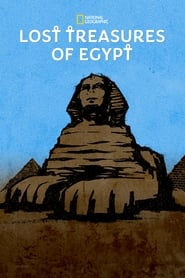
Lost Treasures of Egypt
Download English Subtitle
Release info
Tags
English subtitle preview
The first 200 lines.
Egypt, the richest source
of archaeological treasures on the planet.
Oh, that's a fabulous one!
Beneath this desert landscape
lie the secrets of an ancient civilization.
Wow, you can see why the pharaohs chose this place.
Now, for a full season of excavations,
our cameras have unprecedented access
to follow teams on the frontline of archaeology...
I'm driving so fast because I'm so excited!
It's an entrance, we can see an entrance.
Revealing buried secrets...
So I have just been told
that they have found something.
A sphinx!
And making discoveries
that could rewrite ancient history.
Hey!
This time, archaeologists reveal
what tomb raiders left behind.
John investigates an ancient tomb-robbing scandal.
Royal tombs are not robbed by random robbers.
Us homeland security
helps bring a stolen mummy back to Egypt.
How fabulous.
And Don makes a discovery
in a long-forgotten tomb.
Oh, my gosh.
It has a possibility of being truly exciting.
The Valley of the Kings.
65 tombs hidden in this remote gorge,
built to contain the mummies of Egypt's great pharaohs
and their treasures.
Throughout history these tombs have been raided
from within just a few weeks of being sealed,
right up to the 20th century.
But to archaeologists, what the thieves left behind
is still priceless evidence,
helping them to unlock the secrets of ancient Egypt.
Dr. Ryan.
Renowned American egyptologist Don Ryan
is kicking off his season in the valley.
I first came to Egypt as a student.
It was my priority to come and see this place.
And I had a map of the Valley of the Kings,
and I noticed amongst all these tombs of these famous rulers
there were all these little dots with numbers on them,
and those really intrigued me.
The dots on Don's maps represented
the smaller and lesser-known tombs in the valley.
Don made these his area of expertise.
Working in various tombs around here
has so many aspects that make it special,
apart from it being the most famous archaeological site
in the world.
Dig season runs from October to April
and relies on the expertise
of hundreds of skilled local workers.
I know this guy from before.
He's a good guy.
This book is kind of special,
because it goes back to my very first field season in Egypt.
This is 1989.
Every tomb in the Valley of the Kings
is a piece of a great puzzle.
Don's missions have focused on a cluster
of small tombs at the edge of the valley.
Nearby is the impressive burial chamber
of pharaoh Amenhotep ii.
But most of the surrounding tombs remain unidentified.
All of them were looted centuries ago,
any treasures stolen by robbers.
But in some, they left behind mummified animals
and ancient pottery.
This year, Don is excavating one of the most mysterious
tombs of them all: Tomb number 49.
Who it was built for remains a mystery.
Thought to be empty,
no one has excavated it for over a century.
We are the first archaeologists to go in there
and clear the material out since 1906.
I know from previous experience
having excavated a number of tombs from that period
that these early archaeologists usually took the bigger things
or the prettier things and left everything else inside.
Solving the mysteries of this tomb will be tough.
The chamber is totally unmarked.
At this point we don't have any indication
for whom this tomb might have been built.
We have to look for all the little clues.
Don has become an expert in uncovering
the secrets of these smaller, undecorated tombs.
The tombs I work with don't have any inscriptions,
one can't just go in and read the walls.
In the Valley of the Kings just having a burial chamber
is a magnificent honor.
It could have been a royal family member
or it could have been a very high official.
Tomb 49 has been robbed by ancient tomb raiders,
but that doesn't mean it's empty.
We'll clear this stuff out and we'll go through it,
and it'd be really nice
if we found something with a name on it.
We might find some objects from the original burial.
It has the possibility of being truly exciting.
The team has just three weeks
to move several tons of earth.
Each bucketful must undergo a fingertip search,
with even the tiniest fragments pulled out
for further investigation.
One never knows, it could be the last basketful of debris
that might give up the answer that we're looking for.
At the entrance to the valley
sits a complex of tombs and temples called Deir El-Bahari.
In the cliffs of this site
are where important officials were buried.
Shukran.
How many people do we have today?
Total, 3-0.
So we need 10 more.
Professor Antonio Morales
is an egyptologist from the university of Aalcalá in Spain.
He's in charge of 30 international experts
working here on one of the biggest
archaeological projects in Egypt.
We came here to excavate two or three tombs
that belonged to very prestigious,
very powerful high officials.
They provide much information about things like religion,
beliefs, ritual practices,
and about ancient Egyptian culture in general.
But this year,
his government permit has come through late.
This season is going to be very intensive,
because we were expecting to work for five or six weeks,
we're actually going to do it for three weeks,
which means that this is going to be double intensive.
Like the tombs in the Valley of the Kings,
this site was also robbed by other ancient Egyptians.
Most of the ancient Egyptian tombs were plundered
weeks or months after the funeral,
so for us it's very interesting to try to come up
with a reconstruction of what happened here.
So those are the contents.
Last year, Antonio's team unearthed
hundreds of body parts:
Mummies ripped apart by thieves looking for gold and jewels.
The robbers cut the bandages
looking for as many objects as possible,
and once they were finished with that,
perhaps they burned the mummy, they throw it away,
they didn't want to have any ghost,
any visit from the afterlife.
Tomb robbers believed the dead would come back
to haunt them unless they destroyed the mummy.
But for the dead themselves,
this was the worst possible fate.
They needed their mummified body to remain intact
to live on in the afterlife.
So stopping thieves was about
more than protecting your treasure,
it was also about ensuring your eternal life.
Now I can go into the sarcophagus.
Antonio is investigating
how the owner of this 4,000-year-old tomb
tried to prevent his mummy from being destroyed by looters.
Now we are in the deepest section of the tomb
where his coffin and corpse was deposited.
The team knows this tomb
must have belonged to an important official.
There's no mummy, but the sarcophagus is covered
with intricate hieroglyphs.
Among them, the team finds the name of the owner.
So this area we can read, this Ipi,
so the deceased is named Ipi.
What you can see here is actually all the things
the deceased needs for his afterlife.
Ipi was a vizier,
a role second only to the pharaoh.
A powerful statesman,
he was buried in an ornately inscribed sarcophagus,
covered in spells to protect him in the afterlife.
To ensure his mummy stayed intact,
Ipi's tomb was designed to stop robbers.
The entrance was sealed by huge boulders.
And inside the burial chamber,
the sarcophagus was set into the floor,
then covered with stone slabs
so that the room appeared empty.
When robbers came, they will see an empty chamber,
a wonderful floor, and they will think that the chamber was empty
because it was already stolen.
But even this clever design
wasn't enough to stop thieves.
Ipi's mummy and all his treasures
were stolen centuries ago.
Outside Ipi's tomb, there's an exciting discovery.
I have been told that just in one of the sections
we started working this morning
it seems they have found some kind of a structure.
Lost Treasures of Egypt subtitles in other languages
More English subtitles for Lost Treasures of Egypt
- Lost Treasures of Egypt S04E01-E08 NORDiC 1080p WEB-DL H 264 DDP5 1-CiNEMiX · 76 downloads · 2025-02-11
- Lost Treasures of Egypt S03 NORDiC 1080p WEB-DL H 264 DDP5 1-CiNEMiX · 55 downloads · 2025-02-11
- Lost Treasures of Egypt S02 NORDiC 1080p WEB-DL H 264 DDP5 1-CiNEMiX · 74 downloads · 2025-02-11
- lost treasures of egypt s01e06 curse of the afterlife internal 720p WEBRip x264-CAFFEiNE · 39 downloads · 2019-04-10
- lost treasures of egypt s01e05 warrior pharaoh queen internal 720p WEBRip x264-CAFFEiNE · 43 downloads · 2019-04-10
- lost treasures of egypt s01e03 cleopatras lost tomb 720p WEBRip x264-CAFFEiNE · 40 downloads · 2019-03-20
- lost treasures of egypt s01e02 hunt for the pyramid tomb 720p WEBRip x264-CAFFEiNE · 31 downloads · 2019-03-13
- lost treasures of egypt s01e01 tutankhamuns treasures 720p WEBRip x264-CAFFEiNE · 45 downloads · 2019-03-13
Comments
No comments yet. Be the first to leave one.