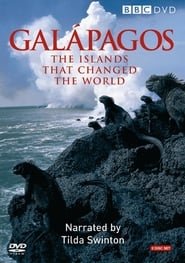
Galapagos
Download English Subtitle
Release info
Tags
Download English Subtitle Files for Mobile (3)
English subtitle preview
The first 200 lines.
In the vastness of the Pacific, there's a place unlike any other.
Enchanted volcanic islands that are home to a remarkable
collection of animals and plants.
Here, evolution is proceeding with spectacular speed.
Black lizards that swim in the ocean
and spit salt from their noses.
Penguins, thousands of miles from Antarctica.
And an abundance of unique plants.
Some animals are tiny,
and some have only just been discovered.
This is a place of wonders.
Galapagos.
Islands born of fire,
with inhabitants that have
transformed our understanding of the whole of life on Earth.
In a lifetime spent making natural history films,
I've been to many wonderful places
but none more extraordinary than here, the Galapagos Islands.
These have been called nature's greatest experiment, for here,
life has evolved in isolation and produced some extraordinary results.
The extraordinary creatures of Galapagos astounded
Charles Darwin when he first came here 200 years ago.
They led him to formulate his revelatory
theory of evolution by natural selection.
And now, 200 years later, there are still mysteries to be solved
and new discoveries to be made.
Teams of scientists are investigating unexplored regions of
the remote islands and discovering hitherto unknown animals.
On the peaks of its volcanoes,
inside networks of immense
tunnels within the lava flows
and in its crystal clear waters.
Among a population of giants,
and in the magical world that is revealed by the microscope.
New technologies are enabling scientists to investigate
the workings of evolution in new ways
and producing insights that would have astonished Darwin himself.
Today, we know a lot more about these islands.
The discovery of new species,
long-term studies extending over decades,
have given us new perspectives not just on this place,
but on the process of evolution worldwide.
The islands lie 600 miles from the coast of South America
and straddle the equator.
There are 16 of them, and a multitude of small islas,
all separated from the rest of the world by the huge expanse of ocean.
The biggest island is Isabela.
Lying in the centre of the group, it has a strange seahorse-like shape.
That is because it originated as six separate volcanoes which
eventually fused into one great island.
The most remote of them is Alcedo.
Its vast crater is four miles across.
The huge steep-sided walls,
still smoking with jets of volcanic gas and steam,
make this one of the most isolated places in the Galapagos.
And it has become a sanctuary for one of the islands'
most spectacular inhabitants.
Giant tortoises.
There are thousands of them.
These are the extraordinary creatures that gave their name
to the islands.
Galapagos in Spanish means tortoise and here,
in the pit of the volcano Alcedo, they've assembled in quite
some numbers to wallow in the warm volcanic mud.
A big one can weigh as much as a quarter of a ton.
They live for up to 100 years or more, which makes them
amongst the most long-lived of all vertebrates. And being reptiles,
they get their energy by basking in the sun.
But their bodies are so big that once they are warmed up,
they can carry on browsing for quite a long time.
The existence of creatures like these,
so far from the nearest continent, poses many questions.
How, for example,
did these enormous beasts get to the islands in the first place?
But perhaps the most extraordinary thing about the Galapagos
tortoises is that they're not all the same.
Different islands have different kinds.
In their heyday there were 15 species.
They seem to have appeared in an evolutionary blink of the eye
in this tiny cluster of islands.
And the tortoises are not alone in this.
Almost every animal and plant in the islands has a similar story.
The animal colonists began to change from the moment they arrived,
driven to do so by the harsh volcanic landscape around them.
There is evidence all around these islands of their direct
connection with the furnaces deep in the Earth's crust.
But it wasn't until recently that we
realised just how close those connections are, here.
Underneath the section of the Earth's crust
on which Galapagos sits, there is something extraordinary.
A gigantic column of super-heated molten rock rising upwards.
This hot spot is immense.
At least 60 miles across.
It extends downwards for 1800 miles
and connects the islands to the very centre of the Earth.
This image, based on the very latest seismological data,
shows the hot spot from underneath the crust.
This is the source of the islands' volcanic activity.
It began to build the Galapagos four million years ago.
A series of islands emerged from the sea.
Today, there are 16 of them, all of which are volcanoes.
Most are now extinct and the oldest are crumbling into the sea.
But the newer islands are still active and spitting fire.
The youngest is Fernandina.
It rose from the sea just 500,000 years ago.
And because it's still active,
the lava fields that cover it are still unweathered.
And here, in this desolate, barren place, we can see how the
ingredients of a great natural experiment came together.
Fate placed these islands in a unique spot on this planet.
They lie plumb on the equator, with its year-long warmth
and sunshine. But perhaps, more importantly,
they also lie at the crossroads between two competing winds.
The southeast trade winds blow up from South America
and the northeast trades come down
from the Caribbean and Central America.
These two winds are the lifeblood of the Galapagos.
They carried the earliest settlers to the emerging volcanic islands.
seeds falling from trees in south and central america
blown across hundreds of miles on ocean.
most lost in sea.
of those few that reach the islands,
many fell on steroid baking hot rocks, but just few who's luckier.
this extraordinary species is related to dandelions.
and its far away to grow where there is neither soil nor rain.
a wind blown seed arrives, and dropes in crevice in the lava.
Moisture collects and cause it to germinate.
with its tiny leaves that managed to collect more moisture.
and the infinite small quantities of nutrients that moisture from the skies might contain.
some of these leaves may look dead, and indeed they are.
the plant is deliberately shutting theme.
it's ensuring that nothing it produces is wasted, it's creating its own soil.
and eventually after 80 to 100 years, it produced this.
Scalisia, it seems to grow straight out of naked rock.
after such a tiny beginning, this extraordinary plant has gone from strength to strength.
today, whole forest of giant dandelion, blanket the high slopes of the island.
but some plants use a more direct mode of transport, than merre gust of wind.
A bird
The Albatross is the king of long distance flight
it spends most of its life on the wing
But each year it lands somewere, to breed and rise a chick.
The appearance of new island in the middle of the ocean, provide Albatrosss with new nesting site.
And oftenly huge birds broughts hitchhikers.
Seeds stock to their feets, and in their feathers.
They may even have give hitchhikers, a head start in life with a nice packet of fertilizer.
So gradually, small patches of vegetation begin to appear on the newly emerged islands.
The seeds of most trees, are too big to be cared far by birds or the wind.
But those that habitually grow along the coast, can use different form of transport.
This is the seed of Mangrove,
And when it falls, it drops in the sea and floats.
This part of it is green,
So can make food just like a leaf can, and the seed can remain made it at sea in life, for a very long time.
But eventually it may float into an estuary,
And then water is brackish, and less buoyant.
So the heavy end of the seed falls, and it hangs on the water like this.
And it's tip, and maybe low tide,
Trails into the mud, and sticks.
And the Mangrove has implanted itself.
This trees are very effective colonists of newly formed islands.
The young seedlings quickly established themselves,
Their tangled arching roots form a grid, wich slows down the tidal water searching through them,
cause in it to drop sediments as mud.
At low tide, all kinds of creatures come out to scavenge among the roots,
And when the tide is high, other creatures swiming to find a shelter.
The water's arround the tangle roots, serves as nest for many species of fish.
So plants created habitats
where animals could survive both in water,
and out of it.
Some of the very first animals here were spiders.
There are some 150 different known species of them
in the Galapagos today,
and they travel in a way that is all their own -
they balloon.
The hatchlings of many species use specially adapted silk.
A spiderling climbs to the tip of a leaf or a twig.
There, it produces a thread of silk from the spinnerets
at the end of its abdomen.
This 3D electron micrograph shows that this thread is actually
two filaments that are stuck together.
It's flattened like a blade.
The slightest wind will catch it.
Once a gust is strong enough,
the spiderling lets go with its feet and is carried up
and away.
Some can float up to an altitude of several thousand metres.
And up there in the trade winds millions of years ago,
and doubtless many times since,
some of them made the 600 mile journey to the Galapagos.
And spiders were not alone, floating through the skies.
Many different forms of life were brought
here by the wind from the South American continent -
seeds, pollen,
viruses, bacteria,
algae and insects.
Insects, of course, are extremely important in most ecosystems.
They pollinate plants
and they're food for many other kinds of animals.
The species that reached here are nearly all the smaller
South American species.
The bigger ones were too heavy to make the journey.
Galapagos subtitles in other languages
More English subtitles for Galapagos
- BBC Galápagos (2007) - Complete Series · 55 downloads · 2018-07-16
- Galapagos 2007 720p BluRay x264-CtrlHD · 30 downloads · 2016-12-28
- BBC Galapagos 2 Islands That Changed The World [Bluray 720p and 1080p SRT] · 30 downloads · 2010-04-25
- BBC Galapagos 3 Forces Of Change [Bluray 720p and 1080p SRT] · 33 downloads · 2010-04-25
- BBC Galapagos 1 Born Of Fire [Bluray 720p and 1080p SRT] · 35 downloads · 2010-04-25
- BBC Galapagos HDRE x264 a1080 dd20 mouse55siluHD all3E · 38 downloads · 2009-02-11
- BBC Galapagos · 30 downloads · 2008-07-26
Comments
No comments yet. Be the first to leave one.