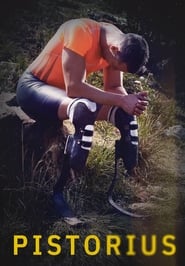
Pistorius
Download English Subtitle
Download English Subtitle Files for Mobile (4)
English subtitle preview
The first 200 lines.
Good morning, friends,
I hope you've got your tea ready and you're sitting down
and all comfortable, because it's time for Women's Magazine.
I, like many of you,
have become saddened and tired of the circumstances
and situations we find ourselves in as a people and as a nation.
The troubles in marriages around us,
the unemployment,
the women abuse, the crime and the poverty.
I believe that revival will be a time
when God will visit South Africa.
It will be a time when he will sweep away the works of the devil.
Now it's time to join Joy and Sheila.
Sheila, thank you for coming on the program.
Thank you very much, Joy!
Sheila, won't you tell us a little bit about Oscar now?
Your very special young man.
Yes, I'd love to thank you.
I have three children, Carl, Oscar and Aimee.
Oscar's my middle son, and he was born with missing bones in the legs.
This was a very difficult time,
but with God's help has gone from strength to strength.
He's been a tremendous source of encouragement
to many people,
and he's just a very popular well-respected boy,
and I certainly deem it a privilege to know him and be his mum.
And I said, get everybody ready.
The maid, the children. I'm going to see...
She was very shocked when Oscar was born.
She phoned me from the hospital
to say there was something wrong with his legs.
They were told at the time that Oscar was born
that he would never walk
and that he would be in a wheelchair all his life,
which is quite a sobering thing to be told
when you've just had a baby.
My mother was sitting in the lounge on the couch,
and she took my hand, and I remember touching his feet,
and she said, "He's special, and you must always look after your brother."
Once they'd got over
the initial dealing with the situation,
they just had a problem-solving attitude.
And I think they took Oscar to, I think it was a total of 11 doctors,
and there were some extreme suggestions
like amputating his legs right at the top of his legs,
and eventually they went for the specialist
who had the least drastic solution, who was Gerry Versfeld.
He's got what is called Fibular Hemimelia,
which is a condition where the fibula is missing,
as is the whole outside of the foot, so he only had two toes.
What we actually were proposing to do was to remove the foot
and leave the shinbone, so it's just the tibia,
and then use the foot heel pad,
put that over the end of the tibial stump.
There was, for me, uncertainty about his future.
How much were they going to take
and what would they leave him with?
To cut his feet off and throw it in a dustbin,
it's a tall decision,
it's hard, and what about if that guy's 21 one day and he said to you,
"Now, who gave you the right to have my feet amputated?"
We tried to time it at the time when he would start walking.
We wanted him to believe that his body was with an amputation.
It's not the doctor's decision, it's the parents' decision.
It was a bad time in South Africa.
There was this emergency law.
And this was blank over the whole of South Africa.
So it was traumatic.
A time of great political tension in South Africa,
almost daily violent clashes
between black demonstrators and the apartheid police.
We lived in a state of emergency,
where nothing could be reported
about what was happening,
the realities of what was happening in the black townships.
Human rights were stripped away,
people were dying in detention,
people would go missing.
These are the first pictures
of township violence to come out of South Africa
since the ban on television coverage
was introduced over a month ago.
We ended up in this part of the earth, and we kind of grew up
being largely unaware that anything else existed.
As a kid, you didn't know anything else,
and the only black people we ever saw
were maybe a housekeeper or a gardener
or somebody like that.
And you never saw educated Africans.
This is apartheid, and this isn't changing.
A time of great uncertainty, of great fear.
The Pistorius family did not, though,
entertain the idea of fleeing.
They were comfortably-off middle class people.
At the age of 14 months,
he started to walk in prostheses,
which was really fantastic because it was just a cone,
he didn't have a foot shape at that stage.
It was in the time of sanctions,
they weren't all lifted yet.
So to get materials and latest technology, it was not that easy.
It is not like you could just go and buy a little foot like that.
You had to make a little foot like that.
Both Sheila and Hank
made a conscious decision not to overprotect Oscar.
I think they felt that that would be to his disadvantage
because people are not always tolerant of having to make exceptions.
Oscar needed to be like a "normal" child.
She always said to him right from the very beginning,
"Oscar, you're as good, as strong, as physically able as any other person."
He would actually sometimes take his legs off
just to try and shock the people around.
And then I think Carl would run around and say,
"Have you seen my brother's legs?"
My godfather made this downhill go-kart.
We'd race down the hill,
and then when I needed to break,
I'd take his legs and I'd jam them into the tar.
The shoes would wear out and the toes of his legs would wear out,
and Sheila used to get very cross with him
because he'd just wear them out.
Oscar adapted pretty quickly on prosthetics.
He didn't have anything to compare,
so he could do on prosthetics what most normal people could do.
Aimee.
The three of us are quite close in age,
so we did a lot together.
Oscar was always free spirited,
full of fun, mischief and lots of boundless energy
to do things and play sports and run around.
Oscar was her delight, absolute delight.
She was immensely proud of everything he achieved.
Oscar, did you like the seal? Yes!
Good.
The time has come to turn off the video.
Sheila was a very vivacious, outgoing, fun person.
I was quite reserved, and she was not reserved.
She came across as a strong person,
and she was very strong in some ways,
and in other ways, she was a very vulnerable person.
When Oscar was about six years old,
she was basically abandoned
by her husband with three little kids.
He was a very absent Dad, and this precipitated a great deal of pain
and practical day-to-day difficulties in the life of Pistorius' mother.
She said that really broke her heart.
It was a difficult time.
I don't know if she ever really got over the sadness of her broken marriage.
A single mother with three children,
without proper financial backing,
is a nightmare to run.
And if you know South Africa, and you're not scared
and cautious at night, you might be a little bit stupid.
A woman, alone, in a big home also felt vulnerable.
There were numerous situations and circumstances
where we'd had a breach into the property,
and we'd have to call the police.
Crimes that were being committed were in context
of the greater social insecurity within South Africa.
The final weekend of campaigning
before South Africa's first open elction
was interrupted by a deadly car-bombing in Johannesburg.
At least nine people were killed and nearly 100 injured.
Please. I've asked you to move back, sir. Please.
We had a sense that things could blow up.
Civil war is a possibility.
Well, no one has claimed responsibility for the outrage,
the intent was clear:
to wreck any chance of a peaceful end to 340 years of white rule here.
It was a kind of schizophrenic period in South African history
where you had on the one hand,
the last violent, dying kicks of the apartheid beast.
Then in parallel,
you had these very civilized, sober negotiations going on
between chiefly Mandela's African National Congress
and the National Party government
that had ruled out for the previous nearly half-century
and had not only have invented apartheid
but had administered it.
What is going to happen to the country
if the country's now run by people
that has never had the opportunity and the skills
to run a democracy,
and, of course, we were very concerned.
With just over 50% of the ballots counted, there is now no doubt
that South Africa is in transition to black majority rule.
I think we were really lucky to be part of that,
I saw it as a kind of a lifetime experience. It was amazing.
The entire state was overhauled.
We managed through cooperation,
negotiation, compromise, understanding and dialogue
to transition to a completely new vision
of what the country could be.
And for many years under Mandela, that euphoria was very real to us.
You've already told everybody that it's going to burn the cake up.
It already is.
This is...
Sheila is back with us. Sheila, welcome to the program.
Thank you so much, Joy.
And we're really looking forward
Pistorius subtitles in other languages
Comments
No comments yet. Be the first to leave one.