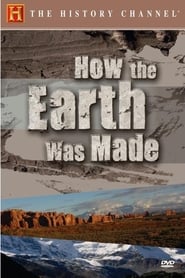
How the Earth Was Made
Download English Subtitle
Release info
Tags
English subtitle preview
The first 200 lines.
As continents shift and clash,
volcanoes erupt, glaciers grow
and recede, the Earth's crust
is carved in countless,
fascinating ways, leaving a
trail of geological mysteries
behind.
And one of the greatest is right
here, at Yellowstone National
Park in Wyoming.
This is one of the world's most
geologically active places,
shaken by up to 5,000
earthquakes every year, and
with more geysers and hot
springs than in the rest of the
world combined. Why is
Yellowstone so active? How did
it form? And why here in the
heart of the Rockies?
Scientists studying Yellowstone
are uncovering a violent past.
Carved by water, crushed by
ancient glaciers and blasted by
the biggest volcanic eruptions
ever known on the planet.
And even today, Yellowstone is
one of the most dangerous
places on Earth.
How The Earth Was Made 01x08 Yellowstone Original Air Date on March 31, 2009
== sync, corrected by elderman ==
Yellowstone National Park is one
of the most amazing places on
Earth, and it's unique.
It contains some of America's
most stunning scenery and
wildlife that attracts three
million tourists a year.
To understand where Yellowstone
came from, and why it is so
active today, we need to take a
journey back into the distant
past of the North American
continent and deep into the
Earth's interior.
Yellowstone sits 8,000 feet up
on a remote mountain plateau,
primarily within Wyoming, but
stretching into parts of Idaho
and Montana.
The park covers 3,468 square
miles, 63 miles north to south
and 54 miles east to west.
And it's on top of one of the
world's most unusual and
deadliest geological structures.
>> What's unusual about the
park? Are the wildlife unusual?
No. Is the wide open space
unusual? No. You've got it all
over the western US. What's
unusual? It's a very unusual
geology that created the park.
Yellowstone was founded as the
world's first National Park
because of the geology.
>> It's this strange geology
that attracts teams of
scientists to the park.
Their task, to piece together
the story of the incredible
processes that built this
unique, extraordinary landscape
by digging deep into
Yellowstone's past.
>> The geologic history of
Yellowstone goes back to the
formation of the North American
continent. Some of the rocks in
Yellowstone are 2.8 to 3.2
billion year old rocks, some of
the oldest in North America.
>> Only by traveling back into
the past can we figure out why
in this particular location
there are 2,400 miles of
rivers, more than 300 waterfalls
and the world's greatest
concentration of 10,000 hot
water springs, bubbling
mud-holes, gas vents and
geysers. What do these features
reveal about this landscape, and
how it was formed?
The investigation begins at
Yellowstone's star attraction,
Old Faithful.
It's a key clue to what's going
on underneath the surface.
Located in the southwest of
Yellowstone Park, the geyser
puts on an explosive display
every 90 minutes or so, blasting
out thousands of gallons of
scalding hot water.
>> Yellowstone is like no other
place on Earth, there is so
much heat coming out here.
It's really a singular
phenomenon.
Well, after about a 90-minute
nap, Old Faithful has roared
back to life. It wasn't actually
napping, it was recharging, and
the temperature of the water was
increasing, the system was
pressurizing. Beneath Old
Faithful is a rather complex
plumbing system, filled with
caverns and conduits and
constrictions.
>> Rainwater saturating the
ground around the geyser slowly
fills its underground reservoir.
Hot rocks below ground heat the
water under pressure for around
90 minutes. Suddenly, some water
spurts through a tiny, five inch
wide crack in the rocks.
This causes a drop in the
pressure within the water
chamber. In an instant,
thousands of gallons of water
are turned to steam and blasted
up into the air.
>> When the pressure builds up
enough, steam bubbles start
rising to the surface, the
system depressurizes, and a
full eruption can occur.
>> Old Faithful shows that rocks
below the surface are very hot.
Scientists find clues to a
violent past 34 miles southeast
of the hot springs, on the
shores of a circular lake
called Indian Ponds.
>> As a field geologist, my job
is to basically be a rock
detective. And so I try to
determine what their origin is
and what the history is of that
particular rock. There we go.
OK, now, in this particular
case-- Let's look at this. This
rock, when it started, it was
just a loose sand, you could
just put your fingers through
it.
>> The solid boulder is formed
from millions of individual
grains of sand.
Microscopic analysis reveals the
grains have been cemented
together by chemicals and
pressure deep under the ground.
But how did the rock get to the
surface?
Morgan has chemically dated the
rocks and discovered that 3,000
years ago, the boulder was
blasted out of the ground by
the hot water explosion of a
gigantic geyser.
>> You would see boiling water,
rock fragments and fine muddy
material being ejected up into
the air as high as 3 to 5,000
feet. And then, at some point,
material would start raining
down from this explosion column.
Now, you wouldn't want to be
standing next to one of those.
>> Indian Ponds is the crater
that the geyser left behind.
But it is dwarfed by the crater
Morgan has found at Mary Bay in
Yellowstone Lake.
Morgan has dated this geyser
explosion to 13,000 years ago.
>> So here we are in the middle
of Yellowstone Lake, and it's,
as you can see, a beautiful day
and it's nice and placid, but on
the floor of Yellowstone Lake,
it's anything but quiet.
>> Morgan's research proves that
geysers were exploding around
the lake, and even under the
water, between 13,000 and 3,000
How the Earth Was Made subtitles in other languages
More English subtitles for How the Earth Was Made
- How The Earth Was Made S02 E01-E13 COMPLETE 1080p BluRay x264 AC3 MVGroup org · 60 downloads · 2022-01-28
- How The Earth Was Made S01E13 The Alps HDTV XVID-DVSKY · 19 downloads · 2012-03-08
- How The Earth Was Made S01E13 The Alps HDTV XVID-DVSKY HI · 18 downloads · 2012-03-08
- History Channel How The Earth Was Made S01E07 Great Lakes 720p HDTV x264-DHD · 19 downloads · 2012-02-20
- History Channel How The Earth Was Made S01E07 Great Lakes 720p HDTV x264-DHD HI · 21 downloads · 2012-02-20
- How The Earth Was Made S01E06 Driest Place on Earth HI · 19 downloads · 2012-02-06
- How The Earth Was Made S01E06 Driest Place on Earth · 16 downloads · 2012-02-06
- How The Earth Was Made S01E06 720p Driest Place on Earth HI · 18 downloads · 2012-02-06
Comments
No comments yet. Be the first to leave one.