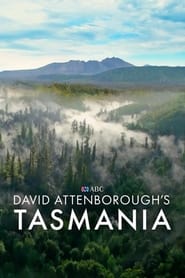
David Attenborough's Tasmania
Download English Subtitle
Release info
Tags
English subtitle preview
The first 200 lines.
At the southern tip of the Australian continent
lies a remote island.
An immense wilderness...
..divided by mountains.
It's a world of ancient forests...
..of pristine rivers...
..and a coastline...
..that's both wild and beautiful.
Its animal inhabitants are as extraordinary
as they are bizarre.
This is a land of black devils...
..and white wallabies...
..where lights dance in the southern sky
and trees tower to 100 metres.
This is Tasmania,
the weird and wonderful isle at the bottom of the world.
Tasmania is full of surprises.
Australia, yes, but with a twist.
It was once connected to the dry Australian mainland.
Today, along with its plants and animals,
it's physically cut off.
Though it lies just to the south, Tasmania is a world apart.
Its isolation and cooler climate has created a sanctuary
unlike any other part of Australia.
And a strong seasonal cycle makes life here very different indeed.
Winter means a struggle for survival.
In Tasmania's mountains there are meagre pickings on offer.
This is the last landfall heading south before Antarctica.
Cold air from further south brings snowfall and freezing temperatures
throughout these winter months.
Many animals, like this female wombat, are Australian species.
But their habits and lifestyles are most definitely Tasmanian.
Mainland wombats are largely nocturnal
but here she feeds at any time of the day,
kept warm by her thicker coat of fur.
She must take every opportunity to find food.
Winter is felt right across this island wilderness.
Even lower down in Tasmania's forests,
temperatures can fall below freezing.
The first Europeans to explore these forests
claimed they heard devils screaming in the night.
And so Tasmania's most famous animal got its name.
The Tasmanian Devil.
Primarily scavengers,
they can smell a carcass from a kilometre away.
And relative to body-size,
they have the most powerful bite in the natural world.
They can easily crunch through bone.
Devils once lived throughout Australia,
but vanished as the continent dried out and humans arrived.
Today, this is their last stronghold.
Like most Australian mammals, they're marsupials.
While they may appear dog-like,
devils are more closely related to kangaroos than canines
and, being marsupial, they rear their young in a pouch.
A few weeks ago this female gave birth to 40 young...
..each the size of a grain of rice.
Inside her pouch she has just four teats,
so only four young will survive.
A devil's race for survival begins early.
It's a tough start,
but this mum will dedicate most of her year
to looking after the four babies who survive.
She overcame extraordinary odds to reach adulthood.
Now it's her turn to raise the next generation.
Marsupials like the devils live here
because Tasmania was once connected to mainland Australia.
The island and its inhabitants became isolated some 12,000 years ago
when sea levels rose following the last ice age.
But Tasmania is a window on a far more ancient past.
Some of these forests have barely changed
since dinosaurs walked the earth, when the southern continents
were a single landmass called Gondwana.
There is still a creature here
whose ancestors roamed that ancient supercontinent.
It lives in Tasmania's rivers,
and is one of the island's longest-lived survivors.
The Tasmanian giant lobster.
Weighing up to five kilos and a metre long
they're the biggest freshwater invertebrates
on our planet,
taking some 40 years to reach full size.
Tasmania's isolation, together with the lack of sizeable predators,
may be one reason why they grow so massive.
But they're not entirely free from threat.
Tasmanian platypuses are enormous.
As much as three times heavier than their mainland counterparts.
It's an adaptation to the cooler southern climate.
This male is after tiny invertebrates
found on the riverbed, including young lobsters.
And to stay warm in winter, he must find a lot.
He needs to keep moving.
With no large predators to worry them,
platypuses here get about in an unusual way.
Only in Tasmania
does the Platypus walk between rivers in broad daylight.
Out of water it's easy to see why
the platypus was once dismissed as a fraud, the work of a hoaxer.
But down here he is in his element.
His strange assemblage of body parts soon begins to make sense.
Webbed feet help him move...
..while his otter-like fur keeps him warm.
His beaver-like tail stores fat.
But the platypus is best known for its duck-like bill...
..which it uses to find food.
Underwater, he's completely blind.
Not ideal for avoiding rocks.
But some 40,000 receptors in the bill detect electrical signals
given off by the muscles of prey animals.
With the need to eat a lot just to keep warm,
a platypus can stay on the hunt for some 12 hours a day.
Though also found on the mainland,
Tasmania's platypuses are by far the biggest and boldest.
They, like others, are adapted to the island's isolation
and cooler climate.
Lying 240km south of Australia...
..Tasmania is surrounded by a vast expanse of open ocean.
To the west, the next landfall is South America...
..thousands of kilometres away.
To the south lies the great Antarctic continent.
And as winter comes to an end, new arrivals come ashore to breed.
Penguins.
Hidden among the rocks,
this female has two newly-hatched chicks...
..but nothing to feed them.
Her partner left some 14 hours ago and is yet to return.
He's out fishing.
But, quite unlike any other penguin,
he must wait for nightfall to leave the water.
Gulls and birds of prey patrol the coast by day.
It's only safe to return after sunset.
That is because these are little penguins.
At only 30 centimetres tall,
they're the smallest penguins in the world.
And with nests several hundred metres inland...
..the only safe way to get there
is to make a dash in the darkness.
There's safety in numbers.
With hundreds of nests in the colony,
the night soon fills with the calls of returning adults...
..the sound of early spring on Tasmania's coast.
This will be a welcome meal for the newly-hatched chicks.
The little penguins' presence
is a reminder of Antarctica's proximity.
But, while early spring brings them ashore to breed,
it also brings wild and unpredictable weather.
Prevailing winds carry most of the bad weather from the West...
..and Tasmania's mountains cause much of the rain
to fall on the western half of the island.
The result divides Tasmania in two,
with a wet western side and a dry eastern side.
Some western areas are among the wettest in all of Australia.
It rains here nearly every day.
And all the water supports a surprising spectacle.
Caught in a bizarre trap, these insects are doomed.
How they got stuck only becomes apparent as night falls.
These strange lights belong to the larvae of a type of gnat.
The light is formed by a chemical reaction
in the larva's abdomen,
and can be turned on and off at will.
The sticky threads hang from its silk and mucus-laden nest.
Insects drawn to the light are ensnared, then devoured.
Each glow worm's thread is made up almost entirely of water,
so the high rainfall in Tasmania's wet west
provides ideal conditions.
And the rain that supports these tiny glow-worms
also sustains one of the largest organisms on the planet...
..mountain ash.
They are a type of eucalyptus...
..fast-growing trees that evolved on the dry Australian mainland.
In Tasmania they become giants.
Strangely, for trees living in a wet forest,
they need fire to reproduce.
The mountain ash stores its seeds in small pods...
..which are released as the pods burn.
Beneath the ash, the seeds live on,
quickly germinating without competition from other plants.
This makes sense in a dry habitat with regular fire...
..but not in Tasmania's wet forests.
Young mountain ash can grow at a rate of several metres a year.
All that holds them back is the next fire or a lack of water...
..and that is the secret behind their staggering height.
In Tasmania's damp west, fire is so infrequent
these trees keep growing for centuries.
Those standing in this valley all germinated
following the same devastating fire 400 years ago.
Today they reach almost 100 metres into the sky.
They may have evolved on the dry Australian mainland,
but it's Tasmania's wet forests that have turned mountain ash trees
into the tallest flowering plants on Earth.
The moisture-laden air that blows in from Tasmania's west
brings several metres of rainfall each year.
Although it can rain most days,
winter and spring are the wettest times
and seasonal waterfalls burst into life.
All who live here must adapt
to the regular downpours and cooler temperatures.
And like so many of Tasmania's species,
their adaptations set them apart.
It may not look like it,
David Attenborough's Tasmania subtitles in other languages
Comments
No comments yet. Be the first to leave one.