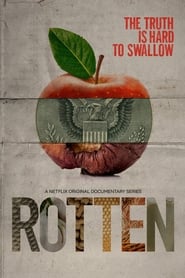
Rotten
Download English Subtitle
Release info
Tags
Download English Subtitle Files for Mobile (6)
English subtitle preview
The first 200 lines.
It's a 21st century success story like no other.
We now live in a global society
where we can have avocados 12 months of the year.
Having that makes people eat them,
makes people like them, makes people love them.
It was a fatty and indulgent food.
Now, it's literally looked at as a health food, a superfood,
a food to be eaten every day.
Each year, more than 11 billion pounds
of avocados are consumed around the world.
The avocado is a financial powerhouse
driving a state-of-the-art Mexican industry
worth more than two and a half billion dollars a year.
I remember we used to sell
a kilo of avocados for two or two and a half pesos.
And now, we can sell one for as high as 80 pesos.
But the profits are both a blessing and a curse to their growers.
There are any number of stories about kidnappings
to force the owners to pay the extortion fee.
This was no longer a quote-unquote "victimless crime."
This was about extracting money from local economies.
The avocado is a money maker
and a magnet for extortion, murder, and oppression.
The whole population was scared to death.
And people were afraid, just waiting to see who would be next.
In Chile, the avocado thrives,
but only by drinking up the country's scarce water resources.
We have been attacked. We've had death threats since 2017.
And indeed, there's a cartel.
There's a water and avocado cartel.
It's called "green gold,"
and that means men will do anything to get their hands on it.
This is how the village
of Quebrada de Castro gets just about all of its water.
Brought in by truck.
The villagers use this water for washing, for cooking, for drinking.
Hi, sir. How is it going?
Doing well, thank God. Sign here, please.
Okay, Zoilita, Have a good day.
When do you come back with water again?
Not until next week. Until Monday.
I don't know what happened with the emergency delivery
you used to get on Thursdays.
- Okay, I'll deal with it. - Because the tank is almost empty.
Yeah, it's almost empty.
Bye, Zoilita. Have a good day.
Yeah, you too.
But it wasn't always this way.
Until 2008, the village water came from a local spring and canal.
That water is no longer there.
There's no more water in the rivers or the canals,
so everything got dry.
We don't even have drinking water.
Central Chile is undergoing several years of drought.
But it's not the drought that stole the water from Quebrada de Castro.
This village is parched because of a worldwide feeding frenzy,
the avocado boom.
The fruit is so critical to Chile's agriculture
that it has taken precedence over the lives of actual Chileans.
How did this happen? How did the avocado become so powerful?
The trouble started in the world's fifth-largest economy,
a far-off place called California.
Do you have the kale for Be Wise?
Be Wise kale.
Uh, Black Beauty Zucchini, we need two.
All right, that's it.
Noel Stehly is a second-generation farmer
in Valley Center, California.
His farm helped start the avocado's climb
from local flavor to international heavyweight.
My father bought here
in the early '60s, about '62,
and moved his farm here from Anaheim in '64.
He was an orange farmer turned chicken farmer.
As the housing boom moved into the flatlands of Anaheim,
my dad needed to move out,
'cause people don't like chickens, and chickens stink.
Avocados are very fickle.
They like good whether. They like that 72 degree, humid,
right above the beach in Hawaii.
When it drops below 30 degrees,
avocados, after four hours at that temperature of under 30,
are damaged.
That's why when you're out here on the farm,
you'll look at these mountains and go,
"Why don't you plant the flatland? Why do you plant up these hillsides?"
The answer to that is that the cold air falls to the valley floor.
Around 95%of American avocados are grown in California,
which has the right hills and pockets of exactly the right climate.
Close to two-thirds of California's avocado acres
have been concentrated in just two counties.
It is grown under certain favorable circumstances,
and an exceptionally fine sector for this has proven to be San Diego County.
Here the conditions seem to be just right
for the production of this fruit on a large scale.
We have here a special brand of avocado known as a Fuerte.
These are a very delicious brand of the avocado.
Farmers detested the common nickname, alligator pear.
Avocado is derived from "ahuacatl,"
the Aztec word for testicle.
But it's still catchier than alligator pear.
The business grew slowly but steadily through the 20th century.
As the national awareness of healthy foods grew,
the Fuerte avocado turned out to be nutrient-rich
and full of the sort of ingredients doctors approved of
like potassium, fiber, and monounsaturated fats.
In the 1970s,
avocado production started to grow in Southern California,
and there was money to be made.
My dad started planting acres, and acres, and acres of avocados.
Growers promoted the avocado as a luxury,
an exotic West Coast ingredient for the sophisticated home chef...
and it worked.
We had thousands of trees in a nursery
that my brothers, and I, and my sisters pulled weeds
in those little pots every day
and grafted those trees,
and got them ready to go out and be planted
on these hillsides as mature trees.
It was just what we did.
You had seven kids, that was part of your workforce.
That was summer vacation for us.
We got to go on a family trip in the middle of the summer,
but other than that, we worked every day.
The 1970s were also the point
when the Fuerte avocado was overtaken once and for all
by its upstart rival, the Hass.
The Hass had appeared back in the late 1920s.
A new variant born by a tree in the backyard
of California postal carrier, Rudolph Hass.
It was creamier than the Fuerte.
With its thicker, pebbly skin, it survived the shipping process better.
It had a longer growing season,
and its smaller size meant consumers finished it faster,
before it could spoil.
It traveled well. It packed well.
It was a good piece of fruit with a decent flavor
that people could latch onto,
and it could get to them in a size that made sense.
The grafts from Rudolph Hass' so-called mother tree
turbocharged the industry.
The Reed avocado is my favorite,
but reality is you can get 28 in a box.
A big Hass avocado, you get 48 of those in a same size box.
So, for the retailer,
having 48 pieces to put out on the table at a buck and a half
versus 20 pieces at a buck-90,
it just made more sense to have the Hass.
But just as the avocado was slipping into the mainstream,
a new image problem.
In the fat burning, sweat-loving 1980s,
the avocado was suspiciously oily and creamy.
Fortunately, the industry had just created the California Avocado Commission,
which took a percentage of every farmer's income
to protect the avocado's public image.
And protect it, they did.
This body needs good nutrition,
including vitamins A, B-1, C, E,
potassium, niacin, iron,
and this body gets them all in California avocados.
Hmm, that avocado is healthy.
It's a healthy fruit. It's a healthy fat.
These were studies that were paid for by avocado growers
and by the Avocado Commission.
On United Airlines Flight 22 to New York,
the passengers aren't getting fat at all
on this delicious lunch of fillet mignon and avocado salad.
The avocado industry grew and grew.
So in the '70s and '80s, avocados were taking off everywhere here.
Growing on every hillside, everywhere.
Between 1970 and 1985,
the number of California farm acres planted with avocados nearly quadrupled.
The value of the state's crop soared
from under $25 million to $162 million.
There were a lot of doctors, lawyers,
just people that had a job, didn't want to live in the city
saw an opportunity to buy a piece of property,
and saw the neighbor had avocados, and started talking, and found out,
"Well, this is a way I can invest in my property also,
and it can pay me a little bit back."
Okay. Well, hey, I just wanted to make sure everything got done right.
Okay.
Jim Shanley was a commodities trader
in the livestock feed business until he retired in the early 2000s.
This is a property that I bought in 1998
specifically for the purpose of creating a farm
to provide a retirement income.
I had a very successful business career,
and I was doing well enough that I thought,
"I ought to get a beach house. You know, this is cool."
And then I had sort of an epiphany
that it would be a couple million dollars sitting on the beach,
but not really anything terribly productive except recreation,
and I, furthermore, realized
that the water here is colder than I want to get into.
So I spend my time looking at the water, not being in it.
Uh, so, it didn't need to be beachfront.
In 1998, avocado farming looked like a good investment.
In just over a year,
the value of an acre of avocados surged by 27%.
Rotten subtitles in other languages
More English subtitles for Rotten
- rotten s02e03 720p WEBRip X264-PHENOMENAL · 16 downloads · 2019-10-06
- rotten s02e02 720p WEBRip X264-PHENOMENAL · 23 downloads · 2019-10-06
- Rotten S01 1080p WEBRip x264-SERIOUSLY · 36 downloads · 2018-01-31
Comments
No comments yet. Be the first to leave one.