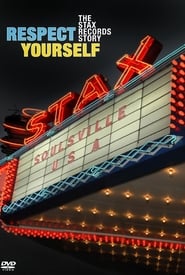
Respect Yourself: The Stax Records Story
Download English Subtitle
Release info
Tags
English subtitle preview
The first 198 lines.
It is an epic story.
That which gave it life nearly killed it, more than once.
Innocence, naked innocence.
Good and evil, light and dark.
Black and white.
In Memphis in the '60s, people who couldn't
dine together, joined together to make music.
Soul music. At a place called Stax.
We're rolling. Take one.
It was a happening, a cosmic happening.
The door opened, the wind blew in and we were smart enough not to fight it.
We were doing the kind of music that was unheard of.
Raw, gritty, gutsy soul.
We lived every day as though this was the last day we were going to get to do this.
We knew we had something - we just didn't know what.
God almighty! How many hits did we cut?
Stax had the funk.
Stax had the funk.
It didn't matter about the colour of your skin.
We weren't in there doing things to prove we were black and they were
trying to prove they were white, we were in their
proving that music is the sentiment of a man's soul.
You had segregation in the City of Memphis but you
could come in to the doors of Stax Records, where you
had freedom, harmony, people working together and
not making a difference between black and white.
After Dr King was assassinated, things began to deteriorate.
We were reduced to our irreducible essence. Naked against the world.
We're still somebody.
So much blood, sweat and tears went into that company, from so many of us.
You've got an environment of camaraderie, the spirit of love and
then you're going to let some people come, guns
strapped on their sides and push people around.
There was a hole in the boat that wouldn't
have sunk the boat without outside influences.
Truth crushed to the earth shall rise again.
Once you're part of the music,
it's till you die.
- Stax. - Stax. - Stax Records. - Stax.
Stax Records.
I am somebody.
Jim Stewart was a banker by day and a country fiddle player at night.
His sister Estelle was a former schoolteacher whose
main exposure to music was through her teenage son.
In 1960, they pooled their money
to rent an old movie theatre in a black Memphis neighbourhood,
hoping to record country songs.
Stax Records was an accident.
Jim Stewart moved into this theatre
and nature threw him a curve.
And a flower garden started to grow,
composed of many different colours and they all came in.
My sister mortgaged her house
to set up the recording studio there,
in that building, which was on McLemore.
Word got around the neighbourhood and we started getting people coming in,
musicians, singers, whatever.
They would come to the studio
and we'd listen to them - talk with them.
Robert Talley came by my house and said there was a new recording studio.
Over down McLemore and College.
He said, you want to go?
And I said, yeah, let's go see what it's like.
And that - it was just that simple.
When the flowers began to play their music
and to demonstrate their creativity, Jim said, I could get into this.
And Estelle said, welcome.
HE PLAYS RIFF FROM "CAUSE I LOVE YOU"
That's the part I play on the baritone sax.
I told them that day I could also play the piano.
He was just a kid, about 15 or 16 years old.
We needed a baritone saxophone, he said, I can play the baritone.
I knew he could play guitar and trombone, all of this.
So we gave him the baritone sax and he had that one line...
At that time, really,
I thought nothing
about white folk.
I think that all white folk are the same.
I'm trying to get my talent out there and they were
the ones to give me that chance to expose my talent.
So, I shared it, that black-white thing at Stax.
We never looked at colour.
We looked at people, their talent.
What Stax was doing, right there in Memphis, which
was right there at the crossroads of the south,
the north, the black, the white, and the blues and the folk,
was really the axis by which everything turned.
Now if you can imagine,
nobody's ever heard R&B music before,
white kids had never heard it. And you can imagine what that did to us.
It was like going to another planet, a real good planet, you know.
The band that I had out of high school, all we wanted to play was rhythm and blues.
This guy come up to me,
that I didn't have any classes with, so I didn't really know him.
He introduced himself and "Hey man, I hear you guys have a good band."
"I'd like to be in your band."
And I said, well, we're not looking for anybody, what you do?
He said, I play saxophone.
I said, how long have you been playing? He said,
I've been taking lessons for three months.
Somewhere in that conversation he told me his uncle had a recording studio,
which actually turned out to be a couple of microphones
and a machine in a garage, but hey, in those days it was a recording studio.
Everybody in that band loved the same music,
in the Mar-Keys, everybody loved black guys' music.
Here was a bunch of white guys
trying to do a bunch of black guys' music.
But we started getting some attention and,
and we started to get some notoriety.
The first time I walked into a recording studio,
I cut an number-one record and that was Last Night.
You hear fresh people having a great time, they got
invited to a party they didn't even know existed
and they were paying us and we just couldn't
get over it how much fun we were having.
Poor old Jim, it was life and death to him.
He had to sell records and get that groove, man.
Miss Axton felt Last Night was a hit record and nobody else did.
And they didn't want to put it out.
She got her way about it and within three weeks it was through the roof.
Atlantic Records out of New York heard about Cause I Love You,
they purchased the master and
from there it just sort of mushroomed.
Maybe it was some chord changes, maybe it was a lick,
maybe it was a song,
but they started playing it.
So, my God, this is fantastic.
And I made a distribution arrangement for it.
'When I came down here'
and was listening to the radio and turning on TV,
it was like turning back the hands of time 15 or 20 years
from what I was accustomed to in New York.
People down here were living like in this little sheltered world
and they were growing up in an era that had already gone by.
I couldn't conceive of what would be here, I couldn't
imagine when I pulled up in front of a theatre with
a record store in what used to be the lobby, I thought,
well, this has got to be something else. And it was.
Estelle Axton had turned the theatre's
concession stand into the Satellite record shop,
welcoming anyone who wanted to buy something or just listen.
Her store soon became THE neighbourhood hangout.
During the summer time she'd put a little speaker thing out there
on the door so you can hear it.
And we'd dance out on the sidewalk.
Before that I had to drive twenty minutes to Sears to
look at records and all the records out there were only country records.
Mrs Axton had a pulse on the creativity.
She knew what the dance beats were, she knew what sound was popular back then.
She wasn't involved in production in terms of being in the studio,
but all of her influence went on in the record shop.
Hey, you guys need to listen to this, this is the hot new dance,
this is the hot beat, this is the kind of song we're going for.
That's how you learn in the music business.
You talk to that person that's buying that product.
And that means you know what to make.
When I came to Memphis, everything in Memphis
was segregated.
There was not one thing integrated.
Nothing.
From the cradle to the grave was segregated
in Memphis, Tennessee, 1959 when I moved here.
And I never really understood why the graveyards had to be
segregated because dead people get along well, they don't bother nobody.
I found my solace, if you will, when we could go inside of Stax,
you know and those doors closed and not be a part of that.
At 926 East McLemore, forget skin tone.
The only tone that mattered came out of your instrument.
Two white Mar-Keys and two black neighbourhood musicians became
the greatest recording unit in soul music, Booker T and the MG's.
The one unit
which recorded just about all of the Stax product,
Steve and Duck and Booker T and Al Jackson.
I knew Cropper because he was the clerk at Satellite
and he waited while I listened to tons of records for hours.
I wound up doing odd jobs like marking tapes and sweeping the
floor and cleaning the bin and doing whatever I could.
Every now and then I'd hear music come from behind the curtain.
I knew there was a theatre back there. I didn't know there was a recording studio.
That was the blues that we were playing, that we
thought would make a record that would sell for us.
That was the one we were excited about.
Jim said if we decide to put this out have you got anything you can put on the B-side?
So I happen to remember a riff Booker played me a week or two
prior to that session - it was a pretty good riff.
I went through the front doors of the theatre into the Stax studios
and around to studio A and opened the door.
And I witnessed something that I had never experienced before,
that these two black guys and these two white guys
were playing music together and I was awestruck.
Booker is the musician in the group, always has been.
Duck and I we know how to pat our foot,
and we know how to dance, we can keep the groove going,
Booker can do that too but he's the musician, always has been.
And Booker would look at me sometimes like,
you don't know that?
It wasn't about the notes of the music or the
melody of the song, it was about the groove.
Comments
No comments yet. Be the first to leave one.