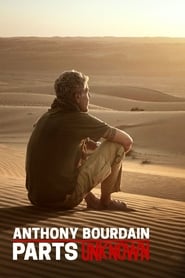
Anthony Bourdain: Parts Unknown
Download English Subtitle
Release info
Tags
English subtitle preview
The first 200 lines.
I've been here before,
this coastline,
this city.
I was looking for something then,
but instead I found this.
Uruguay,
the tiny, underappreciated South American country
tucked between Argentina and Brazil.
Only 3 million people live here,
half of them in the capital city of Montevideo.
I love this city. I love this country.
I mean, there's a vibe here that just...
It's unlike any other place on the continent.
It's the opposite of New York in a lot of ways.
Like, people aren't pushy here, you know?
In New York, everybody's, like, sort of
hungry and pushing and moving.
Here it's extremely laid back.
The only competition is soccer. Well-
- That's the only time that you get competitive,
and it gets extreme.
Ignacio Mattos is the chef/owner
of three very successful restaurants in New York City,
Estela,
Cafe Altro Paradiso,
and Flora Bar.
He's been a New Yorker for the past 12 years,
but he comes from here.
Uruguay is a pretty chill and relaxed place
where you just can disconnect from everything.
For me, it's a melting pot.
It's mostly Spanish and Italian immigrant food.
Bar Arocena in Montevideo's
Carrasco neighborhood specializes
in Uruguay's unofficial national sandwich,
the legendary Chivito,
24 hours a day,
seven days a week, since 1923.
A prince, a king, a Gargantua among sandwiches,
this terror-inspiring heap of protein
is built out of steak, ham, bacon, cheese,
hard-boiled egg, mayo, and garnishes.
That's, like, a perfect sandwich.
Now, last time I was here,
I have to admit that after about six days
I would've killed somebody for a vegetable.
I mean, I didn't see a single...
You're gonna feel like that very soon.
"Nacho," as he's called by nearly everyone,
started his career at the age of 17
with a master of fire and burning wood,
Argentinean chef Francis Mallmann,
and stayed with him for ten years before moving to the U.S.
Working for Francis Mallmann, I felt at home.
They were just a bunch of outsiders
that they found a place where they belonged,
you know, finding this new culture and, like, new flavors.
- How often do you come? - Every two years.
And how long do you spend here?
I usually spend a week.
- Why so little? - We live in New York.
You know what I'm talking about.
- Yeah, I do. - I mean, I love it here,
but it's... you know, you have to commit to it here.
But, you know, you were born here.
You spent your childhood here.
Do you feel the way I feel about this place?
It... it is special, right? I-I think it's special.
But I'm so far detached from it...
Right.
But I can go back to that,
and I can just connect.
Well, we'll see. Over the next few days,
we'll see if you can just slide right back in.
Oh, we will. Oh, we will.
There's no other way out. There's no way around it.
You have to.
Things to know about Uruguay.
It's progressive. Weed is legal.
Abortions are easily accessible.
Gay marriage, universal healthcare,
free education including college,
and democracy is no joke here.
96% of eligible Uruguayans voted in the last election.
Compare that to barely 60% here in the U.S.
There's something really special about this place.
You like it?
It's really one of my favorite countries.
It's really... Amazing.
Many Uruguayans could say that it is the worst place of the...
Well, a lot of it... That's weird.
Some of the Uruguayans I've spoken to
are very ambivalent... Yeah.
- About your country. - "I like it, but you know..."
And this I don't really understand.
I meet Carina Novarese, a journalist and editor
with the newspaper "El Observador"
at Escaramuza Cafe and Bookstore.
I think this thing that Uruguayan has
that is kind of pessimistic
and is always... Sometimes complains too much
about what we have comes from before.
1930s, '40s, and after the Second World War,
this was one of the Americas as they used to call us.
There are few reminders of colonial days in Montevideo,
but plenty of evidence that this is the chief city
of a dynamic and progressive country.
It was a pretty cool society.
Healthcare was free, cradle-to-grave.
Uh, education free. Also a very big medium class.
That is very important for Uruguay.
- Right. - That began to change
after the '60s and '70s.
One could say that the prospect of
socialist, or God forbid, communist movements
in Latin America in the '60s
was an area of great concern for the U.S.
and its more authoritarian-leaning
allies in the region.
So the emergence of the radical National Liberation Movement,
known as the Tupamaros, was cause for alarm at the CIA.
A lot of things happened in the '60s
in the context of Latin America.
A lot of students, young people,
were very active in politics.
There weren't the low classes, as you could say.
They weren't the poor people who were doing this.
These are middle-class kids and highly radicalized.
Yeah. At the beginning, I think,
they really thought they could change the system.
With covert and overt support by our country,
a state of emergency was declared,
and a right-wing dictatorship
grabbed hold of the instruments of power
launching a period of repression that
lasted from 1973 until 1985.
Supported and often guided by CIA officers
trained in what we call these days
"enhanced interrogation methods,"
some of the most brutal bastards
in the ugliest military juntas on Earth
crushed minds and bodies in cells across Latin America.
What kind of people were finding themselves swept up?
- Especially teachers. - Teachers?
- Professors from university. - Troublesome intellectuals.
Sometimes lawyers or...
Something like 3% to 5% of the entire population,
uh, had gone through the prison system.
I mean, we're not talking about incarceration.
We're talking about... No, no, no, no.
They were tortured and then
kept inside a prison system
that was specifically designed to pretty much destroy them.
In the mid 1980s, the people of Uruguay had had enough.
Massive demonstrations and strikes finally
forced the government to hold elections,
and the military was swept from power.
We're now a democratic country since 1984.
- And how's it going? - I think it's going well.
We have troubles. We are in Latin America.
We'd like to believe that we are a European country.
We are not.
- But are you optimistic? - I am.
I am.
I don't see, like, a huge crisis coming.
But also when they came, you never realized before too.
When people think of this
often overlooked little country,
if they think of it at all, they tend to think of it
patronizingly as Argentina's little brother.
Not so.
And that attitude pushes people here
to think of themselves in many ways
as existentially in opposition
to their bigger, louder neighbor.
Where were you born? Are you from Montevideo?
No, no, I'm from Argentina.
Is it a big difference culturally,
Argentina and Uruguay?
Here, if you're a little bit courageous,
then you made it, you know? It's a scene here.
Like, to be flashy, it... it's a scene.
To be successful, it's not something that is one scene.
You got to do it quietly.
There's a saying, " ."
It means "Stay in the small thing," you know?
Right..
It's something that defines... Right.
Uruguay in a way.
Lucia Soria is the chef and owner of Jacinto
in Montevideo's old city.
She worked with Nacho back in the Mallmann years.
What was it like for a woman
working in the restaurant industry in the early 2000s?
I was very lucky because Francis, he had, like,
this army of women... no? Around him.
You were surrounded by women from the beginning?
Yes. Yes.
Is that an unusual situation in Uruguay do you think?
- I mean... - I'm not asking you, man.
Anthony Bourdain: Parts Unknown subtitles in other languages
More English subtitles for Anthony Bourdain: Parts Unknown
- Anthony Bourdain goes to Iran 1080p H 264 (moviesbyrizzo documentaries upl) · 66 downloads · 2020-12-27
- Anthony Bourdain Parts Unknown S06E02 Marseille 1080p NF WEB-DL DDP2 0 x264-NTb · 138 downloads · 2020-05-07
- Anthony Bourdain Parts Unknown S06E01 Cuba 1080p NF WEB-DL DDP2 0 x264-NTb · 136 downloads · 2020-05-06
- anthony bourdain parts unknown s12e07 lower east side 720p AMZN WEBRip DDP2 0 x264-AJP69 · 99 downloads · 2018-11-13
- anthony bourdain parts unknown s12e06 behind the scenes 720p AMZN WEBRip DDP2 0 x264-AJP69 · 79 downloads · 2018-10-29
- anthony bourdain parts unknown s12e05 far west texas 720p AMZN WEB-DL DD+2 0 H 264-AJP69 · 90 downloads · 2018-10-22
- anthony bourdain parts unknown s12e04 bourdains impact 720p AMZN WEBRip DDP2 0 x264-AJP69 · 80 downloads · 2018-10-15
- anthony bourdain parts unknown s12e02 asturias spain 720p AMZN WEBRip DD+2 0 H 264-AJP69 · 76 downloads · 2018-10-09
Comments
No comments yet. Be the first to leave one.