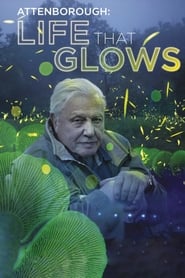
Attenborough's Life That Glows
Download English Subtitle
Release info
Tags
English subtitle preview
The first 200 lines.
As dusk gives way to twilight,
the encroaching darkness is lit by life.
These dancing lights around me are produced by fireflies -
creatures that have the strange ability to produce light.
They bioluminesce.
And fireflies are not alone.
Scientists are finding ever more strange and wonderful
glowing life forms all around the world.
Living light has always fascinated me.
And the discovery of more and more luminous creatures raises more
and more questions.
Why? What is the light for? And how is it made?
In recent years,
scientists have begun to find answers to those questions.
And in doing so,
they've taken us into a world that is utterly unlike our own.
However astonishing these images look, they are all real.
With help from new cameras, one designed just for this film,
we can reveal this extraordinary phenomenon
as it has never been seen before.
Bioluminescence holds many mysteries.
But we do know that fireflies use it to attract the opposite sex.
Each species has its own flash code and WE can join in the conversation.
I'm going to use this rod to fish for fireflies.
It's the actual rod used by the scientist who was the first
to decipher the various call signs of fireflies.
And there are 15 different species, at least, around here.
Each with its own signal.
Biologist Jim Lloyd used the rod to imitate male fireflies
and so decode their various light patterns.
He discovered that the call sign consisted partly in
the actual flight path of the species concerned.
There are, for example,
some fireflies which move steadily horizontally, like that.
And there are others which
turn their light on as they climb, like that.
But in addition to the flight path, they flash a particular signal.
It's rather like Morse code.
So I should be able to use this light myself.
There is a female amongst these leaves here,
which will emit a single flash.
And the male of her species waits for precisely four seconds,
and then answers back with a flash.
Whereupon she immediately gives another flash, like that.
And the male then knows that he is going to be a welcome visitor.
But the message has recently been shown to be more than
a simple signal for sex.
A female judges the quality of a male's genes
by the precision of his timing and the brightness of his light.
She encourages her chosen suitor by directing her lanterns towards him.
And it seems this male sent out all the right signals.
We are now discovering that
this language of light even has local dialects.
Throughout the summer months, from Florida to southern Canada,
gardens, fields and forests sparkle with these mating messages.
Time-lapse photography reveals
the extraordinary extent of this courtship.
Some species flash only at dusk.
Others prefer the forest canopy for their light show.
Some species make their flashes more conspicuous by choosing
the very darkest places in which to display.
I can see virtually nothing here, except the flashes.
And this particular species has another trick, too.
It synchronises the displays.
Individuals flash together.
Each individual is triggered by its neighbour,
and soon waves of light pulse through the woods.
Speeded up, the wave becomes clearer.
Between the waves,
an impressed female can respond with two flashes of her own.
And the males home in on her.
But she can only choose one.
These displays peak for just a few nights in June,
which could explain why they were only recently discovered.
Why they all flash together is still a mystery.
It's surprising how little we know about bioluminescence.
Fireflies are perhaps the best understood
but some living light is still very perplexing indeed.
With dawn, the sexual signals of the fireflies are drowned
by the increasing flood of light.
The flies take refuge in the undergrowth,
away from the sharp-eyed predators of the day.
But right now,
Iight is being produced by life in the soil under my feet.
The threads of certain fungi form a glowing underground network.
But why would a fungus shine in the permanent darkness of the soil?
We simply don't know.
And for years, fungus bioluminescence,
Iike much other living light, was written off as a beautiful
by-product of evolution with no function.
But some species only glow above ground and only at night,
when their intense green light is very obvious.
If it was just a biochemical accident then surely
they would shine all the time.
The glow certainly attracts insects
and the theory is that these visitors spread the fungal spores.
So here, too, just as with fireflies,
we're learning new things all the time.
But much living light remains a beautiful enigma.
And throughout history,
stories of bioluminescence were often thought to be pure fiction.
In the 1870s, Jules Verne, the French science-fiction novelist,
wrote this in his book, 20,000 Leagues Under The Sea.
"At seven o'clock in the evening, our ship, half-immersed,
"was sailing in a sea of milk.
"At first sight, the ocean seemed lactified.
"The whole sky seemed black by contrast with
"the whiteness of the waters."
Jules Verne may have based this story
on a myth told to him by sailors.
But in 1995, the captain of a British vessel wrote
a real-life account in his ship's log.
"At 18:00 hours on a clear moonless night,
"while 150 miles east of the Somalian coast,
"a whitish glow was observed on the horizon.
"And after 15 minutes of steaming, the ship was completely surrounded
"by a sea of milky white colour with a fairly uniform luminescence.
"And it appeared as though the ship was sailing over
"a field of snow or gliding over the clouds."
Reports like this are rarer than the supposed sightings
of the Loch Ness Monster.
And there was no photographic evidence.
Some scientists, including marine biologist Steven Haddock,
were curious, and sought confirmation from above.
We wondered if you could find one of these ship reports where
they record sailing through one of these milky seas,
and actually find the corresponding satellite data that cover
that area at that same time.
So we looked at the satellite from the ship report in 1995
and it was somewhat of a eureka moment.
We cleaned up the noisy sensor image from the camera,
we mapped it onto the ship track, and this 300km feature
emerged on the map matching exactly with what the ship had reported.
So it was really an amazing moment.
We were able to document the full extent of the milky sea over
three successive nights as it rotated with the currents.
So satellite images from the space age validated
a piece of maritime folklore.
On rare occasions, the oceans do glow.
But what was causing a glow
so bright that it could be seen from space?
The answer can be found at the back of a neglected fridge.
Left for a couple of days, this sea bream starts to glow.
The fish itself has no light- producing ability.
The glow is, in fact, produced by bacteria that are found
in almost all seawater when they start to feed on decaying fish.
On rare occasions when currents and temperatures cause a large bloom of
algae in the ocean, these very same bacteria also feed on dying algae.
Once they reach a critical concentration,
their secretions trigger others to glow.
They were glowing in such numbers that they can be
detected by a satellite in orbit.
Bacteria are among the most ancient forms of life,
so they may have been the very first living things to glow.
But why they did so is still debated.
Today some animals have stolen the genes of the bacteria,
and incorporated them into their own DNA.
Others have simply kidnapped the bacteria themselves.
These lights are made by captives,
which are farmed in special organs below the eyes of flashlight fish.
They have harnessed the bacterial glow for many purposes.
We can only see them because our special cameras use infrared light.
But to a predator, the fish look like this.
A confusion of lights which makes it hard to pick a single target.
Just before they change direction, the fish give a quick blink.
These lights have other functions, too.
They act as headlights to illuminate the sea floor
as the fish search for food.
They may even help a fish to flirt with the opposite sex.
Unlike their captive bacteria,
flashlight fish use living light for functions we now understand.
But how is the light made?
While it might appear magic,
it's actually a straightforward chemical reaction that happens
when a substance is mixed with a particular enzyme, like this.
Hey, presto, light.
The exact chemical formula varies according to the species.
The reaction is very similar to that with which bacteria produce energy.
Indeed, it could well be that the first luminescence was
a by-product of that process.
An evolutionary accident that has been co-opted by the fish to
help them survive.
The chemicals involved are quite harmless.
In fact, you can actually buy a lollipop which,
when you put it in hot water, glows.
But to be truthful, I don't really find that very appetising.
Perhaps, at the back of my mind, there's a memory of those
bacteria on rotting fish, which tells me
that things that glow aren't all that nice to eat.
Bacteria may have been the first living lights,
but then many other organisms also developed the ability.
From jellyfish to fungi and insects,
bioluminescence has evolved independently over 50 times,
and is now produced by thousands of different species.
And defence seems to be a common function.
Millipedes are found across the globe.
Many are active during the day,
scuttling across the damp forest floor.
They can do this with impunity, because they are deadly poisonous.
Their bright colours are a clear message to predators -
Attenborough's Life That Glows subtitles in other languages
More English subtitles for Attenborough's Life That Glows
- BBC Attenboroughs Life That Glows 720p HDTV x264 AAC MVGroup org · 50 downloads · 2016-05-12
Comments
No comments yet. Be the first to leave one.