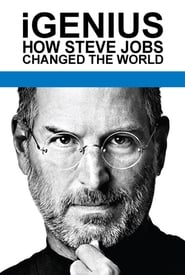
iGenius: How Steve Jobs Changed the World
Download English Subtitle
Release info
Tags
English subtitle preview
The first 200 lines.
He changed our lives.
Steve Jobs had a vision.
Like the world lost a John Lennon.
He demanded perfection.
He could rip his people, be tough to work for.
And led a technological revolution.
The personal computer.
A light bulb goes off
and he said, wow, I can put computers on every desktop.
The iPod.
When they first came out, people were like, oh, my God,
they're so sleek and sexy.
It was new, small.
I have to have it.
The iPhone.
I have an iPhone which is an extension of me and I love using it.
I was able to read text messages and send them.
The iPad --
People didn't know they wanted it or needed it and it turns out they did.
It's kind of like, well, we're going to make a portable music player.
I need that.
We're going to make a phone, I need that!
We're going to make a toaster, I need that!
I'm Adam Savage and I'm Jamie Hyneman.
We're at the computer history museum in Mountain View, Ca.
You don't have to be a tech geek to appreciate the shrine
to the technology age.
It helps.
This is the perfect place to remember one of its founding gurus.
Because it would look a whole lot different around here
if Steve Jobs hadn't been around.
We're going to look at Steve Jobs' legacy in terms of things and ideas.
Ideas that will spur innovation far into the future.
And his big idea?
Right from the very beginning, was to change everything!
Do you have to be a difficult person?
A tough person to be a genius?
I don't know the answer to that.
He was very dictatorial.
He was very tough.
He had a very clear sense
of his own guts, his own instinct.
He was abrasive.
He was brash.
He thought he knew everything.
But the product he created were not elitist even though they were super cool.
All around the world people love these products.
It takes a tough man to make a tender bird.
Say what you want, but Steve Jobs was "the guy"
who envisioned a computer on every desk.
An earbud in every ear
and a device that would take multitasking to a whole new level.
He didn't just invision envision,
he made it happen!
...and we are calling it iPhone.
He was about humanizing technology in a way that made it extraordinarily easy
and it was a joy and pleasure to use.
His gut instinct was his genius.
And it's absolutely unteachable.
It's rare when someone can affect your life in such a personal way
and you don't even though them at all.
Genius is not about making complicated things.
It's about making complicated things very simple.
Making things simple and beautiful,
that was the genius of Steve Jobs from the very start.
He was born in 1955 to a pair of unmarried graduate students,
intellectuals who put him up for adoption.
He grew up with a loving, working-class couple in California's Silicon Valley.
Just like Harry Potter, Steve Jobs realized that he was a wizard,
even though he was being raised by Muggles.
Hybrid, one part geek and one part hippy.
It was the 60s.
When he was a teenager, he met a fellow techy, a hacker named Steve Wozniak.
They used the hours to tinker away with electronics in the Jobs' house.
I grew up in Palo Alto, not far from Steve Wozniak and Steve Jobs hung out.
It's legendary.
There's so many inventors in the bay area who start off in mayor mom's garage.
In 1972, Jobs headed to Oregon where he attended a small liberal arts college.
Turned on, tuned in and dropped out.
He listened to the Beatles, Bob Dylan, and took LSD and went to India.
When he returned to Silicon Valley in 1975 it was the dawn of the computer age
and Steve Jobs had a vision.
He ultimately hits upon this idea
that computer technology can be the source train seven dense,
that it can transform our lives,
that it can help us live on a different dimension.
But in the here and now of the mid 1907s computers were prehistoric and enormous
into back in the '60s and '70s, see what the computer looked like.
The size of an office.
Only the military and large banks could own one of these things.
The very first Steve Jobs' computer
was the brain child of his friend, Steve Wozniak.
Wozniak did the wiring and Jobs did the dreaming and be hold, the Apple 1.
No power supply.
No casing, just a beginning.
Jobs and Woz unveiled the prototype to their fellow tech geeks
at the home brew computer club in 1976.
Everybody kind of huddled over in a group
and you can go over there and talk about
building a 6502 in the first meeting where a saw Steve Jobs,
he was rushing around madly,
trying to listen in on every one of those conversations
that was going on simultaneously.
He had a real intensity to his demeanor.
Jobs' imagined a machine for the people.
And he said he was the man to make it happen.
The two steeves found and investor and formed Apple Computer Inc.
The name Apple, the friendly shape, the friendly advertising we did,
Steve was a genius at marketing.
It helped bring this whole category of device to the world.
Apple 1, morphed into Apple 2 which went further.
It was faster and had text display,
color graphics and its own plastic casing.
The first personal compute they are a human being, a normal human being,
a nontechnically human being could use.
I think Steve Jobs knew that he was on to something big, real big.
But the revolution was about to be sparked on the tail of something quite small.
The mouse.
Jobs' stumbled on the technology in 1979 while touring Xerox.
Their Alto computer has a mouse but let users interact with images.
On the screen that one little object, he sees the future.
I remember when computers were a bunch of codes.
You turn it on and you had to type a word or a set of code
letters or numbers, whatever,
and then that would lead to something else.
It was like, you though,
am I going to get the right code for the thing in the box to give me
what I want?
The mouse -- it was so simple.
Jobs' didn't invent it, he reinvented it.
Reinventing, making stuff better would become his career-long motto.
Meanwhile, Apple 2 sales are robust.
The company goes public in 1980 and Steve Jobs is suddenly worth $200 million.
This hadn't happened before, for a 25 year old, to be worth
hundreds of millions of dollars when he was still young.
He was dashingly good looking.
This new symbol of entrepreneurship.
Apple continues developing the mouse.
Their first computer feature one, the Lisa, released in 1983, is a flop.
Turns out people don't want to 10 grand for a PC
but Jobs' learns from his failure and Lisa gives birth to the Macintosh.
He was looking for something to put his mark on.
And he seized on this little Mac and Steve got the vision
that we were going to sell a million of these.
Instead of calling the monitor a monitor, we called it a desktop, not a screen.
Why?
Everybody knows what a desktop is.
Little icons on the Macintosh would represent a page.
Everybody knows what a paint bucket does.
The one that looks like an eraser, click on it and it erases.
All the things that remove the technology.
The development of the Mac is surrounded by corporate intrigue.
Yes, Jobs is brilliant but notoriously difficult.
The board wants more of a grown-up to keep their young visionary in check.
They were not going to trust their investment to a hippy like Steve Jobs.
So from early on, the money men brought in older,
experienced executives to actually run the business of Apple computer.
Jobs himself recruits John Scully,
former president of Pepsico to become the new CEO.
They get along well, at first.
But Scully wants to market the Mac to corporate America taking on IBM
while Jobs' sees the Mac as a consumer product
and believes it will define Apple's future.
He works his a-team maniacally.
They tell people they are pirates.
The rest of Apple was the Navy, and they literally fly the pirate flag.
He could rip into people and be tough to work for but he was to charismatic
and people at Apple put up with this incredibly demanding culture
because they knew working for him was a once-in-a-lifetime opportunity.
Steve was content to work 100-hour weeks to get this done
but his team couldn't.
There was a lot of friction and tension.
And there was inside Apple, a feeling that Steve was not ready
to manage a division or to be a high-ranking official inside the company.
When the Mac is released in early 1984, sales are underwelshing.
Is Steve Jobs hits the wall, hard.
And the Macintosh is a flop.
And his stock within Apple is diminished
because he's focused on creating this new machine that has failed.
Eventually, things get better for the Mac but they get a whole lot worse
between Jobs and Scully.
By early 1985, the two aren't even talking.
I got them together to try to resolve the issue.
At that meeting Steve got very emotional and started crying and
I started to look at Scully, sort of steel eyes that he saw weakness in Steve
that held probably use against him and he went to the board and said,
I believe, this guy is unstable and we need to take action here.
Sooner or later, titans are going to clash.
Something's got to give and with that, it was Steve Jobs.
Out the window he went.
The visionary pirate is being forced to walk the plank off his ownership.
He's devastated.
It was about 2:00 in the morning and I got a phone call
and Steve was sobbing on the other end of the phone, upset.
He said, I've been pushed to the sidelines.
But failure only strengthen his drive.
The next re-invention was a big one -- himself.
Visionary, genius, guru, artist.
Words that get thrown around a lot when you're talking about Steve Jobs.
He was also a storyteller.
iGenius: How Steve Jobs Changed the World subtitles in other languages
Comments
No comments yet. Be the first to leave one.