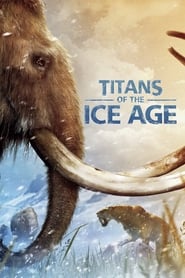
Titans of the Ice Age
Download English Subtitle
Release info
Tags
English subtitle preview
The first 167 lines.
Twenty thousand years ago,
the world was in the grip of an ice age.
Much of the northern hemisphere was blanketed by snow
and crushing glaciers, miles thick.
An iced earth.
Great beasts,
some familiar and some strange, lived here.
Adapted for the punishing cold.
This was the world of the mammoths.
Kingdom of the titans.
An age of ice.
These bones belonged to giants,
but unlike dinosaurs, these animals,
shared the planet with humans.
We can only imagine their strange calls
that once haunted the dreams of our ancestors.
What happened to these great beasts that once walked among us?
Why was extinction their fate?
The stories of their lives continue to unfold,
as strange new creatures are uncovered.
In 2007, a reindeer herder in northern Russia
discovered this mummified baby woolly mammoth.
She had been buried and frozen for 42,000 years.
Her skin and organs, some fur and even her eyes are extremely well-preserved.
Her tiny tusks, not yet visible.
Named lyuba,
she is the most intact mammoth ever found.
And a rare window to our frozen past.
Two and a half million years ago, an ice age began with a snowflake.
One of nature's most beautiful creations.
One by one they fell, billions upon billions.
Blanketing the north,
chilling the planet.
The pleistocene epoch, our most recent ice age, was born.
Our story begins near the end of the last ice age,
roughly 20,000 years ago.
It was an environment well suited to giants.
Woolly mammoths.
This icon of the pleistocene spread through Europe, Siberia,
and into northern parts of north America,
roaming grasslands called the mammoth steppe.
It is likely the herds were constantly on the move,
seeking their favorite vegetation.
Individuals eating up to 400 pounds per day.
Similar to her elephant cousins,
baby lyuba would have lived in a family clan of about 10 members,
protected by a dominant female, the matriarch.
Standing up to 10 feet and weighing as much as eight tons,
woolly's huge mass helped them to retain body heat.
Three layers of hair and wool, a layer of insulating fat,
and small fur-lined ears also helped them cope with the cold.
Massive curved tusks, up to 16 feet long,
could be used as plows to reach grass buried under the snow.
The calves were curious and playful, but vulnerable to predators,
and always under the watchful eye of their mother.
Sometimes a male bull would challenge another for dominance of the herd.
A clash of these titans could be a violent affair.
Since the birth of our planet, the climate has been changing,
cycling, temperatures rising and falling.
There have been at least five major ice ages.
Some may have covered the whole planet in ice.
Climate cycles have been fundamentally shaped by variations
in the earth's orbit over time.
These variations alter the way the sun strikes the earth,
and can lead to cooling on the surface.
As the ice caps grow,
they act as a mirror, reflecting more sunlight away from the shining ice,
causing heat to escape from the atmosphere.
So cooling speeds up, then more ice,
more reflection and more cooling.
Greenhouse gases in the atmosphere such as methane and carbon dioxide
counterbalance the cooling, trapping the sun's heat like a greenhouse
around the planet.
Volcanoes can produce these gases naturally.
Plants and trees recycle the gases and keep them in check.
Too much greenhouse gas, and the planet can warm.
Too little, and it cools.
Each of these factors, the earth's orbit,
angle to the sun and atmosphere,
all work together to shape earth's climate.
This is the clockwork of nature.
Even the tiniest variation can tip the scale
with profound consequences.
During our most recent ice age,
glaciers blanketed the north.
But most wildlife lived south of the ice sheets
on vast grassy plains.
The grasslands supported immense herds of grazers.
Like today, there were seasons,
but each was about 16 degrees fahrenheit cooler,
and with so much water locked up in ice,
there was less snowfall on the plains.
Animals we know today,
lived among mammoths, mastodons and big cats.
The plains of ice age Europe, Asia and north America
were like the African serengeti.
And like the serengeti,
where there are grass eaters,
there are meat eaters.
Dire wolves.
These intelligent, social carnivores, lived and hunted in packs.
At up to 150 pounds,
they were more powerfully built than today's gray wolves.
And they were aggressive hunters.
The wolves are not alone.
Sabre-toothed cats smell the fresh kill,
and an opportunity.
With large curved fangs and nearly twice the weight of a modern African lion,
they are the top predator.
During the pleistocene epoch,
so much of the earth's water was frozen into the ice caps,
that sea level dropped by over 300 feet, connecting continents.
Many ice age animals arrived in north America from Siberia,
over this land bridge, called beringia.
But they were not the only ones to discover the passage.
Humans made their way to this vast, untamed continent.
Though not physically equipped for a harsh and bitter climate,
our intelligence, curiosity and language
allowed us to cope with new challenges.
Ice age humans were the first to leave symbolic records of their lives.
Their drawings, mostly found in European caves,
evoke a world of fire and ice,
of mammoths,
bison
and horses.
As the ice age giants disappeared,
the bones they left behind fueled wild and chilling speculation.
Siberians imagined that hulking skeletons rising from melting ice
must belong to giant moles that lived in hell.
A mammoth's skull may have been the inspiration for the cyclops
of Greek mythology.
Even early attempts by scientists to assemble mammoth bones
were often just as wild.
Scientists were equally confounded by massive boulders standing alone.
After centuries of speculation,
geologists determined that the boulders, called "erratics,"
had been carried thousands of miles on rivers of ice,
and left behind when the ice melted.
And the mysterious bones from mythology
belonged to extraordinary animals from that lost world.
One unusual place,
hidden within the ice age scrub lands,
tells an exceptional, though grim, story.
Tar pits.
A columbian mammoth, lured by drinking water, has perished,
likely from dehydration and exposure
after getting trapped in the tar.
Its carcass is of interest to this sabre-toothed cat.
She's hungry.
A mammoth is a temptation worth the risk.
On this day, the tar has claimed another victim.
And the smell of death attracts others.
For forty thousand years, countless predators and prey
were mired in this deathtrap.
Their bones sinking into and preserved by the tarry asphalt.
Bones that continue to be pulled from the la brea tar pits today,
in the heart of downtown Los Angeles.
Walls now surround the tar pits to allow the bones to be safely excavated.
These sticky deposits were naturally formed when asphalt, deep in the earth,
gradually rose to the surface, seeping into pools.
Since 1906, more than three millions fossils
have been recovered from over 400 species.
Making this one of the world's richest repositories of ice age animals.
I've never seen that before.
In a glass-walled lab called "the fishbowl,"
la brea paleontologists and volunteers separate ice age fossils from the tar.
They're exposing the skull and jaws of their biggest find yet,
Titans of the Ice Age subtitles in other languages
Comments
No comments yet. Be the first to leave one.