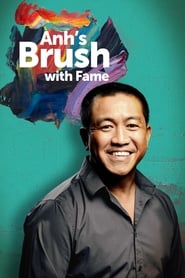
Anh's Brush with Fame
Download English Subtitle
Release info
Tags
Download English Subtitle Files for Mobile (11)
English subtitle preview
The first 200 lines.
In this series,
I meet extraordinary Australians...
..who tell me their fascinating stories
while I paint their portrait.
I was able to be the person who I am.
He was a really beautiful little boy.
My challenge is to capture their character and put it on the canvas.
The portrait is theirs to keep, so I want them to like it.
Oh.
That's me. Ohh.
Oh, my God. Wow.
I love this!
Welcome to Anh's Brush with Fame.
Jessica Mauboy is a showbiz all-rounder
and one of Australia's brightest young talents.
Since her first outback audition on Australian Idol,
her star has been on the rise
with chart-topping albums
and lead roles on film and television.
I had a daughter.
Hey, she's Koori.
What's her name? Dunno.
Never met her.
I wanna find out how a shy little Darwin girl with a big voice
became the role model she is today.
I don't even know if I have the patience to sit doing a portrait.
I guess my personality is, you know, quite quiet in a sense
and celebrative,
so I hope he captures... captures that.
First thing you notice about Jess
are her big round eyes and her great smile.
She just radiates warmth,
so I need to harness that and put it on the canvas.
I'm hoping that choosing this warm palette
will set me off in the right direction.
Hey. Hi.
Welcome, Jess. Hi.
Mwah.
Come on in. Good to see you.
Take a seat. Thank you.
Look at your very, very cool slippers.
Do you like them?
Are they designer slippers or...?
No, they're not. They're basic.
They're fantastic. Thank you very much.
Look comfy.
The world you came from
and the world where you are now is very different, yeah?
Yeah it is.
Um, you know I grew up in Darwin,
born and bred in Darwin in the Northern Territory.
And, you know, that kind of lifestyle
there's a lot of freedom and is very spiritual
and a lot of soul.
You know, a massive Greek community, a big Indigenous community.
There's just, um, a whole heap of culture
that, you know, I was brought up with.
Your father, ah, is from West Timor,
your mother's from the Daintree region of Queensland.
How did they meet?
Um, at a deck chair cinema in Darwin. (LAUGHS)
I remember Mum telling me the story about when Dad laid eyes on Mum.
Mum was like "Ugh, that's not my type." (LAUGHS)
This little short, black chico man.
But eventually, um, you know, Dad never let it pass Mum,
he'd always kind of, you know, be around.
I guess she really enjoyed that kind of,
that feeling of, you know being loved by,
you know this short man. (LAUGHS)
And he was in love at first sight pretty much.
You're the second-youngest of five girls.
Yeah, three older sisters and one younger sister.
All girls. Poor Dad.
And you're very close in age?
Yeah, we're, like, three years apart.
What, five girls?
Five girls, three years... Three years apart?
Jeez, Mum eventually warmed to that little short dark guy.
I tell ya.
We all grew up singing in a church.
The Mauboy girls, ah,
sung the congregation into the church
and we would sing hymns.
My sister will be singing a song called I Was Born To Try.
And one day she will be a famous singer.
Did you have to share a bedroom with your sisters?
I did share with two of my sisters.
My younger sister and I shared a double bed.
It was always annoying and always kind of...
She was a mover in bed
and I always found her, like, her arm on top of me when I woke up.
It's amazing, though, and I kind of look back
and we all pretty much had hand-me-downs -
"Pass it on. You're next. You have it."
Whether it'd be socks, underwear...
And you were second last,
so by the time it got to you, those jeans were pretty thin.
Oh, they were rugged.
We did hand-me-downs. Yeah.
And I'm the eldest and I'm, like, I should be getting the new stuff.
But my brother was bigger than me. Right.
And so he'd get the big shirt
and then a year later I'd grow into it.
'Cause he's younger than me but he's bigger than me.
So I used to think, "This sucks."
I'm the eldest and I'm getting his hand-me-downs.
That's great.
Finances were often stretched in the Mauboy household.
At times, all they had to rely on was each other,
forging Jess' strong sense of family.
We saw our parents go through ups and downs
and fights and stuff like that
and that would indicate that, you know, there was not enough money.
I guess together we all kind of pitched in
and we all helped each other
so if one was down, we'd pick the other up.
My dad had this thing that,
I guess it was something that he grew up with in Indonesia,
you know, they didn't have aircon, they didn't have fans
so he always had this thing of, you know,
"Well, I didn't have this and I didn't have that
"so you don't need it."
He'd wake up when we were all fast asleep
and he would turn our fan off.
Turn it off? He'd turn it off.
To save the electricity? Yes.
"Come on, Dad!" Seriously.
And so when we would wake up,
we were, like, drenched in our own sweat and we'd be like, "Dad!"
Now, a lot of people would hear about my childhood
and they would say, "Jeez, it must have been so hard,
"'cause you were so poor."
The thing is when you're there, that's all you know.
That's all you know, that's all you have, so you just kind of deal.
That's what it is.
It's not even dealing with it, it's just what it is.
When I do think about it, we weren't poor at all,
we were so rich with togetherness, we had each other.
You know, when kids did make comments
about, you know, the shoes or what I was wearing,
like, it didn't really matter,
like, I was so above... above what... the material things.
I've read that Cathy Freeman came and talked at your school.
Yes.
And it made a big impact on you.
I was in grade 4/5.
It meant a lot to see someone who was a physical example,
a role model to me,
someone who shares the same, I guess, culture.
It was a complete moment for me, and I knew what I wanted to do.
I guess it really gave me that freedom
of whatever I want to be I can be.
She was the living example
of reaching your highest points in life,
going through those struggles
but at the end of those struggles there is a light
and there are, um, bigger and better things that do come.
Who you are and what your background is doesn't necessarily matter
but what is inside and that can be generated and can give
is more important.
You interpret it as "What can I give."
Yeah.
Rather than, "What can I achieve?" Yeah. It's what I can give. Yeah.
That's so cool.
And I think that's what, I guess, allows me to do what I do today.
I jump up on that stage and I... and I just give whatever I have,
be in that presence, be in the moment,
not thinking about anything else, but giving.
You realise there's dozens of little girls now in 20 years' time
they're gonna be, "When Jess Mauboy came to my school" as if...
How amazing is that? And I'm crying.
No, it's um...
It's such a, um, an amazing gift to give I think
when you give all of you
that is just purely you and, um...
And that's more. I think that can, ah...
That's a huge impact.
And that's what Cathy did for me, Cathy Freeman did for me, so...
After Cathy Freeman left,
did you think, "I'm gonna be a singer or a runner"?
I knew I wanted to be a singer.
I've always known, I've always had music in me.
I think I was about four years old when Mum...
Mum used to tell me I'd sit in front of the TV
and when the commercials would come on, I would sing them.
There was a song about iron storms, it was about corrugated iron.
And I would sing this song
You make corrugated iron sound so good. I'm gonna buy some.
And when the commercials would stop,
like, I would just sit there real quiet.
I dunno when you were growing up if you had, um, the music shows on TV.
Mm-hm And I...
We didn't have money to buy CDs
but I had... I'd tape it off the TV. Yeah.
And then my brother would come in
and he'd say something silly and I'd go, "Shh, I'm taping, man."
That's so hilarious because I remember doing the same thing.
My, my Opa, my Dad's dad, used to have this old cassette recorder
and I would record myself back
and it was the first time kind of experiencing
More English subtitles for Anh's Brush with Fame
- Anhs Brush With Fame S06 WEBRip iview · 39 downloads · 2021-07-06
- Anhs Brush With Fame S05 WEBRip iview · 23 downloads · 2020-10-13
- Anhs Brush With Fame S04 WEBRip iview · 13 downloads · 2019-07-24
- Anhs Brush With Fame S03 WEBRip iview · 13 downloads · 2018-09-12
- Anhs Brush With Fame S01 WEBRip iview · 17 downloads · 2018-06-11
Comments
No comments yet. Be the first to leave one.