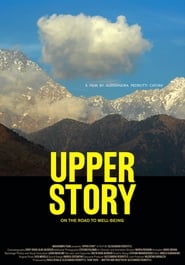
Upper Story: On the Road to Well-Being
Download English Subtitle
Release info
Tags
English subtitle preview
The first 200 lines.
Zuzu Flavius
An investigation into the mental health status of South Africans
has revealed that one third of all South Africans
have mental illnesses.
Australia is hiding a shocking secret
and it’s one we really need to talk about.
Every week five kids, five,
commit suicide.
In the past thirty years the opening up of China has been very rapid
and people feel depression.
It is unprecedented.
WHO has declared India to be the most depressed country in the world
with 36% of Indians admitting to battling depression.
27% of citizens in the European Union, more than one in four,
suffer from mental health problems.
Too many Americans who struggle with mental health illnesses
are still suffering in silence rather than seeking help.
In the state of Virginia, in the city of Charlottesville,
since 1987 the Mind & Life Institute
has been conducting rigorous scientific research
to discover the secrets of mental well-being.
The Institute works with some of the best universities in the world,
such as MIT, Emory University, Brown University,
University of Zurich and Kyoto University.
The Mind & Life is a global community
and the work that we do is with
and because of the people who make up our broader global community.
And so for all of our programs,
we engage our colleagues from different parts of the world
to help us in being sure
that what we are doing is culturally sensitive
and is in fact going to be able to have
impact into their local communities.
The research has been informed by the very first
conversation
of the Dalai Lama with Western scientists,
which was the foundation of the Mind & Life Institute
almost 34 years ago.
I started my...
My world and my work was in health care.
I started my work as a nurse
and that was caring for people with very serious illness,
primarily people with cancer
and facing the end of life,
as well as those people who have mental illness.
2007 was my first personal experience with Mind & Life
as I attended the Summer Research Institute,
and I was just a regular attendee.
Being with neuroscientists and biological scientists
and social scientists, anthropologists and Buddhist study scholars
and philosophers,
was very refreshing.
Because there wasn’t another place we could do that.
All the people you see are members of the Mind & Life Institute.
They came here from all over the world.
We went to welcome them at the airport.
And soon, you will discover why they travelled to such a remote place...
...where McLeod Ganj is.
We’re going to be all the way up.
This is lower Dharamsala here.
- Dharamsala? - Yes, so Dharamsala...
McLeod Ganj is primarily Tibetan and Sikh
and then there’s a large refugee population in the south of India.
In the south?
McLeod Ganj is a small village
located on the first slopes of the Himalaya,
in the state of Himachal Pradesh
and home to the Tibetan Government in Exile
as of the 1960s.
Most importantly, McLeod Ganj is
the official residence of His Holiness the 14th Dalai Lama of Tibet.
India gave His Holiness a ready welcome
and other freedom-loving nations extended sympathy and support.
Many thousands of Tibetans
crossed the Himalayan barrier to the security offered by India.
In the 1950s a large part of the Tibetan population
left its homes and moved to India.
A few years later, the social movements of the 60s and 70s
pushed a growing number of Westerners to explore Asia, especially India,
giving them the chance to meet the Tibetan masters and scholars.
Impressed by their knowledge, many of the Westerners went on
to establish solid relations with them,
which still prosper today in many cities around the world.
A new chapter in human history was about to be written.
Since my childhood,
I have...
the interest about science.
Even Buddha’s own words,
we have the right to investigate.
If we find contradiction,
even Buddha’s own words,
then we have the right to reject.
So,
I developed a keen interest about modern science.
I think...
in the 70s, 60s... 70s,
I developed a desire
to discuss with modern scientists.
So then when I asked
some of my friends,
some Westerners:
“I want a serious discussion with modern scientists.”
Then some of them responded to me:
“Be careful!"
"Science is a killer
of religious faith.”
Then I immediately reflected
on Buddha’s own words of advice to us.
He mentioned: “All my followers,
"monks, scholars,
"should not accept my teaching out of faith,
"out of devotion,
"but rather thorough investigation.”
So then I start
meeting with scientists.
Mainly four fields:
cosmology,
neurobiology,
physics,
including quantum physics
and then psychology.
We learned many useful information.
In the Asian Indian tradition,
there’s a lot of knowledge about mind, about emotions,
how to tackle these emotions.
That is relevant to humanity.
So then,
a number of scientists,
they really found useful information
from our tradition,
that is Indian tradition.
To better understand this story, we have to take a step back
to 1987.
On one of my trips to Asia in 1974,
I happened to be invited to a Tibetan monastery
that was set up for Westerners,
called Kopan, in Kathmandu.
Since I’d always been interested in the meaning of life
and what we’re really doing here,
I found the teachings offering a pretty complete explanation.
Not that I believe the explanation,
but from a logical basis I thought it was very complete.
To sit down with someone from the East
like His Holiness who had a great scholarly background
and actually discuss
some topics of interest in their research...
And I knew that His Holiness from his side was very interested
in speaking with Western scientists.
So it was really to create an atmosphere of deepening of understanding.
And I have a lab where I do some experiments relating to perception,
I do some work in artificial intelligence.
Just like many people: because at some point,
I realized that my life was a total mess
and I didn’t know what the hell was going on.
Finally I run in 1974
totally by, one would say, accident in Boulder, Colorado
into a Tibetan teacher called Trungpa Rinpoche,
who was then beginning to teach in the West.
He made so much sense in terms of how to work with oneself
that I started to practice.
About 3 or 4 years down my practice, I began to realize that
behind the whole tradition of Buddhist meditation, there is also such a rich...
epistemology and theory of mind, if you want to say it that way.
There is a natural attitude that both scientists and Buddhists have.
Both of them have a strong interest in examining
if I may say so, the phenomena in front of them.
That is they like to go into details of things.
And second of all, both of them like to examine,
particularly with reference to experience
rather than relying on dogma or purely on texts.
Buddhism is more natural a partner for a conversation to Science
than any other spiritual tradition on this planet, I would submit.
In Buddhist psychology, there's a lot of explanations.
About the physical level, modern science
has much knowledge, or information.
So in the past, the scientists
simply considered the brain.
Besides the brain, nothing there.
So even scientists, some scientists, reject the existence of the mind.
Varela,
a very nice person,
he also has genuine interest about Buddhism.
He himself you see, his own personal experience,
made something, a very close connection
with scientific research work
and similarly
combined with some Buddhist...
knowledge about mind, about emotion, these things.
He really helped to develop this Institution.
Then later Richard Davidson.
He’s a specialist about the brain.
Very, very useful. Very, very useful.
His knowledge is so wonderful
and his personal...
nature, also wonderful.
Wonderful.
Since, we’ve become very trusted close friends.
This incredible journey has brought us to the University of Wisconsin-Madison
to visit Dr. Richard Davidson,
founder and chair of the Center for Healthy Minds.
More English subtitles for Upper Story: On the Road to Well-Being
- Upper Story 2020 1080p WEBRip x264 AAC-[YTS MX] · 11 downloads · 2021-02-16
Comments
No comments yet. Be the first to leave one.