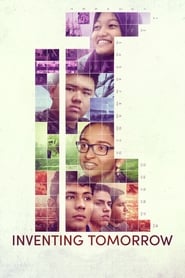
Inventing Tomorrow
Download English Subtitle
Release info
Tags
English subtitle preview
The first 156 lines.
Water, air, the Earth. We all share them.
With the environment,
you see the same issues repeated across the world.
It's inevitably our job
as the next generation to tackle this.
The people who are approaching this
through the eye of science
are the people who can fix it, and who are going to fix it.
[continues singing in Indonesian]
[Nuha and woman speaking Indonesian]
[Nuha and woman speaking Indonesian]
Welcome to ISEF.
International Science and Engineering Fair.
Can I get a show of hands?
How many of you are here
competing for the very first time?
- - Wow.
When the students come,
they've already gone through a series of competitions
to get to the level of ISEF.
And students who really want to advance
know they have to do original research.
This is the science fair of science fairs.
It's a juvenile.
-Juvenile? -Juvenile.
Right there.
This tree.
Left tree. Come here.
Yeah, I see the black jays are coming.
They're coming, Jared. Jared, Jared, Jared.
Right there, right there.
-Oye. -
Oh, it's a 'I'iwi.
Their signature pose is upside down
and facing forward.
I'm actually a third generation.
Born and raised in Hilo, Hawaii.
I was always taught by my parents, my grandparents,
to always respect the 'Aina.
The land that we live off of.
I just find great enjoyment being with nature.
I first started coming to Huilua Pond
when I was about three years old.
My grandma, she would bring me here
to feed the ducks bread.
Growing up, I always heard, you know, the terms arsenic,
contamination, and, you know, dangerous.
But I was never really told how it got in the soil.
Eventually, I learned about the production plant
in Huilua Pond.
Over a 28-year period, they've released
an estimated 558 tons of arsenic into the pond.
And then, two tsunamis struck Hilo.
Arsenic spread out into the town
through the force of the tsunami waves.
So this location where we are right now...
...is actually the border of the inundation zone
from the 1960's tsunami.
A lot of the debris that was contained in any of the water
was most likely left here and never picked up again.
That's why I'm digging up these samples.
I can create sort of a zoning hotspot map
to know exactly where these arsenic concentrations are.
It becomes a really big hazard,
if we have ten times the safe limit of arsenic
just lying around the soil here.
Long-term effects of arsenic can include anything
from decreased eyesight,
loss of hearing, bladder cancer.
Look at this big duck. Go!
Even the wildlife is contaminated.
Four generations of my family
has been involved with the pond.
That's what really drew me into my science fair project.
It was about quarter to seven in the morning.
I was the only one up.
I never saw the tide this low,
where there's no water.
Can you believe,
right in the back of our yard?
Gone.
Like the whole bay was just like a drain.
Yeah.
Your great grandma, she got up and looked out the window,
and then she yelled.
"Tsunami!"
The wave was coming.
And what did the waves look like?
It was rolling in, like this.
It was... I can never forget the picture of it.
It must have been about...
40 or 50 feet high.
We ran.
And then, the wave came.
Our house was flat.
There was nothing left of our house.
In the meantime, great grandpa was traveling
from Pa'auilo to Hilo.
So, he figured that we were all gone.
Then when he drove in with his car, we all went out.
You know, I never saw great grandpa cry
the way he did.
We were all just crying
and holding each other like, "Wow. We found life."
Yeah.
When I was growing up, I remember the lake.
- Yeah. - Um, it's by...
Just five minutes walk from our house.
And I ate in front of the temple in the village.
And it was so nice and clear.
And there used to be lotuses in the lake.
And we would go and jump in the canal and swim.
People sometimes used to wash their clothes.
- Mm. -They used to wash the buffalos.
If only that was our problem now.
Now, we see in all the cities, look.
Only concrete buildings, no place left for trees.
Everything was connected, right?
This combination of water and sun
is something so sacred to us.
That every aspect of nature,
we pray to the hills, we pray to the water,
we pray to the trees.
Because these are all giving us everything we need.
This is the kind of tradition we come from, right?
- -
Bangalore was once known
as the City of One Thousand Lakes.
But now it's known as the Silicon Valley of India.
And now, there's only around 93 lakes.
The sad thing is,
as more people started moving here,
sewage goes into the lakes,
mainly because it has nowhere else to go.
The lack of infrastructure is definitely a problem.
Where is the lake?
Oh, my god.
You can't even tell there's a lake.
It's so overgrown with weeds.
Um, which is a really bad sign,
because when you have this many weed,
it's a sign of something called eutrophication.
Which is so much nutrient sewage contamination,
that all these plants start growing,
and they block the light to the lower layers of the lake.
Basically, just kills everything that lives in the water,
and you have a dead lake.
The fire and foam
are what really got people interested in the lakes,
and got a lot of people to start working on them.
The sewage that causes this foam
mainly comes from apartments.
So you can see there's a lot of buildings around here,
and they release raw sewage into the lake.
A lot of the detergents and stuff that people use
contain really high levels of phosphates.
Comments
No comments yet. Be the first to leave one.