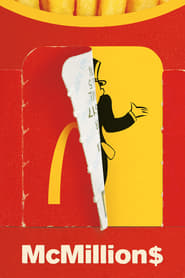
McMillion$
Download English Subtitle
Release info
Tags
Download English Subtitle Files for Mobile (6)
English subtitle preview
The first 200 lines.
I want some!
- It's the Monopoly game, only at McDonald's!
With over 50 million prizes, it's supersized excitement...
- Monopoly. Do not pass "Go."
Go directly to McDonald's.
- If you were around back in the '90s...
- Now at McDonald's, Monopoly is more than a game!
You can play it...
You heard it everywhere.
- The game Monopoly is back at McDonald's,
bigger and better than ever.
- This year, there's more prizes than ever.
- McDonald's ran the Monopoly game for years.
- Hey, collect the right game pieces...
And win $2 million.
But no one...
knew the truth about the game being played.
No one.
- People everywhere are winning big!
- The McDonald's prizes could be cars,
boats, $100,000 up to the million dollars.
But from 1989 to 2001...
I won a Dodge Viper!
- There were no legitimate winners
of the high value game pieces
in the McDonald's Monopoly game.
I mean, how crazy bullshit is that?
- Jacksonville FBI had a little bit of a reputation
of being a Sleepy Hollow retirement office.
There was a slower attitude there.
Very undersized.
You know, a fraction
of a Miami or an Atlanta or something like that,
spread, you know-- spread very thin.
At the time, in 2001, I supervised a squad
of approximately 12 agents charged with investigating
white-collar crime, bank fraud,
healthcare fraud, public corruption.
Even before I got there,
I kept hearing about this legendary guy, Rick Dent,
mid-career senior agent and his partner Doug Mathews,
a newly assigned agent to the division.
I'm Special Agent Mathews.
When you pull Jacksonville as an office you're going to,
I know what I heard was, "Good luck with that."
For big cases, man, you are-- you're like duct-taping stuff
together just 'cause you wanna make it happen.
That's the type of division you were in.
I was lucky to link up with Rick Dent early on
and have him as the old guard, you know, my training agent.
He's a mathematician and has about as much personality
as this piece of wood right here.
Very matter of fact.
And so he and I were kind of opposites there.
You know, I'm always looking for another fun ride, right?
If you guys get to Rick Dent,
I'm telling you he's gonna be...
"Yes."
"No."
"Don't recall."
The priority for the FBI
at that particular juncture was healthcare fraud.
We're working a one- to three-year type case.
That's a long time.
Sometimes I have that ADD thing
of the shinier object or whatever.
So I see this note in the corner part of his desk,
and all I saw was "McDonald's Monopoly Fraud?"
with a question mark.
And I go, "What is that?"
'Cause I'm bored to death
of this healthcare garbage, right?
It's important, but I was ready to move on.
I go, "Is this the McDonald's Monopoly game?"
He was like, "Yeah.
Eventually I was gonna get around to it."
So what he told me was that there was an individual
who had called in and had this story
that the Monopoly game was fixed.
That was pretty much it.
I go, "Give me that damn thing.
I'm gonna go check this out."
I'm seeing the fun meter with that.
Like, that's gotta be more fun than this shit
that I'm looking at.
Dent thought it was just some BS story...
so, "Pfff, this--yeah, here.
Run with this for a little bit, young man."
I contacted the source of this call,
and the source
gave me three names
that were previous million-dollar winners
and said, "I know this is fixed because
"these people are related.
"They're on the family tree somehow.
With all different names."
And the person who's controlling this
was this nebulous name of Uncle Jerry.
So I come back, like, I'm excited right?
I got the biggest case ever, right?
And I said, "Look, all million-dollar winners.
"We need to be on this.
Screw that health--" I think I probably said that.
"Screw that healthcare shit we're working, right?"
Or something like that.
I don't--Rick, I don't know if that was it,
or I know you would never agree with that.
But like any senior agent goes--
and this happens even in today's Bureau.
The new young guy goes out
and finds a nice piece of gold.
The old agent goes,
"Give me that back, and let me look at this."
That's about how it was.
- Truth be told, I was a little skeptical.
You know, fast food, promotional game fraud
was not making any list of priorities anywhere.
I don't think anybody had really even seen anything
like this before, so...
there's always a risk that I turn these guys loose on this,
and it turns out it's not true
and that I've expended resources,
but you know, I think we all realized...
if this is true, this is, you know--this is big.
- What Rick did was immediately get in touch
with the U.S. Attorney's Office and Mark Devereaux,
'cause if you don't have an interest from a prosecutor,
you're wasting your time.
Devereaux was the go-to guy
that prosecuted all of our white-collar stuff.
- If there's a chance this thing can be indicted,
prosecuted, even if it's a difficult case,
he's gonna be the guy to do it
because he's the guy behind the wheel.
- That part of the sell, to get that prosecutor on was--
that was a big deal.
I don't know if Devereaux knew what Monopoly game was.
I have no idea.
You know, I think he was a Burger King guy.
I don't know.
- My name's Mark Devereaux, Assistant U.S. Attorney
for almost 30 years.
In this case, it was, you know,
I don't know if this is real, or don't know
if it's just somebody trying to get family members
somehow interviewed and get 'em in trouble.
But lo and behold...
when we received a list of all the winners,
we were able to show, through different databases,
that these individuals were related.
They had family connections
in the local Jacksonville area.
In my world,
you don't believe in coincidences very much.
And the chance of having numerous family members
and relatives win the game was just astronomical.
Basically, you've got less of a chance than you do
of getting struck by lightning in Florida.
At that point in time, we knew there was a problem.
How big was that problem? We had no idea.
- The information that we were compiling
is that their contest had been infected
years before we became aware.
- I mean, we're talking, you know, altogether,
potentially hundreds of millions of dollars
of these prizes.
Well, how much of that is fraud?
- Once Devereaux said, "Yeah, I'm interested in this,"
he's on for everything.
All the strategy sessions.
Some prosecutors, you see that space, you know.
Devereaux, you got no space.
Right all up in there with you.
- So we start with where could there be the opportunity
to steal the game piece?
- We weren't sure if there was somebody inside
with McDonald's, where that person was,
how many, and how far that went.
- How many suspects do we have?
We have to figure out who makes the cups,
who makes the fry box,
who makes these game pieces that you would pull off--
how many people are in this chain?
- There's all kinds of possibilities.
This could be the driver, the delivery people,
people in the factory, or even, you know,
somebody in corporate at McDonald's.
We didn't close out anyone.
- So there reached a point where there was a ton
of questions, but it was, I mean, very difficult
to pursue that further without putting some action to it.
There wasn't a lot of, like, let me just, you know,
at the time get on the Internet and do some--
there wasn't a lot of that.
- We clearly had to start somewhere,
but without compromising the case.
So we needed a source of information on the inside.
- There was a big decision to be made, and that was:
do we contact McDonald's?
Because we just ran into a dead end.
McMillion$ subtitles in other languages
More English subtitles for McMillion$
- McMillions S01E06 WEB-XLF · 30 downloads · 2020-03-15
- McMillions:S01E05 WEB-XLF · 31 downloads · 2020-03-15
- McMillions S01E04 WEB-XLF · 37 downloads · 2020-03-15
- McMillions S01E06 720p HEVC x265-MeGusta · 23 downloads · 2020-03-11
- McMillions S01E05 720p HEVC x265-MeGusta · 23 downloads · 2020-03-04
- McMillions S01E04 720p HEVC x265-MeGusta · 37 downloads · 2020-02-26
- McMillions S01E03 AMZN WEB-DL 720p-NTb · 31 downloads · 2020-02-20
- McMillions S01E03 WEBRip x264-ION10 · 26 downloads · 2020-02-18
Comments
No comments yet. Be the first to leave one.