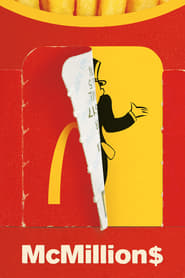
McMillion$
Download English Subtitle
Release info
Tags
English subtitle preview
The first 200 lines.
I'm just gonna tell you the whole story.
So I had the $50,000 debt because of the taxes.
I was screwed. Jerry's dead, I'm left holding the bag.
And I don't have 50,000 for the IRS. I'm not going down like that.
I was just thinking, "Okay, I gotta do something here. I gotta do something."
I called the IRS and I said, "Listen,
I know you know I owe 50,000, but I have a story for you."
So I told the IRS the whole story verbatim.
Now it might have been a year later, my accountant, we were talking,
and he said, "You're the reason why all this went down." I said, "What?"
He said, "Yeah." Because they reported it to the FBI or whomever,
and it just busted wide open after that. But I had no idea,
all I was trying to do is get myself out a $50,000 debt.
And the next thing I knew, everybody is being investigated.
I was kind of scared coming out with this.
I didn't want anything to happen to me
because I've come a long way, I don't wanna ever go back.
And so I was hesitant about this whole mess,
because when you're quiet for so long about things that took a turn
and you didn't know why it took a turn,
then you found out that you're the reason that it made the turn,
I don't know what, it just made me be more quiet.
But does that make you the informant?
It does, but I don't like that adjective. I don't like that because
in my mind, I never even knew that I was the one.
MCMILLIONS
He was not at his Lawrenceville home today,
the man neighbors here have jokingly nicknamed...
We called him the Hamburglar.
The FBI says 58-year-old Jerome Jacobson was the ringleader who kept...
There was a lot of publicity on this case at the time.
There was an enormous amount of publicity.
The press was all around the house, on the streets.
I get phone calls continuously, all hours of the night, they would call.
Jacobson provided the winning game pieces to his friends and associates
who acted as recruiters.
We were totally exhausted.
It just took so much energy to get out in the public.
The FBI believes those recruiters passed on the tickets to relatives.
So we had this big buildup of the case in anticipation of the trial.
Eight people who worked for the company that runs McDonald's games
like Monopoly and Who Wants To Be A Millionaire...
... the hugely popular Monopoly game...
... people who run the McDonald's Monopoly game.
If you're just tuning in, breaking news here on 1010 WINS.
A plane has crashed into the World Trade Center.
This happening just a matter of minutes ago.
U.S. attacked
After 9/11 everything changed. So this McDonald's story just vanished.
It did very quickly get eclipsed. "All right, we're under attack,"
and you kind of snap out of it.
The world changed. And what went
from being a case that the entire office and others
were feverishly working on kind of went back to primarily just Doug and Rick.
Many, many of us were immediately changed.
You are now a terrorism agent and working all day, all night on that.
We didn't put any local stories on the front page for four months.
So if we had updates, they were going back of the paper.
So it vanished here and then vanished off the front pages everywhere.
After 9/11 the McDonald's was a memory.
Everybody forgot about it,
except the FBI and the Justice Department. They proceeded.
The trial was here in Jacksonville, here in this building.
It lasted three weeks,
and it was almost like a couple trials within a trial because
once we have the overall scheme,
then had to place evidence just upon each of the defendants.
You have those grand hopes of being a million-dollar winner.
Devereaux says Jacobson pocketed those pieces,
and in exchange for a cut of the prize, gave them to friends and relatives.
Mark is at that stage coming on very strong,
with lots of threats about the consequence to our client,
and the terrible situation our client was in,
and how much time it was gonna get.
Generally, we don't respond favorably to threats.
It was pretty clear that Mark Devereaux was coming full force.
I always love wiretaps because you just bring in the little recorder
and you push play.
And there's this client, not only is he making a confession
you are listening live to your client committing the crime.
Mark was like the bulldog that bit the tire of the truck
and couldn't let go,
and ultimately I sent Janice on him. And she eventually brought him around.
Ultimately, it's all up to how you will define victory.
And in this case, it wasn't trial, but it was
working through what was best for him plea-wise.
We ended up working out something that was definitely waivable
and favorable for our client from a very difficult position to start with.
Right. We didn't have much of a defense.
According to federal investigators, Jacobson has pleaded guilty
to taking those pieces and giving them to friends and family to redeem.
Once we made our deal and Jerry pled guilty
then he became kind of the instrument of the prosecution.
Because Jerry began cooperating,
the prosecutor did agree to do have motion to the court for reduction
based on substantial assistance.
But you are totally at their discretion.
They could suck you dry for information and then not help you.
We had eight original individuals who are indicted,
which turned into fifty-three people.
And out of the fifty-three that were there,
everybody pled but seven people decided to go to trial.
They didn't plead because they didn't like Devereaux's aftershave.
It's because we had them. That's why.
They got me on one count of mail fraud, and I pled to the one count
because... I did it. I did it.
These people that I gave tickets to did not know I lied to them.
So they really... they got screwed.
But once you plead guilty, it's too late.
But that's the mentality of people who never been in trouble.
You get so scared, it's like you're gonna lose everything you have,
you're gonna go to jail and somebody's gonna be screwing your wife,
and your kids, they're not gonna know you anymore, and guys get scared.
So that's why they plead guilty, to get it over with.
My plan at the time was to enter a plea of not guilty. So that's what I did.
If you have little knowledge of a conspiracy or a crime,
you can't be guilty.
Seven went to trial, two following my opening statement
ended up changing their pleas from not guilty to guilty
because they didn't realize the evidence was more than compelling.
The light at the end of the tunnel was a train coming at them,
and they wanted to get out of the way, so they pled guilty.
Certainly, it was a crime when Jacobson stole that game piece.
But then you had the fraudster,
and the fraudster is the one turning in that game piece
and saying that he or she won it according to these rules.
Part of the government's theory was that McDonald's have been defrauded
by folks like George Chandler because they had violated the game rules.
Game rules in a federal court of law, the federal statutes apply, mail fraud.
I have never tried a case where the law
is the game rules of a hamburger company.
You literally have a federal prosecutor suggesting that
if you broke the McDonald's game rules, you must be a criminal.
There were those that would really question,
"Why are you even prosecuting it? It was just a game."
There's a difference between a law and rules of a game.
But even if an individual was tricked, and their friend was telling them,
"Why don't you do this? You act like you're the winner."
Well, you committed fraud because you deceived,
you tricked Ronald McDonald into letting go of money.
What gave the federal government the ability to prosecute this
was that they used the United States mail.
If you have a scheme to trick somebody
out of property or money,
and you use our United States mail,
that's a crime.
The government dug its heels in on that and took the position that
if someone found that game piece on the street and cashed it in,
they'd be committing a federal crime.
But the McDonald's witnesses called by the government
admitted that there's nothing that prohibits a transfer of a ticket.
So St. Jude could get a ticket given to them as a gift,
George Chandler can get the ticket by buying it or having it handed to him.
All of that was perfectly lawful.
Now, of course, the defense made a big deal of St. Jude saying, "See?
McDonald's didn't even follow the rules, didn't follow their own rules."
They did follow the rules.
McDonald's gave St. Jude's Hospital a million-dollar donation
as a gesture of goodwill and fairness.
I don't think the average person
would think if they got a game piece from somebody else,
but most in these circumstance that they were doing anything wrong,
even though they would tell him a lie, it wasn't a crime.
They didn't know though that the piece was stolen.
It's like the difference of buying a car that's stolen
versus, "Oh, look, I got a really good deal," and had they known,
I would suspect many of them, if not, all of them, wouldn't have bought it.
I was a witness for the US government for Mark Devereaux.
I remember a question that Devereaux asked me,
he said, "When did you find out the game pieces were stolen?"
I said, "You told me they weren't stolen."
If he could have come up and punched me at that time, he probably would have.
But he stepped right into it, because it was the truth.
Jerry had never told anyone.
No one in the whole process knew that he was stealing the game pieces.
People said, "Well, how? You got to be kidding me." No.
I knew Jerry has done something wrong. He said, "I want the game pieces."
But the reality is,
He had right to place them wherever he wanted. He was taking money for them.
There's only one witness that could say what George Chandler knew
and that was his foster brother, Mr. Dwight Baker.
And he told the jury in substance that,
"I heard George Chandler and Dwight Baker made it clear to the jury
that George was not a member of the conspiracy." He said that,
sworn testimony. The FBI did a wiretap for two months.
Hundreds and hundreds of phone calls and not one word about George Chandler
had in any complicity and knowledge of tickets being stolen or embezzled.
The judge agreed with us,
and he announced that he was gonna add a jury instruction that
the juries could not convict unless Chandler knew the ticket was stolen
or unlawfully obtained.
We knew then we should win the case.
Today, the Lawrenceville man who admitted fixing the McDonald's Monopoly
a few years ago testifies in federal court.
Jerome Jacobson took the winning tickets
while working as head of security for the company that ran the game.
The obvious question
and one of the things that was important for us to present to the jury
was how in the world could he, Jerome Jacobson,
steal winning pieces from the fortress that was Simon Marketing and Dittler
McMillion$ subtitles in other languages
More English subtitles for McMillion$
- McMillions S01 AMZN web-dl · 39 downloads · 2020-03-20
- McMillions:S01E05 WEB-XLF · 31 downloads · 2020-03-15
- McMillions S01E04 WEB-XLF · 37 downloads · 2020-03-15
- McMillions S01E06 720p HEVC x265-MeGusta · 23 downloads · 2020-03-11
- McMillions S01E05 720p HEVC x265-MeGusta · 23 downloads · 2020-03-04
- McMillions S01E04 720p HEVC x265-MeGusta · 37 downloads · 2020-02-26
- McMillions S01E03 AMZN WEB-DL 720p-NTb · 31 downloads · 2020-02-20
- McMillions S01E03 WEBRip x264-ION10 · 26 downloads · 2020-02-18
Comments
No comments yet. Be the first to leave one.