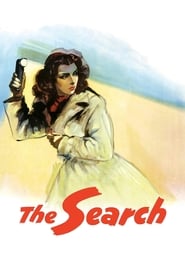
The Search
Download English Subtitle
English subtitle preview
The first 200 lines.
Get them out as quickly as you can,
but be careful with them, they've had a
very rough trip.
Yes, ma'am.
Ask them to get out.
The war is over, but want and suffering
have not come to an end in Europe.
A trainload of children dragged into Germany during
the war, found wandering, lost, homeless, found in
concentration camps.
Can they really be children?
They might be little old men and women.
Their spirit is broken, there is nothing left
in them but fear, fear of being punished
and beaten.
The mere sight of a uniform terrifies them,
for the men who persecuted them, they wore
uniforms.
That is why they obey every order, follow
every command.
They cannot understand that those now in charge
of them want to help.
They move like machines, not a sound can
be heard in the wretched little troop.
And this is but a handful, a tiny
handful out of the millions of orphaned, homeless,
bewildered children.
Children who had a right to better things,
a right taken from them by the war.
Bread, bread and it's there to be eaten.
But this boy knows why he hides it
away.
They have often been given a slice of
bread, then came a day, and a night,
and another day, and not a bite of
food.
And you little boy with a sad face
and the big eyes, you had to eat
your food with your fingers for so long
you've forgotten how to use a spoon.
Another habit has stuck.
After every meal, they had to show by
this movement that they were not hiding any
bread.
Oh dear, see that the children get to
bed as soon as possible, will you?
Where are we going to put them?
Everything's full.
Well, they're setting up some extra beds in
the corridors now.
Right.
This was once a barracks, a German barracks.
It has better uses now.
It's a long time since these children slept
in a clean bed under a warm blanket.
These are their keepsakes, the last memories of
their homes and parents.
Jealously guarded is a precious possession through all
their wanderings.
And still not a sound of children's voices
and children's laughter.
What's your name?
Raoul.
Raoul Dubois.
We live in Belfort.
I'm 11 years old.
And you're from Belfort?
And your religion?
Catholic, no doubt.
Yes, I always went to church with my
mother.
Religion, Catholic.
Where's your mother now?
They stuck her.
They caught her and took her I don't
know where.
Mother taken away, away, doesn't know.
And his father?
And your father?
Did he also get taken away by the
Germans?
My father joined the Maquis.
He was a hero, my father.
But he was shot.
Father killed with the partisans.
I was in the forest.
There were 16 of us.
It took them a long time to find
us.
In the end, they caught me and put
me in a camp.
He says he himself lived in a forest
for months with a whole gang.
But they caught him and put him in
a concentration camp.
Which camp?
Which camp?
Mauthausen.
Mauthausen, yes.
All right, sit down.
It's all right.
Tell him to sit down.
Come and sit down.
Next, Jadwiga Brunowska.
Come here.
This is my brother.
We are together.
He's her brother.
Sit down, Jadwiga.
We've never done anything bad to anyone.
My father was a music teacher in Petrkov.
We've never done anything bad to anyone.
Ask my brother.
They sent our parents to Bergen-Bels.
My brother hid them.
And I had to work very hard.
Then I found my brother.
I'm everything to him.
Father, music teacher in Petrkov, Poland.
Both parents killed at Bergen-Belsen.
And she was in slave labor.
Is that what she said?
Yes, sir.
I see.
Miriam Szigeti, parents domiciled Budapest, both gassed at
Dachau.
What did she say?
Her job was to sort out the clothes
of the people who had been gassed.
She had to sort them according to size
in a room next to the crematorium.
She found her own mother's blouse among them.
Say something to her.
Anything.
Next, the
little boy with the cap there.
I can't get anything out of this little
boy.
Come along, young man.
We aren't going to hurt you.
He seems to have understood that.
The boy's afraid.
Look at his eyes.
Has nobody spoken to him yet?
We tried.
Perhaps the other boy could help us.
Are these two together?
Are they brothers?
No, they're just friends.
He says there's nothing to be got from
the boy.
Is he German?
I don't think so.
Take it easy.
Yes, of course.
He doesn't know his name.
I'll ask him where he comes from.
Where were you born?
I don't know.
Where do you come from?
I don't know.
Sit down.
I don't know.
Sit down.
Next, Peter Lutken.
Why won't you speak?
Where do you come from?
Where is your home?
Where are your father and mother?
It was in a city in Czechoslovakia many
years ago.
Everybody knew Dr. Malik, for he was a
good doctor.
This was the Malik family.
The father, the mother, Mrs. Hannah Malik.
Their daughter, Vlasta.
And then there was a little boy, Carol.
It was a happy family life.
It was a happy
family life.
The enemy had occupied the little country.
The persecution of the Czech intellectuals had at
last reached the Malik family.
The family was separated.
Dr. Malik and his daughter were deported.
For a long time, the mother and Carol
were left together in a concentration camp.
Time passed.
And from the moment little Carol was separated
from his mother, his mind gradually went blank.
He has wandered far, come across many people,
heard many languages, picking up a word here
and there.
But he seldom speaks.
What's the use of speaking?
He knows it can't help.
Miss Thompson?
Yes, Mrs. Murray.
Twenty-two in your group.
Yes, I'll check it.
The Search subtitles in other languages
Comments
No comments yet. Be the first to leave one.