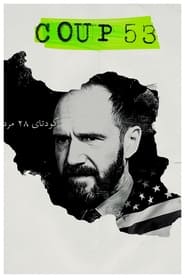
Coup 53
Download English Subtitle
Release info
Tags
English subtitle preview
The first 200 lines.
I began making this film back home in Iran in 2009
And have since traveled thousands off miles
in search of witnesses and archive material
in 2012 I gave a TED talk
in which I spoke publicly for the first time about making this film
Coup 53
I am going to be telling the story of this man
doctor Mohamed Mossadegh
He was our first democratically elected prime minister
And the closest Iran came to having its own Mahatma Gandhi
My film has taken so long to finish
that some of the people I have interviewed have since died
In 1952 Time magazine named him man of the year
because he had nationalized Iranian oil and pissed off Winston Churchill
and the company that controlled our oil
you now know it as PB
so in August 1953 Eisenhower and Churchill
staged a coup and overthrew Mossadegh
In 1953 the United States together with Britain
have participated in
supporting a coup in Iran
that got rid off Mossadegh who was a left leaning leader of Iran
and restored the Shah to the power in Iran
I grew up in pre-revolution Iran under the rule of the Shah
went to the school and most of the teachers were political activists
frequently arrested by the secret police
My life under the Shah came to an end in 1975
when I was sent to England for school.
Suddenly at 15 whole new culture, new environment, new language
, and a new tribe to observe: the British
But unlike the Americans,
the British government has never officially
acknowledged its role in the coup.
I must insist that I do not think at any time we really planned a coup.
Mossadegh was potentially the father of a future democratic Iran
An Iran in which a young 12-year-old boy would
not have had to have his teachers arrested or be scared of reading a book
Nothing in my 30-year career as a documentary maker
has prepared me for the remarkable
discovery I am about to make on this journey
Evidence that has the potential to turn a dark chapter in history
inside out
I am the deputy director and research
director at the national security archive
which is a non-governmental organization based at George Washington University
so I oversee a lot of our research projects looking at declassified documents
from US and other archives
and then I have a couple of my own projects
The main one that I work on is on US-Iran relations
and I spend a lot of time looking at that historical issue.
So, these are the papers that I have been waiting
to see; you have seen them over and over again?
Yes. what have you got?
Well,all kinds of stuff from the whole period of post war of
US-Iran relations so we have been collecting over the years
So among other things I have got a small collection of CIA materials.
They are probably
I would guess maybe 200: 300 pages of CIA records that have been released
officially released over time over the years
200:300? Something like that, yeah
They’re at least three internal histories that the CIA has produced
In probably the late 1970s, one of these items was produced
Is this when you write to them asking for information?
This is the response letter to me saying
"we are enclosing this document that you requested"
and then here is the document itself called the battle for Iran
The battle for Iran! Which is still going on!
This is what is new about this release: covert action
In earlier versions which you will see, this is all plotted out
- keep that out - so, we can take this one out
There is still a lot there. I like the fact that there is still lot of blank pages
They are supposed to show you what was there. Right
And what came out that was new? I was in Tehran
On the sixtieth anniversary of the coup
August 19, 2013, I was in Tehran
what was new was essentially this page
the military coup that overthrew Modsadegh and his national front cabinet
was carried out under CIA direction
They had never to my knowledge officially acknowledged their role
- Right! - in the coup
And you see here the first part of that sentence there
As an act of US foreign policy
conceived and approved at the highest levels of government
It was not an aggressively simplistic solution, clandestinely arrived at
but was instead an official admission by both the United States and United Kingdom
that normal rational methods of international communication
and commerce had failed
i.e., Mossadegh was in the way
-And even acknowledged the British role -Right
So, this is the CIA outing the British
who have not yet confessed to it
Right Do you know what, Malcom? um
I am standing
in front of the filing cabinet
of a drawer full of documents
that essentially changed the fate of my country
and changed my fate: what happened to me, what happened to my family,my my..
It was like how your lives, your fate, your destiny is
- encapsulated - Yeah, in half a file drawer
This is it.This changed Iran
This box of papers
You had a million dollars in cash that will run the coup, right?
That is right, and we used about sixty thousand dollars of it. That was all
- Are you saying that sixty thousand dollars was all it took? -Yep
I do not know where the money went
and I did not ask because it was so damn little,that uh
that no one was going to ask me any questions
All they asked me was how the dickens did you get away with spending so little
For those among you who know anything about the coup
Kermit Roosevelt's name has become synonymous with the events of 1953
His version of the story, the stuff of books and TV documentaries
has been the received wisdom for decades
But what we are about to discover in the making of this film
will reveal the suppressed history of what really happened and who was responsible.
This is the most important document our film has discovered
in its nine-year history of production
This has gone on fifty or sixty years
With the United States has been involved in overthrowing governments
Mossadegh back in 1953. No body knows who Mossadeq was
Democratically elected prime minister of Iran
He was overthrown by British and American interest
because he threatened oil interest of the British
And as result of that, the Shah of Iran came in: terrible dictator
Result of that you had the Iranian revolution coming in
and that's where we are today
Good evening!
on day thirty-seven of the seizure of the American embassy
and the kidnapping of the hostages
the United States has now moved the crisis toward a showdown stage
For most Americans , the Iran story begins in 1979 and the hostage crisis
that gripped the world for 444 days and cost Jimmy carter his presidency
But for us Iranians, the story goes back to 1953
and the CIA/MI6 coup that crushed democracy in our homeland
Three hundred killed and hundreds wounded as a conservative estimate
Mossadegh and his government were swept from power in favour of general Zahedi
the man appointed by the Shah in the first place
The thoughts of Britain instinctively turned to Abadan
that monument of British enterprise and engineering skill
The force to abandon what we had created in the wilderness
Is it to much to hope
that we shall see once more the tankers of Britain at Abadan
maybe sanity will yet prevail
and Iran and Britain go forward in harmony.
You know I was here earlier looking through the titles on these boxes
Iran–Contra
CIA Family Jewels
Iran-US relations
Nest of spies, documents from Iran ,Chile Chile
Behavioral study,Mind control. and there is incoming FOIA
- that means new stuff coming in - Right we get stuff everyday
Because we have been filing requests for years and years
It's like a freight train or it just keeps coming and keeps coming
Are you okay for me to spend some time just going through these ?
Absolutely, this is the idea yep help yourself
Thank you very much. I don't know where to start
-Alright -Maybe, I will one day win the battle for Iran.
If I can read enough of those
- Happy reading! - Thank you so much, Malcolm.
The battle for Iran!
It is an entire CIA profile of Mossadegh
Mossadegh's power rose from his consummate ability
to appeal to national aspirations and emotions
The above fact is too little to explain his often bizarre behaviour as a politician
We would call him doughty in some respects
but he was not impersonal. Some of the very moderate person parliament
Parliamentarians would weep when he spoke
even though they knew perfectly well that it was ruinous for their country
and impractical
His way of living and general appearance did not stike one as being
the sort of person you would think of as a prime minister
and I do not mean that because he did not wear stripe trousers
In fact, he always wore pajamas
and that was a rather odd
figure for the future prime minister to cut
My uncle was someone who did not go in for formalities as such
He was who he was
And because of his dress
they didn't think they are prepared to make the difference
Of course, it was the first time that heads of state or politicians
came to a bed side of a prime minister to discuss politics with him
So, it was quite strange in western eyes
Mossadegh was truly a remarkable figure
his father had been finance minister of Iran for decades
his mother had been a princess coming out of the Qajar dynasty
While he was still a teenager,
he became the chief tax collector for his home province
And he greatly impressed people
with his honesty and his seriousness and his efficiency.
He went on to become highly educated. He was the first Iranian
to receive a doctorate in laws from a European university
He was probably the most highly educated Iranian of his generation
I do not think that there has been in the last 50 years
anybody more prestigious than Mossadegh in the history of the country. Why?
For one thing: Mossadegh was incorruptible
The second thing was: he was against the power
always stood up to the power.
End of Empire was a major fourteen-part television series
that chronicled the unwinding of the British empire country by country.
Even though, Iran was technically not part of the empire
it had been dominated for so long by British commercial interest
Coup 53 subtitles in other languages
More English subtitles for Coup 53
- Coup 53 2019 720p WEBRip 800MB x264 · 52 downloads · 2025-12-06
- Coup 53 2019 720p WEBRip 800MB x264 · 432 downloads · 2025-01-06
- Coup 53 2019 1080p WEB h264-NiXON · 53 downloads · 2023-10-24
Comments
No comments yet. Be the first to leave one.