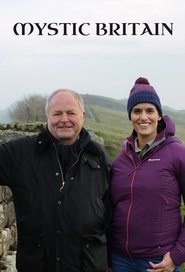
Mystic Britain
Download English Subtitle
Release info
Tags
English subtitle preview
The first 200 lines.
Witches. Do you believe in witches?
I think I do.
This time, Mary-Ann and I take on superstition
and the medieval dark arts in Britain.
I've decided to harness the forces of evil.
People believed that the devil and his disciples
walked the earth...
How many dead bodies would there be?
It would have been in the hundreds.
Spreading evil and disease.
A world dominated by fear.
This is feeding off dead bodies.
Yes.
But follow the dark arts,
and you could pay the ultimate price.
Bit of a rock and a hard place, then,
hanging or burning, then.
It was the time...
Of the witch.
It's becoming more and more like a Dan brown novel.
It does appear to be.
And even less plausible.
The British isles have a very long history.
People have been living here for tens of thousands of years.
And the further back you go,
the more elusive and mysterious
the lives of those ancient Britons appear to be.
Stonehenge. What's the point?
It's a bit like Lego.
Oh.
Who were these ancient Britons?
What did they believe?
What was their world like?
Are you a fan of human sacrifice?
I don't practice it myself.
As a talk show host,
I should know how to ask a good question.
Where are we going to, Mary-Ann?
Clive, we are off on an adventure.
But answers are not really my strong suit.
Mummies or not mummies?
It's a tricky one, isn't it?
So I've roped in
someone with more insight into the ancient world
than I'll ever have...
Anthropologist Mary-Ann Ochota.
Old bones, looking at the past,
you know everything, don't you?
I like to ask a lot of questions about the past.
Together we're going to unlock the mystic secrets
of the ancient Britons.
Prepare to embrace the very odd indeed.
Right. I'm ready for all comers.
The east of England,
a landscape wrestled back from the sea,
famous for its flatness and...
Well, its flatness.
Well, it's the epitome of gentle British countryside around here.
But when you start delving into Britain's mystic past,
you soon discover that appearances can be deceptive.
Hard to believe today, but in medieval times,
evil was thought to be everywhere.
No more so than here in the small village of Troston
in the heart of east Anglia.
Locals, like the rest of the country,
believed the devil stalked the land,
causing chaos and death.
Neighbor turned on neighbor,
people thought the whole world was going to hell.
It was all pretty grim,
so much so that people believed
that the church alone couldn't save them
from this evil infecting the earth.
Troston's village church, St. Mary the virgin,
is a perfect example.
It's been here since the early 1300s.
It's an ancient Suffolk church.
As I understand it,
there's superstition written literally on the walls.
But, as you can see,
the hand Mark there.
Is that a date?
There's loads more inside.
I don't know why I'm whispering.
Inside the church,
the walls are covered in strange symbols
that I've never seen in a church before.
Matthew champion has spent years studying this curious graffiti.
Hi, Matt, sorry to disturb you in your...
What are you, rubbing the pictures?
I'm doing tracings at the moment,
so what we've got is an acetate here
we are laying over these inscriptions,
and then we're just marking them out.
So, how long have these inscriptions, bits of graffiti,
how long have they been here?
Well, we've got a complete mixture on the wall here.
Some of this is dating back to 14th century.
But unfortunately dates don't really start appearing
until middle of the 16th century.
So, many of the earlier inscriptions
we have to date from other means.
So in the case of this full-length figure
we have here of a woman,
we can date this back to the late 14th or early 15th century,
based upon the style of costume she's wearing.
We've started to realize that this can tell us
things about the past that we can't find elsewhere.
So, particularly with some of our text inscriptions,
they're recording events, they're recording lives.
And some of these are, you know, actual informal memorials.
Yes.
So in many cases these may be the only Mark
these people ever leave on this planet.
Mm.
There are hundreds of these scratch marks
scraped into the walls,
and they have a very creepy name.
Are any of these what they call witch marks?
There are a number of these markings in here,
which a lot of people do call witch marks,
but that's really a misnomer.
These are what we call, um, ritual protection marks,
uh, or apotropaic marks,
and they're actually designed to ward off evil.
So, if anything, these could be regarded as anti-witch marks.
Anti-witch marks, yes.
If we go and look at the chancery,
you'll see the whole area is absolutely covered.
Let's go and have a look at that, shall we?
Yeah. This side.
But what could they be protecting themselves from
that justified defacing their own church?
It might help
if I actually draw this one out for you, okay?
I'll Mark out the eye there,
take it round there,
and we have a nice bulbous nose sticking out there.
And then we have a big open mouth out there,
full of sharp teeth.
And then right there we have a big lolling tongue
coming right out.
It's like a scene from a hammer horror film,
a sinister presence in the house of god.
So, why is there an image of a demon in church?
Um, in the middle ages, demons were very, very real.
Um, demons were what brought misfortune.
Uh, demons were what suddenly, um, you know,
caused all your cattle to drop dead.
Demons were what brought sudden illness or caused sudden death.
Um, you know, demons were part of this world.
Yeah.
But there's not just a demon here.
There's a deeper Mark scored over the top
that shows just how scared people were
of this demonic threat.
The interesting one about this
is you'll notice that right over the top
we have this pentangle,
this five-pointed star.
And you'll see it's much deeper than the demon,
it's been inscribed,
it's almost like it's been gone over time and time again.
And it sits directly on top of that demon,
pinning it to the wall there.
Nowadays, the pentangle is considered a satanic symbol.
But according to Matt,
it meant exactly the opposite in medieval times.
The pentangle is unusual
in the fact we actually have a written account
that tells us exactly what it means.
If you go back to the 14th-century poem
of "Gawain and the green knight,"
which I am sure you've read in the original middle English.
I read it every night.
Absolutely.
Um, he talks in there about the pentangle,
and he says it represents the five wounds of Christ,
it represents, um, the five virtues of the knight.
It represents the five fingers of the hand given by god
to do good deeds.
So, this, in this instance,
we see the pentangle being used to pin this demon to the wall.
Right.
Essentially it's taking away its power,
and it's trapping it here.
So, it's acting more like a demon trap.
Right.
So, we're standing where a demon could be trapped
in that pentangle.
It's becoming more and more like a Dan brown novel
the whole time we're here, isn't it?
- It does appear to be. - Yes.
And even less plausible.
The idea of demons
wandering around cursing everyone
does sound a bit odd.
Was something strange going on to cause such hysteria?
I'm meeting a man here
at the Ashmolean museum in Oxford
More English subtitles for Mystic Britain
- mystic britain s01e10 time tripping 720p WEB H264-UNDERBELLY · 19 downloads · 2019-10-17
- mystic britain s01e08 ice age shaman 720p WEB H264-UNDERBELLY · 16 downloads · 2019-10-17
- mystic britain s01e07 human sacrifice 720p WEB H264-UNDERBELLY · 19 downloads · 2019-10-17
- mystic britain s01e06 mummies 480p web x264 rmteam · 17 downloads · 2019-10-17
- mystic britain s01e05 the pagan prince 720p WEB H264-UNDERBELLY · 23 downloads · 2019-10-17
- mystic britain s01e04 the revenants 480p web x264 rmteam · 12 downloads · 2019-10-17
- mystic britain s01e03 hadrians mystic wall 720p WEBH264-UNDERBELLY · 22 downloads · 2019-10-17
- mystic britain s01e02 the rollright witch 720p WEB H264-UNDERBELLY · 21 downloads · 2019-10-17
Comments
No comments yet. Be the first to leave one.