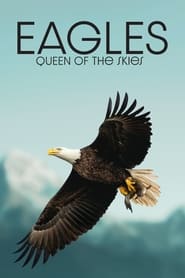
Eagle - Queen of The Skies
Download English Subtitle
Release info
Tags
English subtitle preview
The first 200 lines.
Eagles, dramatic predators
that have inspired myths and legends for millennia.
Though top of their food chain,
they battle for survival,
working tirelessly to raise their young.
Powerful, diverse, agile,
this is an Epic story of conquest for one individual.
But what does it take to become a ruler of the skies?
Nearly a meter long, one of the largest flying birds.
It takes two and a half meter wings
to get its six kilo body into the air.
The white-tailed sea eagle is a master of survival.
In bleak winter when food is in short supply,
it hunts wildfowl,
driving the Coots underwater until they tire.
There are 60 species of eagle.
They are among the largest and most impressive birds
united by their killing skills.
Soaring on huge broad wings,
scanning the landscape with eyes
some three and a half times more acute than our own.
They can swipe pray with enormous talons
and devour their victims with meat cleaver beaks.
But the white-tail is distracted by the calls of his mate.
Eagles pair for life
and every year this couple return to their nest.
They have built their home
in the cold Northern forests of Scandinavia.
Calling helps renew their bonds.
They may be together for 20 years or more.
Mating is a delicate balancing act
that requires patience and trust from both parties,
but they won't be able to enjoy
this intimate moment for long.
One of their offspring from last year
is hoping to be welcomed home to the nest.
It'll be several years before the chocolate brown chick
will lighten and get its characteristic white tail.
The youngsters will often stay close to their birthplace
for their first few years.
The plaintive calls beg for a free meal,
but it's not going to work.
With the female pregnant,
they need to make some preparations.
It's March and still pretty cold around their wetland home.
The male eagle is searching, but he's not after food
or even the frozen drinking water.
He diligently gathers
the driest reeds and grasses he can find
and takes them back to the nest.
The huge platform, or aerie,
gets bigger each year with the home improvements.
The grass goes on the inside to create a bowl,
it's like papering the nursery for when the baby comes.
Blue tits appreciate his handiwork.
Smaller birds, often nest in the underside of the aerie.
As long as the eagles don't eat them,
they'll do a good job of keeping other predators at bay.
All eagles build enormous nests
and in the Amazon,
there is plenty of building material for harpy eagles,
providing they can break it from the trees.
They're impressive aeries can be a meter and a half across
and well over a meter deep.
It's a good platform, but it doesn't offer much shelter.
And the rainforest lives up to its name.
The eight long weeks of incubation
can be an uncomfortable period for the parents to be.
Over the years, the nests of sea eagles can become so huge
the trees have been known to collapse under their weight.
After a few weeks, the female lays two baseball sized eggs.
The grass bowl lining the nest
will form cups around the eggs, keeping them warm
and stopping the parents from squashing them.
Now begins the arduous period of incubation.
For over a month, both parents will take turns
tending to the clutch while the partner goes off to feed.
See eagles are supreme hunters of fish,
but before long, even their fish catching skills
are being put to the test.
There are now two new mouths to feed.
Sea eagles eat around 500 grams of food a day
and it won't be long before the chicks are begging
for a similar portion.
The male returns to the nest
for his share of babysitting, relieving his larger mate.
Female eagles are always a kilo or so bigger than the males.
She performs her toilette away from the nest,
helping to keep the house clean.
He butches his latest catch into bite-sized chunks.
Back in the Amazon, the weather is finally brightening up.
Mother's able to dry off just in time
to welcome her new chick.
Harpies usually only brewed one of their eggs,
meaning only one will hatch.
The male does most of the hunting for the family.
She calls him in, her voice echoing across the forest.
The pair regularly swap roles to help share the burden.
Dad's brought dinner and a clawed hand reveals the victim,
a three-toed sloth.
Harpy eagles often snatch sloths, monkeys,
and other animals from the tree canopies.
Across the eagle family,
all manner of meals are brought to the nest
from ducks to deer,
but for our young white-tails, it's usually fish.
Eagles are fastidious in their cleaning,
both the nest and themselves, requiring constant attention.
To be able to hunt, they must maintain their feathers,
which are so dense and strong
that they make up 5% of the parent bird's weight.
With their chicks flourishing,
the parents almost seem to celebrate their success.
They need to be totally committed to the little ones
who will be dependent on their help
for the next five months.
Another fish supper.
At five weeks old, they are starting to look a lot
like their parents, but already it's clear
that one youngster is getting all the food.
The parents work hard to try and provide for them both.
Eagles usually lay two or three eggs,
but in some species it's unusual for all to survive.
Often the largest and fittest
of the chicks will get the most food
and the runt will waste away.
The parent birds will fish throughout the day,
though only around 30% of tries would result in a meal.
Having favoritism seems cruel,
but ensures the parents can invest
all their energy in one offspring.
And that it's the one
with the best chances of a successful future.
But despite their best efforts,
by July, there is just one youngster in the nest.
It's possible the brother fell,
but most likely he was starved
or displaced by his larger sister.
When there is only one survivor, it's usually female.
Even at this age, she's the bigger sex.
Does this take the pressure off the parents
or just make their quest all the more important?
They can't afford to lose another chick.
She spotted a dead eel, easy pickings.
No eagle turns his nose up at a free meal.
While mum's fishing, dad delivers his catch of the day.
Sea eagles are real generalists,
the chick's big enough to swallow the young rat whole.
Summer is a productive time for the forest of Europe.
Long hours of sunlight result in an abundance of food.
As the season passes,
the young female goes from strength to strength,
having lost most of her infant down,
but today her parents seem less forthcoming with food.
They are trying to encourage their daughter
to start exploring her world.
The parents come and go, teasing their chick.
She seems agitated at their lack of parenting,
but her frustrations are their intention.
She suddenly seems to discover her wings.
The first steps of exploring are called branching,
branching out on the limbs of the tree.
For 12 weeks all she's known is the inside of the nest,
but that's about to change.
Sea eagles are often described as, "flying barn doors."
Her huge wings will take a while to master.
After a few days, her confidence grows
and she can start to explore further.
She feels ready for her first hunting trip.
She has a lot to learn.
Luckily, her parents will still offer food
for a few more weeks, plenty of time to practice.
With acute binocular vision,
eagles have amazing depth perception,
making them masters at snatching prey on the wing
and none more so than the African fishing eagle.
To perform such aerobatics,
their feathers need a great deal of maintenance.
Like all their family, the African fishing eagles
perform a duet to proclaim their lifelong devotion.
The young female still has a long way to go
to become a true queen of the sky.
But she has another attempt at self-sufficiency.
The first thing to catch her eye doesn't look too promising.
A dead fish, on the other hand,
is much more what she's accustomed to.
Rocks are useful tools for cleaning her beak.
Winter lies ahead, a tough time for all animals.
As summer draws to a close,
the wetlands are getting busy with migrating wildfowl.
This is the first time our female has seen ice.
Her parents are still around,
but are no longer offering free food.
There are other eagles too,
birds that have moved from Northern territories
to a more sheltered wintering spot.
Copying the adults examples,
she finds weaker patches in the ice
using four and a half centimeter claws
to expose drinking water.
Eagle - Queen of The Skies subtitles in other languages
Comments
No comments yet. Be the first to leave one.