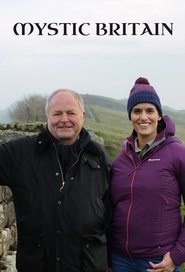
Mystic Britain
Download English Subtitle
Release info
Tags
English subtitle preview
The first 200 lines.
This time on mystic Britain...
Are you a fan of human sacrifice?
I don't practice it myself.
Mary-Ann and I enter the murky world
of iron age human sacrifice...
My, what a big knife that is, Katie.
Using our razor-sharp investigative skills...
This is a human body obviously.
I spotted that straight away.
We'll be searching high and low...
You can go down first
just to check that it's big enough for me to get down.
And competing in an iron age cook-off.
It's gonna be the best thing before sliced bread.
And Mary-Ann comes to a shocking conclusion.
I don't know why everyone's so against it.
What? Human sacrifice?
Yeah, why not?
You're looking at me with a rather evil eye there.
The British isles have a very long history.
People have been living here for tens of thousands of years.
And the further back you go,
the more elusive and mysterious
the lives of those ancient Britons appear to be.
Stonehenge. What's the point?
It's a bit like Lego.
Oh.
Who were these ancient Britons?
What did they believe?
What was their world like?
Witches. Do you believe in witches?
I think I do.
As a talk show host,
I should know how to ask a good question.
Where are we going to, Mary-Ann?
Clive, we are off on an adventure.
But answers are not really my strong suit.
Mummies or not mummies?
It's a tricky one, isn't it?
So I've roped in someone
with more insight into the ancient world
than I'll ever have...
Anthropologist Mary-Ann Ochota.
Old bones, looking at the past,
you know everything, don't you?
I like to ask a lot of questions about the past.
Together we're going to unlock the mystic secrets
of the ancient Britons.
I've decided to harness the forces of evil.
Prepare to embrace the very odd indeed.
Right. I'm ready for all comers.
Human sacrifice.
A brutal practice from ancient Asia,
the pacific,
south America...
And Dorset.
According to Mary-Ann,
in the iron age, this part of Britain
was a hotspot for human sacrifice.
Now we have some peculiar customs...
Like Morris dancing and cheese rolling.
But ritually killing people just doesn't seem very...
Well, British.
So what was going on in iron age Britain?
To find out, Mary-Ann has dispatched me
to one of the great centers of iron age civilization,
maiden castle,
Britain's largest iron age hill fort,
if I can actually find it.
Do I go right or left?
Let's try left.
I'm no expert,
but this doesn't look much like a castle or even a fort.
Perhaps their strategy
was to exhaust attackers with a steep climb
or just get them thoroughly lost.
If that's the case, it's certainly working on me.
I don't know which way to go.
Seem to go right.
What I need is a different perspective.
OK, now that is impressive.
A Titanic fortress,
hewn from a natural hill
by the hands of iron age Britons.
What it lacks in battlements and stone walls,
it makes up for in size
and in the size of these great big ditches,
the protective ditches
that stop people attacking up here, I suppose.
A series of man-made banks and troughs
up to six meters high
defend a vast enclosure at the very top of the hill.
Well, it is an enormous area up here.
The sign down below
says this is the size of 50 football pitches,
and you could get at least that number of games up here.
So what did people do up here?
How did they live?
And can it shed any light on whether iron age Britons
practiced human sacrifice?
What I need is an archaeologist.
And what do you know?
Hello, Niall.
Hello, Clive.
Good to see you. Now, you're a great expert...
Well, so they say.
Yeah.
Professor Niall Sharples has spent a fair chunk of his life
investigating the world of iron age hill forts,
which is extremely helpful
because all I can see is a very large field.
Well, for the visitor, though,
you do have to use quite a lot of imagination.
I think if you have a look
at this I've brought with me,
it'll give you a better impression
of what it might have looked like in the past.
Press that button there.
Oh, this is lovely.
It's an iron age iPad.
And we can see in this picture, the more sharply declined,
the walls and the ramparts and so forth.
Yes, they would be much more pronounced
than they are now.
What we're seeing is 2,000 years
of gradually decay and accumulation.
- So smoothing out. - Smoothing out, yeah.
They would be sharp, well-defined.
They could even have had timber walkways along the top.
The site was first occupied in the stone age,
around 6,000 years ago,
but it was the iron age people
who moved in around 600 B.C.
That built the amazing fort we see today.
So, how many people would have occupied this site?
Well, I've done some estimates.
I think about maybe 1,400 people.
You know, that kind of number of people,
that would be my best guess at the number of people
that would be inside this, so a couple of hundred houses.
That sounds like a lot of people.
Well, it is.
So would it be better to describe this
as a maiden township
rather than a maiden, maiden castle?
Yes, no, I think this is a big settlement
where people lived permanently,
and it was as close to a town as you can get
in prehistory.
Protected by the great walls,
Niall believes the sheer size of the settlement
and its dominating position in the landscape
would've made the people up here major players in the area.
It's a sophisticated society.
The amount of effort that goes into this,
the amount of construction, the amount of organization,
you know, to arrange all the food
to feed the people that are coming
to build the ramparts
and to bring in the resources from miles away.
And the fertile land around here
was well up to the task
of supporting such a large community.
It's a relatively rich landscape,
intensive production of grain,
so wheat and barley,
you know, there's huge quantities of that
being grown in the fields around here,
and that would be probably the main foodstuff.
Maiden castle was a seat of power,
rich in local resources
and safe in the knowledge
that it was the biggest, baddest hill fort around.
This was the good life, iron age style.
But according to Niall,
there might have been a darker side to this good life.
More than 80 years ago, a body was dug up here,
and there was something very unusual about the burial.
So this is one of the trenches
that was excavated in the 1930s,
and at the bottom of this pit
there's a burial of a young male,
probably 20 to 30,
and he's sort of sitting up at the bottom of this pit.
When it was excavated,
archaeologists penned a handy sketch of the find.
It shows the body buried in a very odd position.
He's sitting in there.
That's significant, isn't it?
That he's sitting rather than lying down?
I think he's arranged.
It's a funny kind of arrangement.
It's not something that we see very often.
Most of the admittedly tiny number
of iron age burials we know about
were laid in a fetal or crouching position,
not sitting upright.
Niall thinks the location of the body
is also highly significant.
About 350 B.C.
More English subtitles for Mystic Britain
- mystic britain s01e10 time tripping 720p WEB H264-UNDERBELLY · 19 downloads · 2019-10-17
- mystic britain s01e08 ice age shaman 720p WEB H264-UNDERBELLY · 16 downloads · 2019-10-17
- mystic britain s01e06 mummies 480p web x264 rmteam · 17 downloads · 2019-10-17
- mystic britain s01e05 the pagan prince 720p WEB H264-UNDERBELLY · 23 downloads · 2019-10-17
- mystic britain s01e04 the revenants 480p web x264 rmteam · 12 downloads · 2019-10-17
- mystic britain s01e03 hadrians mystic wall 720p WEBH264-UNDERBELLY · 22 downloads · 2019-10-17
- mystic britain s01e02 the rollright witch 720p WEB H264-UNDERBELLY · 21 downloads · 2019-10-17
- mystic britain s01e01 witches and demons 720p WEB H264-UNDERBELLY · 17 downloads · 2019-10-17
Comments
No comments yet. Be the first to leave one.