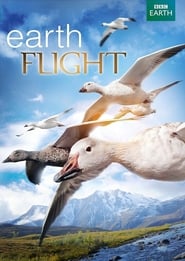
Earthflight
Download English Subtitle
Release info
Tags
English subtitle preview
The first 187 lines.
Earthflight.S01E05.720p.BluRay.x264-aAF English HI SRT Subtitles - UF (v1.04)
It's a universal dream to fly like a bird...
...to soar on wings into the heavens.
But it's nothing compared to the reality.
This is our planet seen as never before.
A bird's-eye view.
Theirs is a journey that covers the world...
...filled with astonishing natural events...
...extreme challenges...
...and hard-won rewards.
This is the world on the wing.
It's autumn across the Northern Steppes of Asia,
and flocks of demoiselle cranes are heading south for the winter.
It's a race against time as they must reach India before winter closes in.
Blocking their path is the Himalayas, the highest mountain range on earth.
It's a barrier that extends for 1500 miles and in places soars five miles high.
Flying over the top isn't an option.
The only way through is a treacherous maze of valleys and canyons.
Each year thousands of cranes negotiate a pass that leads them 200 miles to the other side.
They have a huge challenge ahead of them.
Many will not make it out alive.
Already they face danger - bad weather is closing in.
They gain height to face the challenge, but they're battling against a head wind.
No matter how hard they try they make little progress.
It's the last thing they need so early in their journey.
The wind stops them in their tracks,
forcing them to fly lower and lower.
On the valley floor villages nestle in the most sheltered spots.
It's here that the cranes find refuge.
They mustn't hang around for long.
If winter comes early they won't make it out alive.
These cranes aren't the only ones attempting the journey.
Above are some of nature's most skilled high-fliers.
Five miles above the face of the earth
bar-headed geese take on the Himalayas... the hard way.
Here the temperature plummets to minus 40 degrees
and the air is so thin most animals would die within minutes.
But these extreme aeronauts take it in their stride.
They could climb to twice this height and still survive.
Their blood can absorb oxygen better than any other bird,
a real help in this rarefied air.
Bar-headed geese cross the vast mountain range in just a few hours.
Ahead lies their winter destination, the warm lowlands of the Indian subcontinent.
They've spent the summer on the sparsely inhabited steppes of Siberia.
Now they are heading for the second most populated country on earth.
The Blue City of Jodhpur in Rajasthan
is one of the first landmarks that migrating birds encounter.
Long-legged buzzards are among the early arrivals,
and they are desperately in need of a meal.
Compared to the barren steppes,
this landscape of roads and buildings is actually a land of plenty.
The famous Mehrangarh Fort is home to the buzzard's favourite prey.
By gaining height he can study their movements.
Pigeons love this ancient citadel.
Their ancestors would have nested on cliff faces.
Nowadays, these battlements offer superior accommodation.
But even in the midst of the city the pigeons can't escape their natural predators.
The buzzard dives at the masses.
The pigeons take evasive action, falling like leaves.
A single bird makes a far easier target.
But he drops out of reach.
The fort's defences provide vital boltholes.
But he's not called the long-legged buzzard for nothing.
Although all he gets this time is a fistful of feathers.
He checks another pigeonhole.
But nothing.
He's spoilt for choice. So many pigeons, but which one to go for?
The pigeons all use the same tactic. He needs to up his game.
He soars high to find a likely victim.
And dives at over 100mph.
It will be a welcome meal after such a long journey to get here.
Pigeons have succeeded by learning to adapt to our way of life.
They are now found on every continent except Antarctica.
As well as a few humble pigeons,
Australia boasts a colourful selection of native birds that have also taken to urban living.
More species of parrot live here than in any other continent -
a dazzling array of over 50 varieties.
As well as in Sydney, rainbow lorikeets are found all along Australia's east coast.
The popular Gold Coast is also one of their favourite locations.
These cheeky birds have adapted their lifestyle to our own
and now prefer the sweet delights of city parks and gardens.
They can't resist ripe fruit, especially the cultivated varieties.
After a spot of scrumping their thoughts turn to romance.
The males try to impress the opposite sex by clowning around.
It usually works. Parrots have proved very successful at breeding in our backyard.
Even in the outback parrots have multiplied by living on our free handouts.
Cockatoos... thousands upon thousands of them.
They form huge raiding parties, laying waste the farms and agricultural fields
that bring riches to an otherwise barren land.
A life of petty theft means living on their wits.
They are the most intelligent pest a farmer is likely to encounter.
But one of the most familiar parrots of all lives a blameless existence,
right in the heart of the outback.
Uluru, also known as Ayers Rock, lies at the very centre of the continent.
It's remote spots like these that the budgerigar calls home.
This tiny parrot is the most popular of all pet birds,
but in the wild it lives far from human company in some of the driest parts of the outback.
For much of the time they flit around in small groups, just a few hundred strong,
sharing information on where the best food and water can be found.
These small search parties look for the wild grass seeds
that make up the budgie's staple diet.
Grazing animals such as kangaroos show where ripe grasses are most likely to be found.
The budgies also watch what other flocks of birds are getting up to.
Gradually the merry band gathers followers.
Soon it numbers many thousands.
Then it grows to millions.
This is one of the largest flocks of budgerigars ever seen.
They now act like a super-organism,
pooling their knowledge to find the best sources of food and water.
With so many minds working together,
they have an overview of vast areas of the outback.
And finally they hit the jackpot...
...a remote waterhole.
Wave upon wave take turns to drink.
Each bird has just seconds to swallow what it can
before another drops in to take its place.
But wherever birds gather... so do their predators.
Black falcons take up residence,
confident that each day food will land right on their doorstep.
But thirsty budgerigars give them a run for their money.
Budgies can perform some of the fastest manoeuvres of any bird.
They are so skilled they even sneak in a drink between attacks.
It drops like a stone just before the grab.
Again it falls just out of reach.
Turning on a dime it out flies the falcon time and time again.
Despite their best efforts the falcon and his partner go hungry.
A waterhole gives the budgies a break from wandering.
But once the local grasses have been plundered,
the huge flocks will split into small roaming parties once more.
Back in the Himalayas the weather has cleared.
The downed cranes have survived the days of bad weather by raiding farmers' fields.
Himalayan villages have inadvertently become a lifeline for migrating birds that run out of luck.
But the cranes' presence isn't welcomed here.
The travellers are pushed further down the valley.
As the sun appears, the dry riverbed creates eddies of rising hot air.
They feel the welcome breeze and open their wings to catch it.
The demoiselles begin to levitate upwards as if by magic.
With clear skies and a light wind it seems their luck has changed.
But before them lies an even greater challenge, a Himalayan valley of death.
Here airborne predators patrol the canyon walls.
They've been expecting the cranes.
Golden eagles are among the waiting birds of prey.
They launch a high-speed ambush from the heavens.
The eagle singles out an exhausted crane.
The eagle is part of a double act.
Driving the crane into the talons of her mate.
They're well-practised at this manoeuvre.
For the pair, it's now a game.
The rest of the flock make their escape.
But these hills have other eyes.
Peregrine and laggar falcons are the next big challenge.
Half the crane's size they rely on speed and sheer force of impact to kill.
But the crane reacts by dropping away, reducing the speed of any collision.
The falcon's only hope is to knock it off balance.
This young crane isn't out of the woods yet.
She has been separated from her family and is alone and exhausted.
Above, Himalayan vultures are starting to gather.
At this time of year they make a good living from birds that perish on migration.
She'II need all the luck she can get if she's ever to see India.
The remote Himalayas aren't the only place vultures can be found.
Back in Rajasthan these scavengers can make a living without leaving town.
Vultures were once a common sight over India.
Today Jodhpur is one of the few cities where they still make a home.
Indian vultures now mostly live on road kill.
But if this fails they'll find food the old-fashioned way -
waiting for one of India's most famous hunters to provide a meal.
They can fly for miles with hardly a wing flap.
The vulture's keen vision spots a tiger on the prowl.
Deer are a tiger's favourite prey.
And running deer ring the dinner bell.
Dinner is served.
But a vulture won't risk landing while the owner's around.
They gather and wait their turn.
But suddenly the tiger ups and leaves her prey.
She must have other things on her mind.
The vultures won't waste this golden opportunity.
But the reason the tigress left soon becomes clear.
She has young cubs.
At three months old the cubs have started to eat meat.
It's time to give them a treat - if there's any left that is.
The vultures are good at bolting their food and retreating when the rightful owners arrive.
This is no time for heroics.
The tigress returns just in time. Her cubs won't go hungry today.
Back in civilisation, the pigeons are also on the hunt for any scraps they can find.
Their travels take them over some of the most magnificent sights in this part of India.
The Palace of Winds in Jaipur.
The Lake Palace of Udaipur.
Earthflight subtitles in other languages
More English subtitles for Earthflight
- Earthflight S01E06 720p BluRay x264-BaKuDoU · 47 downloads · 2012-11-20
- Earthflight S01E04 720p BluRay x264-BaKuDoU · 57 downloads · 2012-11-20
- Earthflight S01E03 RERIP 720p BluRay x264-BaKuDoU · 52 downloads · 2012-11-20
- Earthflight S01E02 RERIP 720p BluRay x264-BaKuDoU · 62 downloads · 2012-11-20
- Earthflight S01E01 720p BluRay x264-BaKuDoU · 65 downloads · 2012-11-20
- Earth Flight Ep01 North America (2011) 720p BluRay x264 · 17 downloads · 2012-10-21
- BBC - Earthflight · 53 downloads · 2012-10-02
Comments
No comments yet. Be the first to leave one.