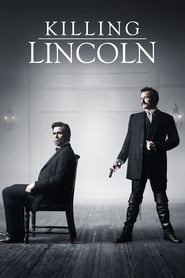
Killing Lincoln
Download English Subtitle
Release info
Tags
English subtitle preview
The first 200 lines.
Hello, John.
I am harmless except to myself.
I hear you.
You will please recollect
you are addressing my daughter, and in my presence.
Yes, I'm offering her my heart and hand
just as she wants them... with nothing in 'em.
I am aware, Mr. Trenchard,
you are not used to the manners of good society,
and that, alone, will excuse the impertinence
of which you have been guilty.
Don't know the manners of good society, eh?
I guess I know enough to turn you inside out, old woman,
you sockdologizing old man-trap.
On the evening of April 13th, 1865,
John Wilkes Booth initiates his plan
not only to kill Abraham Lincoln,
but to decapitate the government
A civil war that has lasted four years
is drawing to an end.
While Washington City celebrates the surrender
of Robert E. Lee's Confederate army,
Booth and his co-conspirators
plot a carefully coordinated triple murder.
And...
- Mr. Powell. - I ain't Powell.
It's Payne.
Reverend Payne, James Wood, or Mosby.
Mind your aliases, Mr. Powell.
Pick one, lest the others trip you up.
The Secretary of State ain't going nowhere soon.
Confined to his bed and slow to recover.
Got hisself a nurse.
A little slip of a man named Robinson who tends
And there's a nigger butler.
The doctor, name of Verdi,
makes his calls mornings and evenings.
Mr. Herold, when working at the pharmacy,
do you have occasion to deliver medicines to patients
at the request of their physicians?
And with personal instructions
as to the administration of the medicine?
Um, yes. For certain, it's a common thing.
Common enough, yes.
Prepare a package for Mr. Powell,
the Reverend Payne, James Wood or Mosby here,
to deliver, tomorrow night,
to Secretary of State William Seward.
Number 17 Madison Place, Lafayette Square.
Yes, sir. I'll do it.
Mr. Atzerodt, you will check into the
Vice President Johnson's suite is on the first floor.
No.
- No? - No.
I do not wish... I cannot.
It is too late, George.
We have... all of us, conspired together.
To capture, yeah.
To kidnap one man, not to murder.
This is an act of war, and you are stuck to it.
It is a tar pit from which you cannot pull away.
And when tomorrow night is through and our deed is done,
we will... all of us, be known as its authors.
I have seen to it.
And we will be hailed as heroes.
We will meet back here tomorrow night at nine o'clock.
Powell and Herold will pay a visit to the Secretary of State,
Mr. Atzerodt will go to see the vice president,
and I will go to Grover's Theatre
for a performance of Aladdin! Or His Wonderful Lamp.
And there... I will kill a tyrant.
This is the true story of the killing of Abraham Lincoln,
the first assassination of an American president,
and what might be the most resonant crime
in the history of the nation.
John Wilkes Booth's plan to kill Lincoln
isn't the first black-flag operation
to target the 16th president of the United States.
From 1861 through March of 1865, at least five kidnapping
or assassination schemes are hatched,
although none are attempted.
None... save, perhaps, one.
Abraham Lincoln is riding alone, as is his custom,
from the War Department to the Soldiers' Home
where the family stays during the hot summer months.
Whoa! Whoa!
Help me, son!
Whoa, whoa! Whoa!
Steady. Steady now, steady.
I, uh, I heard a rifle shot.
Yes, down by the bottom of the hill,
that is what frightened him so.
And, uh, he bucked
and separated me from my eight-dollar plug hat.
Private Nichols, I'm much obliged to you.
Your hat, sir.
I found it at the bottom of the hill.
It is properly ventilated for these hot summer months.
Likely, some fellow returning from a day's
in a precautionary measure of safety
before bringing it into his home.
I assure you, I am in greater danger from a rumor of snipers
than I am from your silence in this affair.
I would ask that you tell no one of this adventure.
Sir, I...
I will be doubly... obliged to you.
Yes, sir.
That is Abraham Lincoln,
a self-educated statesman who has abolished slavery
and will go on to end the war and save the Union.
Yet, during his four years and 41 days in office,
the intensity of the hatred leveled toward him,
even by members of his own party,
is extreme, even by today's standards.
But while the killing of Abraham Lincoln serves to sanctify him,
to transform a controversial president
into a dearly beloved martyr,
it also serves to pervert the truth about his killer.
John Wilkes Booth, a passionate and well-admired man,
on the path to become one of the greatest actors of his time,
is reduced by history to a two-dimensional scoundrel
and dismissed as a madman.
Harder. Faster! Come on!
Ah!
Whoa...
- Good God! - It's all right, old man.
Come on hard, for God's sake, and save the fight.
Now... let one spirit of the first-born Cain
reign in all bosoms,
that the rude scene may end,
and darkness be the burier of the dead.
Curtain! Pull the curtain.
- Mr. Booth? - Why, Mr. McCollum!
- Mr. Booth, I am so very sorry. - Come, come, old fellow.
You look as if you had lost the blood.
Now, if you'd have gotten my eye, that would have been bad.
But you didn't, and it was...
Well... it was splendid!
Allow me to buy us all a drink!
That is John Wilkes Booth,
the third son of an acting dynasty.
He has set out not only to play the roles
that made his father and brothers famous,
but to bring to the stage a new style of acting,
an in-the-moment naturalism and realism all his own.
Born and raised in Maryland, a border state,
a slave state that did not secede from the Union,
John Wilkes Booth is also a Southern zealot,
whose hatred of Abraham Lincoln is nothing less than fanatical.
In October of 1864,
Booth makes contact with the Confederate Secret Service.
And shortly after Lincoln's re-election,
he determines to kidnap the president.
He stops in Philadelphia to visit his sister, Asia,
and there, he writes a letter.
To Whom it May Concern:
Right or wrong, God judge me, not man.
My love is for the South alone.
Nor do I deem it a dishonor in attempting to make for her
a prisoner of this man to whom she owes
so much misery.
Edwin, our brother, voted for him?
- Yeah. - For a false president.
A tool of the North who means to crush out slavery
by robbery, raping and slaughter!
Oh, God grant that I may see the end.
This country was formed for the white man
and not for the black.
Asia... lock this in your safe for me.
I may come back for it.
But if anything should happen to me,
open it alone,
and send the letters as directed.
For brother Junius and sister Rosalie
and one other...
To Whom it May Concern.
A Confederate doing duty upon his own responsibility.
J. Wilkes... Booth.
When will your child be born?
In five months, maybe less.
God bless you, sister mine.
Take care of yourself.
Try to be happy.
I shall never be happy until I see your face again.
Hmm...
I will fix that for you, son.
We'll put a fine point on it.
On February 5th, 1865, Abraham Lincoln visits
Alexander Gardner's photographic studio.
Are we ready, Mr. Gardner?
Aye, that I am, Mr. President. Now, if you wouldn't mind
moving to the other side of the table, that angle favors you.
After four years,
and more casualties than in any conflict
in the nation's history, the Civil War is almost over.
But the image made on this day
will be the last official portrait ever taken
of the 16th president of the United States.
Abraham Lincoln has six weeks to live.
Taddie.
Killing Lincoln subtitles in other languages
More English subtitles for Killing Lincoln
- Killing Lincoln 2013 1080p BluRay x264-ROVERS · 65 downloads · 2022-11-11
- Killing Lincoln 2013 1080p BluRay x264-[YTS LT] · 85 downloads · 2019-08-31
- KILLING LINCOLN 13 Blu-Zone org · 29 downloads · 2013-08-05
- KILLING LINCOLN 13 Blu-Zone org · 27 downloads · 2013-08-05
- Killing Lincoln 2013 480p BRRip 400MB · 52 downloads · 2013-06-06
- Killing Lincoln 2013 480p BluRay x264-mSD · 64 downloads · 2013-06-02
- Killing Lincoln 2013 1080p BluRay x264-ROVERS · 57 downloads · 2013-06-01
- Killing Lincoln 2013 BluRay 720p DTS x264-CHD · 44 downloads · 2013-05-31
Comments
No comments yet. Be the first to leave one.