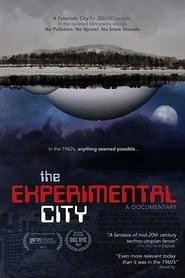
The Experimental City
Download English Subtitle
Release info
Tags
English subtitle preview
The first 200 lines.
Welcome to the World of Tomorrow.
You are about to take a journey out of this world
into the world of the Future.
Forget the world around you.
Forget the people around you.
You are entering
- When I grew up, in the Minneapolis Paper,
there was the cartoon series called "Our New Age"
by Athelstan Spilhaus.
And every week it would be
on a different aspect of the future.
On Sunday morning you'd read it and you could dream.
What became important was the idea
that every invention had been perceived
as outside the realm of reality at some point in history.
And they all became real.
Two, one.
- You were going to be on the moon.
You were going to be flying cars.
This was what was supposed to happen.
And this idea of doing an Experimental City –
it must be real, it's in the newspaper.
- Really the essence of the Experimental City
is to try to build complete new controlled-size cities
with new technologies, in the open lands
of the United States. Looking toward 25 years from now.
- I think Spilhaus wanted to believe
that you could do this on a scale
which would allow results to be utilized worldwide.
Not the idea that it would scare the dickens
out of whole regions of Minnesota
and become public enemy number one.
Well, is it working right?
Doesn't seem to me that light's winking,
isn't it supposed to wink?
Yeah that's about right, isn't it?
If I put it, if I put it down like this...
- Ladies and gentlemen, distinguished colleagues,
I'm going to talk about experimental cities.
And at the outset...
- Athel and I met after he came down to
the University of Texas
to work on the accretion of an underwater city.
That grew out of his Experimental City project.
They would take, it was like a chicken wire or something
as simple as a chicken wire
and form rooms and houses and buildings.
And then they'd shoot an electric current through it.
It was almost like a coral calcification
that would form around these electrified wires
and actually build buildings.
He definitely felt it would work.
It's not like, you know
some crazy off-the-wall spaceship kind of thing.
I made, maybe the mistake one day of saying
"Athel someone has to record your life."
I just kept saying Athel somebody has to do this,
this has to be put on paper.
And finally he said, "alright, then you do it."
Chapter one.
Is it recording?
Yes.
Now what do you want me to do
just when we come to something that...
- If something stirs you up with a story
then go ahead and tell it.
Okay?
- I told you I don't look backwards.
Why are you writing it down
when the damn thing is getting it?
- I was more pleased and flattered than I can say
about being invited to introduce
Dr. Athelstan Spilhaus, until I saw his biography
when I realized: how do you introduce the speaker
who has done everything?
He's a mighty intellect.
A student of our times, a futurist.
And I can assure you is a most unusual person.
He evidences a kind of Rabelaisian brilliance.
Are you offended by being called
a 20th century Da Vinci?
I don't like the "a" – "the."
I always get an answer, I'll say that.
- Dr. Spilhaus is a native of South Africa
and obtained his masters from MIT.
- Massachusetts Institute of Technology
1936, 37.
- Now that's '35. I was 24 years old.
I invented a thing called a "comfortometer."
And God did I get kidding about that –
a thing that tells you if you're comfortable or not.
You start with observation,
observation leads to understanding.
Understanding leads to prediction
and after prediction, control.
An engineer should not merely sit back
and predict the inevitable result
of carrying on present practices.
He should design the future.
- And even now scientists and planners
are shaping the lives of our children
who will live in the 21st century.
- Now if what I say seem like dreams to some of you,
I remind you that you and I have had dreams
and seen them rapidly become reality.
In fact, dreams are indeed the stuff
that practical progress is made on.
- His life became a whirlwind of activity and adventure.
Never was he still for a moment.
- It's gonna make a hell of a movie script.
Can you imagine?
I wonder who they'll have do you.
He was a showman, I mean he was
in the middle of everything there for a while.
He liked to be head of the committee.
- Dr. Spilhaus, I want to thank you, sir
for coming to Science in Action to tell us
of your committee's work in this field.
- A moment ago you said that we Americans
often seem proud of wasting so much
and I'm afraid this is very true.
Often we even seem to measure our economic success
and prosperity by the number of manufactured things
that we throw away.
This kind of thinking is dangerously close to insanity.
- Inefficiency did not suit Athel at all.
Yes that's very true.
Another way of putting it is, the way I would put it
is that waste is just a resource
that we don't yet know how to use.
- He was busy doing something at all times,
brain was being engaged. Inventing, tinkering, in control.
Sorting out the world and making it function better.
And if he couldn't, he'd get quite irascible.
- Now I have gained the impression that the future
perhaps of our entire nation might be dependent
on the way we look at this waste problem.
Well I believe that this is profoundly true, Earl,
I think we should get away from waste
and I think waste can become a serious danger.
We seem to have been sort of chicken
in the United States about our efforts
to attack this massive problem.
We know how to do things better
in the control of pollution.
But we have no opportunity to experiment.
We knew from our waste studies that there were excellent
new technologies for the reuse of waste.
But you can't introduce them into the old cities.
Who's going to float a bond issue for an entirely untried
brilliant new technology?
For without exception, our cities are hopelessly bound
by tradition, restrictive legislation
and their unplanned, unhealthy growth.
It's time to look at alternatives.
I've sounded rather pessimistic so far
and I don't want to leave this impression with you,
the picture is not all black.
I'm an incurable optimist about science
because I've read the history of it.
Sometimes if we look hard enough at a problem scientifically
we can find an answer even to seemingly impossible things.
And I thought about having a little city
and trying waste management things in that city.
We will try to build a noiseless, fumeless city
where you can take the same technology
that has caused the smoke and the grime
and the polluted rivers
and use this technology to clean it up.
Then I thought, but heavens this applies to mass transit,
it applies to most everything you do in a city.
Why aren't we able to do these things?
It's too experimental.
That was the beginning of the idea.
We must be prepared to step boldly out
and experiment with new and radical ideas
for improved urban living.
We must utilize the most advanced methods
of building construction,
the ultimate in transportation, in communications,
in waste removal, and in city management.
And the place to try them is an Experimental City.
Alright, chapter two.
When I began to study the Experimental City,
there had been lots of writing about pollution
but the issue hadn't reached any serious levels yet.
Radical ideas, however, have difficulty gaining acceptance
and what I was proposing was a completely new concept.
Fortunately I didn't have to sell the idea.
Otto Silha of the Minneapolis newspapers did it for me.
That's S-I-L-H-A, isn't it?
- Yeah, Silha was the Publisher of the Minneapolis Tribune.
I was a friend of Otto Silha's
and had worked with him in Republican politics.
He was a progressive kind of a guy
and interested in ideas that might improve things.
And in our culture at that time,
newspapers were one of the leading institutions –
not only to report the news but to influence civic activity
and bring to the attention of people
Comments
No comments yet. Be the first to leave one.