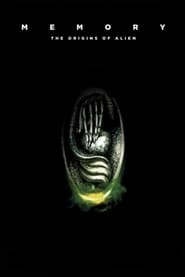
Memory: The Origins of Alien
Download English Subtitle
Release info
Tags
English subtitle preview
The first 200 lines.
Computer:
Nicholas cull: Every film is a product of its time.
And every successful film tells you something
about the time it was made.
It's successful because it resonates
with stories and images that people need to see
at that particular point.
Henry Jenkins: "Alien" is a radical break
with science fiction.
This is not the notion of the alien
that we were building toward in something
like "close encounters."
Clarke wolfe: "Star wars" comes out,
we have a fun space adventure.
And then "alien" comes out, and people embrace it.
And then just a couple of years later, "e.T."
And John carpenter's "the thing" come out,
and audiences resoundingly are like, no, thank you.
We want our aliens to be nice and squishy
and cool and eat candy.
I think there's a special status that comes to some films
that lodge in the audience's collective imagination,
and I think "alien" is certainly one of those films.
William linn: Tolkien talked about the cauldron of stories,
and certainly, "alien" is an example
of a story drawing from a real global set of myths.
If you look at a somatics experiment, what you're going
to see is sand that vibrates in a shape,
and the shape changes based on the different vibrations.
A myth is like something that vibrated from something
deeper that you can't see.
You see a major curse in the form
of the alien, who is very much a fury,
responding to an imbalance.
We're looking at a story where there
is a piece of material prop that is now completely
alive in our imaginations.
It lives in our dreams.
It lives in our cultural conversation.
It's one of the biggest cultural dreams we've ever had.
Diane o'bannon: I met Dan at usc.
He was a real standout.
You couldn't miss him.
He was a wild man, unbounded by conventional reality.
You couldn't call him an iconoclast, because he
didn't have icons to break.
He could be very offensive, and was frequently
offensive on purpose.
He was hot, you know, emotionally hot, emotionally
responsive, very angry.
He was born and raised in rural Missouri and had no television.
They didn't even have a telephone till he was 10.
They lived in the middle of nowhere on 24 acres.
And yet he knew all these things.
They didn't even have a library in the town.
His mother used to send off for boxes of books,
and they would come, and he would read them,
and then they'd send them back.
Dan was always sneaking science fiction.
His mother always wanted him to read good literature.
And his mother would always say, you
haven't got any of that science fiction in your backpack,
have you?
You're not taking that science fiction to school.
His father owned a curio shop, it was called odd acres.
There was a sort of screwy Louie room, you know,
where things were sort of off kilter,
and everything looks like it's leaning.
That was growing up in odd acres.
One time his father faked a ufo landing.
And Dan helped him, and then he had the press out there,
you know?
By direction of the President of the United States,
stay in your homes.
I repeat, stay in your homes.
Reporter: Because in one moment of history-making violence,
nature, mad, rampant, roared its most awesome creation.
Diane o'bannon: There's a lot of bugs there.
And he was always very frightened, in a way,
by the sudden appearance of bugs,
like a stick insect and cicadas, massive invasions
in Southern Missouri, they would have hundreds of thousands
of them come out of the ground and swarm over everything
and then vanish and die.
So these things really gave him the creeps.
And he wanted to creep everybody else out too.
But he was quite an artist.
And when he was thinking of his monsters,
he would sketch them out.
Before "alien," Dan had written a screenplay called
"they bite."
It was "alien" before "alien."
And it involved a cicada-like creature,
but instead of being 13 years underground,
it was several million years underground,
and gradually picks off the people in the encampment one
by one.
It's a version of an alien creature
evolving, needing an evolution, and being
destructive in that evolution.
O'bannon has this great line, says,
"I didn't steal from anybody.
I stole from everybody."
And one of the places that he happily
admitted that he stole from was a 1951 ec comic
called "seeds of Jupiter."
There's just eight pages.
It starts on an aircraft carrier,
and this orb crashes onto the aircraft carrier, breaks apart,
small orb, and it's got like, 50 seeds.
And there are three Navy guys on the ship,
and they're wondering what it is.
One of them's called peach pit, and he likes to put peach pits
in his mouth, and the other two guys
sort of trick him into putting one of these seeds
into his mouth.
And then they slap the guy on the back, it's all good fun
and he swallows.
He gets terribly sick.
He's dehydrated.
It's emergency surgery.
He's going die.
The Navy surgeon takes a scalpel,
cuts open his chest, everybody shocked,
and out pops this hideous, scaly, disgusting mini octopus.
And then it literally scamper across the deck
and plunges into the sea.
And they go, well, we're never going to see that again.
Guaranteeing that they'll be seeing that again.
Tim boxell: The origin of "death rattle" was
in a farmhouse in Minnesota.
The story itself is some sort of astronaut
coming across an object.
It's the kind of statuary that you might see in a temple
in some ancient civilization.
In the process of sending it back, he drops it,
he breaks it, and he releases something
that's about to change his life in a very horrible way.
He is attacked by this thing that gets into his body.
He is effectively raped.
His eyes are gouged out and something goes into his head.
And from that point on, he becomes
a receptacle for something that's taking him over.
Something is transforming a person
into something very, very different,
very unfortunate, shall we say.
As a healthy young kid growing up in the midwest in the 1950s
and '60s, there were things going on in the world
that didn't quite make sense.
Television was very safe and cleaned up,
so I clamored for things that I wasn't
getting from my civilization, from my culture.
Dan o'bannon drew upon his experiences
as a person from the midwest, reading comic books at the drug
store, like I did, and brought that kind of sensibility
and that outlook on the world to this major science
fiction horror epic.
The midwest may seem tranquil and civilized and so forth,
but the fact is, you never know who's next door.
You never know who's going to roll into town, you know,
it's like we're all, you know, one cough, one kiss,
one scratch away from global disaster.
Diane o'bannon: The influence of lovecraft on Dan
was considerable.
The eggs lying dormant on the planetoid
is comparable to the cicada's million
year life cycle, isn't it?
Creatures coming out of the ground after being
dormant for millions of years is superbly
lovecraftian, completely.
I think that's a pretty straight line between the two.
St joshi: Lovecraft, in his own day,
was a pioneer of science fiction.
More specifically, his brand of horror fiction, which he
called weird fiction.
He felt that the essence of horror is the unknown,
and what is most unknown, it is what
is out there in the depths of space,
and what has happened in the far distant past.
Many of the features of "alien" have a lot
to do with lovecraft's short novel,
"at the mountains of madness."
This is a novel he wrote in 1931.
And it's something that he'd wanted
to write for a long time, because he
had been fascinated with the antarctic since he was a boy.
An expedition from Massachusetts goes down there,
and come upon fossilized remains of alien entities, which
this expedition labels the old ones.
Dallas: It's been dead a long time.
Fossilized.
St joshi: In the course of this novel,
they become unfrozen and come to life.
They cannot be defined by normal human or terrestrial biology.
I have confirmed that he's got an outer layer
of protein polysaccharides.
Has funny habit of shedding his cells
and replacing them with polarized silicon.
St joshi: In fact, the explorers find this immense city
that the old ones built hundreds of millions
Memory: The Origins of Alien subtitles in other languages
More English subtitles for Memory: The Origins of Alien
- Memory The Origins of Alien 2019 1080p BluRay x264-JustWatch · 85 downloads · 2021-12-20
- Memory The Origins of Alien 2019 1080p WEBRip x264-RARBG · 76 downloads · 2021-03-20
- Memory The Origins Of Alien 2019 1080p WEBRip x264-[YTS LT] · 91 downloads · 2020-11-28
- Memory: The Origins of Alien 2019 1080p · 73 downloads · 2019-10-19
Comments
No comments yet. Be the first to leave one.