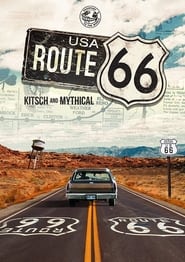
Passport To The World Route 66
Download English Subtitle
Release info
Tags
English subtitle preview
The first 198 lines.
- In America, one road has fascinated travelers
from all over the world for almost 100 years,
a unique and mythical road that is part of the folklore
and even the great American dream, Route 66.
In the land of opportunities, this road,
also known as US Highway 66, Will Rogers Highway,
or the main street of America,
originally stretched over 3,800 kilometers,
connecting small towns and big cities.
The eight-state snake starts in Chicago
and runs through Illinois, Missouri, Kansas,
Oklahoma, Texas, New Mexico, and Arizona,
before ending at Santa Monica in California.
Since its establishment in 1926,
Route 66 has grown with America,
being a part of many obstacles
the country has gone through.
Poverty-stricken families escaped their former homes
off to a better future on Route 66
during the Great Depression.
Later, Route 66 became a military transport corridor
during the Second World War.
And during post-war years,
Americans prospered, bought more cars,
and went on vacation on Route 66.
But Route 66's fame ultimately led to its downfall,
when in 1956, U.S. President Dwight Eisenhower
supported the construction of a new system
of high-speed, limited-access,
four-lane divided highways, today's interstates.
Route 66 remains an American historical landmark
where traces of the past lie all along the route.
The old cars, the diners, the motels, the neon signs,
and all its memorabilia of the 50s and 60s,
this highway museum not only attracts nostalgic Americans,
but people from all over the world.
With most of the original roads still functional,
let's take a road trip back in time
through America's most iconic highway
with Big Brown, a 1976 AMC Matador Brougham station wagon.
The trip down memory lane starts
on the intersection of South Michigan Avenue
and historic US 66 in downtown Chicago.
The first stop is at Lou Mitchells' diner,
a family business that's been up and running
even before Route 66 was even created.
Since 1923, U.S. presidents, mayors, governors,
senators, and athletes have been to Lou's
for top-quality food at affordable prices.
Sharon Wasberg, an employee at Lou Mitchell's for 38 years,
tells us more about the iconic diner and Mr. Mitchell.
- Mr. Mitchell and his father built this place.
He came to work every morning.
He went in the market before he came here
and picked out the fruits and vegetables.
He used to stay here all day long.
At two o'clock in the afternoon,
he used to have his lunch.
He used to come at five in the morning,
at two in the afternoon, he had his lunch
and then he smoked his cigar.
He had a cigar everyday.
- The restaurant has been welcoming commuters
from all over the world for a good old American breakfast.
Saturday was one of our busiest days,
and now it's still a Saturday and Sunday, very busy days,
as you see a line out the door.
- Delicious donut holes are handed out
to customers waiting in line.
People come and they eat, and the leave,
because they know it's busy.
When Mr. Mitchell was here, he used to say,
"Doesn't anyone ever go back to work?"
It's fun to work.
It's nice meeting people all the time.
We have lots of people from different countries.
They come her to do the Route 66.
They used to come here from different countries,
Germany, whatever, on their motorcycles, and do the route.
There'd be like 25, 30 at the time,
but now they find out it's stupid to come here,
rent their motorcycles, and then do the trip.
We've had people from every country.
I had three this morning, three different tables
that were doing it today.
Little ways down Route 66
to Chicago suburb of Cicero,
Henry's drive-in offers the best
Chicago-style hotdog around,
which are best-known for being a meal in itself.
This classic hotdog stand was started in the 50s by Henry,
and has survived through the years,
unlike other hotdog stands erected later on.
About 50 kilometers down the highway,
in the city of Joliet, you can get dessert
at the Rich & Creamy ice cream store.
The monument has been restored to its original appearance
from the booming days of Route 66.
Jake and Elwood, the Blues Brothers,
dance on the roof of the store,
representing a part of history
where Broadway was at its peak popularity.
Across the street is Dick's Towing,
with the original building still standing,
surrounded by a series of classic cars,
including a tow truck perched on the roof.
Farther down in Wilmington stands the Gemini Giant statue,
which has been the Launching Pad restaurant's
main decoration since 1965, and is recognized
as one of Route 66's historical landmarks.
Unfortunately, the restaurant has been closed since 2010.
Be mindful of the speed limits in the area.
You might wind up in jail like Jake.
Nearby in Joliet
is the Will County Adult Detention Facility.
You probably already recognized the establishment
that was used to film this classic film, The Blues Brothers,
where we saw Jake Blues getting out of jail.
In Odell, Illinois, Standard Oil gasoline station
has been there since 1932, and has kept
its original look with minor adjustments.
For car enthusiasts, a small break-in Pontiac
is a must to visit a recently opened
and entirely dedicated museum, the Pontiac Oakland brand.
Strolling through the land of Lincoln,
you will see the tall Paul Bunyan statue,
one of several molded fiberglass sculptures of its kind.
The first Paul Bunyan character was holding an ax.
Then, using the same mold, other characters were created.
At least three of them are still in Illinois,
along Route 66.
This particular character was originally
at a hotdog restaurant in Cicero, named Bunyan's.
In 2002, Bunyan's closed and put the figure up for sale.
The city of Atlanta in Illinois
made a long-term loan arrangement with the owners
to display the statue on Arch Street
as a symbol of Route 66.
Across the street from the Paul Bunyan statue
is the iconic Palms Cafe.
Once closed down and reopened 10 years ago,
this Route 66 staple is a must-go
for classic Route 66 fare.
- The Palms Brew Cafe actually opened its doors
first, in August of 1934,
ran through the late 1960s,
and then it closed down.
This building was completely gutted,
and it essentially disappeared, until 2008,
and that's when the Atlanta Public Library decided
it was going to reopen the cafe,
make it operational again, and hopefully,
help use it to attract visitors and tourists to town,
because they owned the building.
The building happened to be donated.
I, at the time, came off with the idea and said,
"You know, if we really want to use this
"for the benefit of the town, let's recreate the cafe
"and turn it into an operating entity."
So we did, it opened in, I think it was April of 2009.
So we're almost 10 years in operation now.
And it's been wonderful.
Our goal is to provide folks with a little taste,
literally, of what it used to be like
to stop in a small town along Route 66.
We have several really interesting items on the menu
that they used to serve back in the day,
fried bologna sandwiches, fried spam sandwiches,
homemade pie, and everything that is done
here at the cafe is homemade.
That's one of the things that distinguishes it.
We really didn't know what it looked like
when it first opened in 1936,
until I happened to be out mowing my yard one day,
it was one of those small town kind of things.
A woman I didn't know pulled up in a pickup truck
in front of my yard, rolled down the window,
and she had known that we were going to reopen the cafe.
She handed me this picture, and she goes,
"Here, I think you're going to want this."
So we had this guide all of a sudden
as to what it looked like when it first opened.
The reason she had the photo,
the women standing behind the cash register
in the photo, is her grandmother.
If you really wanna walk in the door,
and all of sudden see, and smell, and taste, and feel
what it used to be like back in the 30s and 40s,
this is the place to come.
- Midway between Springfield and Saint Louis
is the town of Litchfield,
tucked away in fields of corn,
soybeans, and wheat principal crops.
The Ariston cafe was founded by Pete Adam,
a Greek immigrant in Carlinville, Illinois in 1924.
The cafe was originally located on Route 4,
but the restaurant was relocated in Litchfield in 1929,
and moved to its original location in 1935 along Route 66.
More English subtitles for Passport To The World Route 66
- Passport To The World Route 66 2019 720p WEBRip x264 AAC-[YTS MX] · 14 downloads · 2021-06-06
- Passport To The World Route 66 2019 1080p WEBRip x264 AAC-[YTS MX] · 16 downloads · 2021-06-06
Comments
No comments yet. Be the first to leave one.