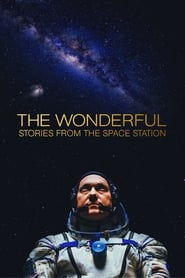
The Wonderful: Stories from the Space Station
Download English Subtitle
Release info
Tags
English subtitle preview
The first 200 lines.
...advances in science and technology.
Opportunities and jobs will multiply as we cross new thresholds of knowledge
and reach deeper into the unknown.
Nowhere is this more important than our next frontier: Space.
Tonight, I am directing NASA to develop a permanently manned space station
and to do it within a decade.
Hi, Dad. Have you gotten your Christmas presents yet?
Yeah, thank you for the T-shirt.
I think I put, like, a bell in there that was like, "Number One Dad."
- Got the bell and the card too, yeah. - Yeah.
The T-shirt was in there too.
Yeah.
- Love you, Charlotte. - Love you too.
Mr Secretary General,
delegates to the United Nations, ladies and gentlemen,
we meet again in the quest for peace.
President Kennedy made a speech to the United Nations in September of 1963
and made the offer to bring the Soviet Union in
and to make them a part of the Apollo program.
Finally, in a field where the United States and the Soviet Union
have a special capacity in the field of space,
there is room for new cooperation,
for further joint efforts in the regulation and exploration of space.
I include among these possibilities a joint expedition to the Moon.
Space offers no problems of sovereignty.
Why, therefore, should man's first flight to the Moon
be a matter of national competition?
November of that year, he wrote a memo to NASA
telling them he would like to have them come back in two weeks
and tell them why the Soviet Union should not be a part of Apollo.
President Kennedy was killed on the 22nd of November and that never happened.
That vision that Kennedy had of working together as partners
finally materialized and is happening today.
That is the space station we're flying right now.
There has never been any other collaborative engineering project
of this scope, size or challenge, in my opinion.
You are basically taking pieces of hardware
that may have been built thousands of miles apart,
that had never been in the same room, never touched each other.
Then you have to put them together in space, in a vacuum,
going at 18,000 miles an hour,
and they have to work the first time they touch
and not cause shocks or not leak or have any other problems
that of course are disastrous in space.
And they all worked. They all worked when we put them together.
I flew three times in space.
My third mission was as the commander of the International Space Station
early in its assembly in life.
I was trained for several possible spacewalks.
I ended up doing one where we were attaching the cables
to power up a new compartment that had come up
and test out a new piece of equipment that the Russians had sent up there.
It's an all-day affair to get ready for it.
You have to have all the right equipment,
we have to prepare the station as if we can't get back inside
and have to come in a different way,
and then you've got to go through all the procedures
to make sure your suit is working right before you go outside.
It's a whole different experience being on the outside of the station.
We're here in Washington and the Washington Monument's downtown.
If you could imagine someone asks you
to go out the windows at the top of the monument and wash the outside.
You open the window, you look out.
There's nothing for 500 feet below you.
So you open the hatch on the station. You look out.
There's nothing except the atmosphere for 250 miles below you.
You'd be very careful about making sure your tethers were always attached,
because the Russian suit did not have a little rocket pack on the back
to fly you back if you got loose.
About an hour or so in, when I was feeling pretty comfortable,
I found myself on top of the station,
and so I put my feet under the hand-holds
and I stood up on top of the station.
Imagine standing on top of a 747 and holding on to just a little rope.
That's kind of what it was like standing up there,
because you had the fuselage of the station,
you had the wings of the solar arrays,
and you're on top of the world, and it's all just unrolling beneath you.
Throughout all history, humankind has had only one place to call home:
Our planet Earth.
Beginning this year, 1998,
men and women from 16 countries will build a foothold in the heavens,
the International Space Station.
With its vast expanses, scientists and engineers will actually set sail
on an uncharted sea of limitless mystery and unlimited potential.
The space station is really like being on a ship, sailing some sea.
We've drawn a lot of legacy that we all have as seafaring nations.
What the space station provides
is our chance to become a spacefaring civilization.
My name is Bill Shepherd, and I was the commander of Expedition 1,
the first crew on the space station that came aboard in November of 2001.
When I was a young boy, the space program was starting
and everybody wanted to be an astronaut.
I didn't really have a good prospect of that
until I was through college and in the navy,
and a chance came up to apply for the space shuttle program,
and that's how I got to NASA.
When I was little, I used to cut up two-by-fours and make little boats.
I'm still in the boat-building business. It's just in orbit.
I don't really know why I was chosen
to be the commander for the first expedition.
In my time in the navy I worked with many foreign counterparts
and there was a great amount of common sense
and a little bit of kind of backyard diplomacy required for that.
I don't know if that was why I got picked, but that helped me a great deal.
There was a lot of controversy
when I was named to be the leader of the first crew.
I had two exceptional Russian cosmonauts as crewmates,
but many of the political leadership in Russia
were quite unhappy that, from their standpoint,
the Americans had taken over their space program.
My name is Ginger Kerrick.
I am currently a division chief in the Flight Integration Division
at NASA Johnson Space Center.
In the summer of '95, I took my application
and marched it down to the astronaut selection office, turned it in.
They had received over 3,000 applicants and had selected 120 to interview,
and I was one of the 120.
I was 26 years old and I thought, "Oh, my gosh, my dream has come true."
But when we went through interview week,
they did medical tests and they found that I had kidney stones,
and there was a new medical disqualification enacted that year
that if your body shows the ability to form a single stone,
it is a lifetime disqualification from consideration.
So I was devastated, but I had started this new job
where I got to teach astronauts in the Mission Operations Directorate,
and I thought, well, maybe astronaut wasn't for me.
Maybe there's another path that I was destined to take.
Maybe I'm 26 years old and I don't have everything figured out,
so how about I be open-minded and see where this leads?
Do you wanna go through these procedures or do you want a general tour?
- General tour would be excellent. - OK, let's start up here.
I was assigned to support the first crew
that was getting ready to fly on board
the yet-to-be-constructed International Space Station.
So I got assigned to Captain William Shepherd,
Sergei Krikalev and Yuri Gidzenko.
Here's the person who's going to live in there.
Sergei, clean up your room.
Open the door and throw everything out.
Those guys were great.
From an age perspective, Yuri was more my age,
Sergei was about the age of my older brother,
and Shep was 20 years older and kind of like a father figure.
So managing those three personalities took a unique skill set.
This was a new vehicle.
It had components from 15 different countries.
The pieces were not gonna come together until they met each other in orbit.
Many of the techniques and procedures we needed to operate it
had not been written yet.
So our training was very much "fly by the seat of your pants."
It was a wonderful experience,
and if I had never watched the news, I would never have suspected
that there would be any antagonism between Russia and the US,
based on my experience.
Both of us have been in competition since the early '60s,
trying to get to space, the old space race,
but now we recognize that if we're gonna go beyond low-Earth orbit,
if we're gonna go to the Moon or Mars,
the only way to do that is to do it together.
When we did land survival, we did it in the winter outside of Moscow,
and it was very wet and cold.
We were in a boilerplate capsule, as if we had just landed,
we got out in our survival suits,
and we had to build a little camp and then survive.
It was an extremely good experience to bond the crew,
and for time for us to really get to know each other
and contribute to what each of us could offer as strengths and weaknesses.
We've been here for two days.
Our launch is three days away, on Tuesday.
Everything in the vehicle looks ready to go. Crew's well trained.
We've been ready for probably a year to go fly in space.
It's just kind of a quiet time,
thinking about everything we have to do once we start flying,
and Tuesday morning we'll be ready.
Beth, any thoughts?
Just still, I think, hard to believe that we're actually here,
and just looking forward to watching a great launch, so...
We launched on the 31st of October, 2000.
We're out in Baikonur way out in the desert in Kazakhstan.
We sign our names to the door of the room that we're in.
I drew a little picture of Space Station.
Bill Shepherd's now joined
by Johnson Space Center Director, Mr George Abbey.
This is just before the crew members were set
to head over to the suit-up room this morning shortly after wake-up.
We have a little breakfast,
and then we go out to the launch pad in a bus.
Bill Shepherd, the commander of Expedition 1,
Along with Yuri Gidzenko and Sergei Krikalev, now boarding a bus.
The crew members will again head over to the suit-up room.
The Russian approach to rules is often quite different than the US,
and that's one of the things you get to appreciate sometimes.
In the United States, we have a very regimented procedure
for how you deal with friends and family right before the launch.
I waved goodbye to my wife about two hours before we launched,
and then we're driving away in the bus and I saw her through the window.
But then right as we're getting ready to go out to the rocket,
she surprised me from behind.
Whoa! This was...
The Wonderful: Stories from the Space Station subtitles in other languages
More English subtitles for The Wonderful: Stories from the Space Station
- The Wonderful Stories from the Space Station 1080p Blu-ray Remux AVC DTS-HD MA 5 1-HDT · 31 downloads · 2022-10-06
Comments
No comments yet. Be the first to leave one.