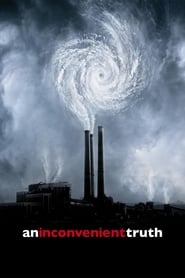
An Inconvenient Truth
Download English Subtitle
Release info
Tags
English subtitle preview
The first 200 lines.
You look at that river, gently flowing by.
You notice the leaves
rustling with the wind.
You hear the birds.
You hear the tree frogs.
In the distance, you hear a cow.
You feel the grass.
The mud gives a little bit on the river bank.
It's quiet. It's peaceful.
And all of a sudden,
it's a gear shift inside you.
And it's like taking a deep breath and going,
"Oh, yeah, I forgot about this."
This is the first picture of the earth from space
that any of us ever saw.
It was taken on, uh, Christmas Eve 1968
during the Apollo 8 Mission.
...within relatively comfortable boundaries.
But we are filling up that thin shell of atmosphere with pollution.
Ladies and gentlemen, Mr. Al Gore.
I am Al Gore.
I used to be the next president of the United States Of America.
I don't find that particularly funny.
I've been trying to tell this story for a long time,
and I feel as if I've failed to get the message across.
I was in politics for a long time and I'm proud of my service.
You gotta be kidding me. This is a national disaster.
Get every doggone Greyhound bus line in the country,
and get their...moving to New Orleans.
That's them thinking small, man,
and this is a major, major, major deal.
What do you need right now?
There are good people,
who are in politics in both parties
who hold this at arm's length
because if they acknowledge it and recognize it,
then the moral imperative to make a big change is
is--is inescapable.
...unless you fix the biggest damn crisis in the history of this country.
...scouted out landing spots and they lost radio contact
when they went around the dark side of the moon.
And there was inevitably some suspense.
Then when they came back in radio contact,
they looked up
and they snapped this picture, and it became known as Earth Rise.
And that one picture exploded
in the consciousness of humankind.
It lead to dramatic changes.
Within 18 months of this picture,
the modern environmental movement had begun.
The next picture was taken on the last of the Apollo missions,
Apollo 17.
This one was taken on December 11, 1972,
and it is the most commonly published photograph in all of history.
And it's the only picture of the earth from space that we have
where the sun was directly behind the spacecraft
so that the earth is fully lit up and not partly in darkness.
The next image I'm gonna show you has almost never been seen.
It was taken by a spacecraft called The Galileo
that went out to explore the solar system.
And as it was leaving Earth's gravity, it turned its cameras around
and took a time lapse picture of one day's worth of rotation,
here compressed into 24 seconds.
Isn't that beautiful?
This image is a magical image in a way.
It was made by a friend of mine, Tom Van Sant.
He took 3,000 separate satellite pictures
taken over a three-year period, digitally stitched together.
And he chose images that would give a cloud-free view
of every square inch of the earth's surface.
All of the land masses accurately portrayed.
When that's all spread out, it becomes an iconic image.
I show this because I--I wanna tell you a story about two teachers I had.
One that I didn't like that much, the other who is a real hero to me.
I had a grade school teacher who taught geography
by pulling a map of the world down in front of the blackboard.
I had a classmate in the sixth grade who raised his hand
and he pointed to the outline of the east coast of South America
and he pointed to the west coast of Africa
and he asked, "Did they ever fit together?"
And the teacher said,
"Of course not. That's the most ridiculous thing I've ever heard."
That student went on to become a drug addict and a ne'er-do-well.
The teacher went on to become science advisor
in the current administration.
But, you know, the teacher was actually reflecting
the conclusion of the scientific establishment of that time.
Continents are so big, obviously they don't move.
But, actually, as we now know, they did move.
Uh, they moved apart from one another.
But at one time they did, in fact, fit together.
But that assumption was a problem.
It reflected the well-known wisdom
that what gets us into trouble is not what we don't know,
it's what we know for sure that just ain't so.
This is actually an important point, believe it or not,
because there is another such assumption
that a lot of people have in their minds right now about global warming
that just ain't so.
The assumption is something like this. The earth is so big
we can't possibly have any lasting harmful impact
on the earth's environment.
And maybe that was true at one time, but it's not anymore.
And one of the reasons it's not true anymore
is that the most vulnerable part of the earth's ecological system
is the atmosphere.
Vulnerable because it's so thin.
My friend, the late Carl Sagan, used to say,
"If you had a big globe with a coat of varnish on it,
"the thickness of that varnish relative to that globe
"is pretty much the same
"as the thickness of the earth's atmosphere
"compared to the earth itself."
And it's thin enough
that we are capable of changing its composition.
That brings up the basic science of global warming.
And I'm not gonna spend a lot of time on this because, uh, you know it well.
The sun's radiation comes in in the form of light waves
and that heats up the Earth.
And then some of the radiation that is absorbed and warms the earth
is reradiated back into space
in the form of infrared radiation.
And some of the outgoing infrared radiation is trapped
by this layer of atmosphere and held inside the atmosphere.
And that's a good thing because it keeps the temperature of the earth
within certain boundaries,
keeps it relatively constant and livable.
But the problem is this thin layer of atmosphere is being thickened
by all of the global warming pollution that's being put up there.
And what that does is it thickens this layer of atmosphere,
more of the outgoing infrared is trapped.
And so the atmosphere heats up worldwide. That's global warming.
Now, that's the traditional explanation.
Here's a... What I think is a better explanation.
You're probably wondering why your ice cream went away.
Well, Susie, the culprit isn't foreigners.
It's global warming.
Global wha... Yeah.
Meet Mr. Sunbeam.
He comes all the way from the sun to visit Earth.
Hello, Earth. Just popping in to brighten your day.
* La, la, la, la, la, la, la! **
And now I'll be on my way.
Not so fast, Sunbeam.
We're greenhouse gases. You ain't going nowhere.
Oh, God, it hurts.
Pretty soon, Earth is chock-full of Sunbeams.
Their rotting corpses heating our atmosphere.
How do we get rid of the greenhouse grasses?
Fortunately, our handsomest politicians
came up with a cheap, last-minute way to combat global warming.
Ever since 2063,
we simply drop a giant ice cube into the ocean every now and then.
Just like Daddy puts in his drink every morning.
And then he gets mad.
Of course, since the greenhouse gases are still building up,
it takes more and more ice each time.
Thus, solving the problem once and for all.
But... Once and for all!
This is, uh, the image that started me
in my interest in this issue.
And I saw it when I was a college student
because I had a professor named Roger Revelle
who was the first person to propose measuring carbon dioxide
in the earth's atmosphere.
He saw where the story was going
after the first few chapters.
After the first few years of data,
he intuited what it meant
for what w-was yet to come.
They designed the experiment in 1957.
He hired Charles David Keeling
who was very faithful and precise
in making these measurements for decades.
They started sending these weather balloons up every day
and they chose the middle of the Pacific
because it was the area that was most remote.
And he was a very hard-nosed scientist.
He really emphasized the hard data.
It was a wonderful time for me
because, like a lot of young people,
I came into contact with intellectual ferment,
ideas that I'd never considered
in my wildest dreams before.
And he showed our class
the results of his measurements after only a few years.
It was startling to me.
Now he was startled
and made it clear to our class
what he felt the significance of it was.
And I just soaked it up like a sponge.
He drew the connections
between the larger changes in our civilization
and this pattern that was now visible
in the atmosphere of the entire planet.
And then he projected into the future where this was headed
unless we made some adjustments.
And it was just as clear as day.
After the first seven, eight, nine years,
you could see the pattern that was developing.
An Inconvenient Truth subtitles in other languages
More English subtitles for An Inconvenient Truth
- An Inconvenient Truth 2006 WEBRip x264-ION10 · 74 downloads · 2020-02-18
- An Inconvenient Truth 2006 720p WEB-DL DD5 1 H 264BS · 143 downloads · 2018-05-06
- dvd preview fix it · 42 downloads · 2011-08-05
- International Version 25fps · 72 downloads · 2008-11-21
- an inconvenient truth Eng · 53 downloads · 2007-06-15
- An Inconvenient Truth DVDScr XviD-PUKKA · 102 downloads · 2006-11-11
- An Inconvenient Truth DVDRip XviD-DiAMOND · 69 downloads · 2006-11-04
Comments
No comments yet. Be the first to leave one.