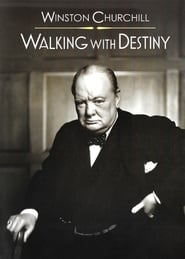
Winston Churchill: Walking with Destiny
Download English Subtitle
Release info
Tags
English subtitle preview
The first 200 lines.
When Winston Spencer Churchill died
at the age of 90 on January 24, 1965,
life stopped for a few days in Great Britain.
While he had been in ill health
and out of the public life for many years,
his death still came as a shock,
not only to the British people but to the rest of the world.
From the average person in the street
to world leaders and the British royal family,
it seemed as if there was no one who was not affected
by the passing of the man who many considered to be
the greatest figure of the 20th century.
I think his legacy is his inspiration
and the example that he set in the most difficult time
that his country had ever had.
The vital importance of Winston Churchill was
that he kept the flag of freedom flying.
I'm convinced that but for Winston Churchill,
it is entirely possible that the Nazi swastika
would to this day be flying
over the palace of Westminster, over Buckingham Palace,
and over every capital city of Europe as far east as Moscow.
25 years earlier, few would have predicted
this kind of adulation.
May 10, 1940.
Nazi Germany had just invaded France, Belgium,
Holland, Norway, and Denmark.
Increasing numbers of Britons, dissatisfied
with the way in which Prime Minister Neville Chamberlain
was handling the war,
were now demanding a change in the government,
so Chamberlain handed in his resignation.
The public were calling for Churchill, the newest
member of the cabinet
and the First Lord of the Admiralty,
to replace Chamberlain.
But he was not the preferred choice
of King George VI and many
in the majority Conservative Party, the Tories.
After a spirited debate in the House of Commons,
a reluctant decision was made by the Tories to go
with public sentiment.
That evening, Churchill was driven to Buckingham Palace
to meet with the King.
On the drive back to his residence
at the Admiralty, Churchill was
uncharacteristically quiet.
His personal bodyguard, Inspector Walter H. Thompson,
wanting to break the silence,
decided to congratulate his boss
on his appointment.
"I only wish the position had come your way
in better times, for you have an enormous task,"
said his long-time aide.
Churchill became quite emotional.
"God alone knows how great it is," he replied.
"I hope it is not too late.
"I'm very much afraid it is.
We can only do our best."
The situation he was inheriting was
extremely bleak.
Over 130 Nazi divisions, backed by
the powerful Luftwaffe in the air, were on the assault
throughout Western Europe.
More than 300,000 British and French troops
in Northern France and Belgium were caught
completely off guard.
The French army was cut off and unable to launch
an effective counterattack.
Late on May 10, in his residence
at the Admiralty, Churchill reflected
on the situation and the events which had led
to his becoming Prime Minister.
By the time he was ready to retire for the night,
his glum mood after meeting with the King
had changed.
He wrote in his diary "I was conscious
"of a profound sense of relief.
"I felt as if I were walking with destiny
"and that all my past life had been
"but a preparation for this hour and this trial.
I was sure I should not fail."
In early 1930, Winston Churchill was
living in the wilderness, both physically
and politically.
Thrown out of office the year earlier with
the rest of the Conservative government, he was still
a member of Parliament but without a cabinet
position for the first time
in almost 3 decades.
He had retreated to the beauty of Chartwell,
his country estate in Kent, a few hours outside London.
Chartwell was his home.
Um, he had a house in London, but Chartwell was
where he felt most, I should think, at peace.
He did an enormous amount of work in the grounds.
He developed waterfalls which went down into
ponds, where he kept wonderful fish,
and there was a swimming pool,
and then at the very bottom,
there was a big lake where he had black swans,
and--he loved any living creature, so anything
that he could put there, whether it was fish or
birds, he always had.
My grandfather described Chartwell as somewhere
where "a day away from Chartwell is
a day wasted."
One of his favorite tasks
at Chartwell was bricklaying.
In fact, he took such pride in his work that he
joined the bricklayers union.
One day, he decided to take on a particularly
ambitious project, a brick wall outside
a cottage a local contractor was building
for him on the estate.
Watching him work was his bodyguard Walter H. Thompson.
At noon, Churchill left to have his lunch.
As he was dining, the builder took
Inspector Thompson over to Churchill's half-built wall,
each layer of bricks progressively out of line
with the next.
"Look at his wall," the builder exclaimed.
"If he puts one more layer of bricks on it,
it will topple over."
Knowing how proud Churchill was of his
bricklaying skills, Thompson did not want to
deliver the bad news.
So the bodyguard and the builder tore down
the wall and rebuilt it while Churchill
enjoyed his lunch.
Upon his return, Churchill stood
before the wall admiring his work.
"Look at that," he proclaimed to Thompson.
As straight as a die."
Despite his isolation at Chartwell, Churchill had
not stopped paying attention to world affairs,
especially a developing situation
in Germany.
In October 1930-- this is almost
3 years before Hitler becomes chancellor--
Churchill went to a dinner party
at the German embassy in London,
and the counselor of the embassy was startled
because Churchill kept asking him about Hitler.
He found it so unusual that he reported this to
the German foreign minister as an oddity.
One of the reasons why Churchill was
paying attention to Hitler's rising
popularity was his concern about the Nazi
leader's views and rhetoric about Jews.
Randolph Churchill, his father, had many close
Jewish friends.
After his death just before Winston's 20th birthday,
these same friends looked after him,
becoming father figures, and when he began his
political career in the early 1900s,
his first Parliamentary seat was in Manchester,
with a large Jewish constituency.
Churchill's concern about Nazism was also shared
by son Randolph, who in the early 1930s was
working as a journalist.
My father, when he was only 21 years old,
his first commission as a journalist was to go to
Nazi Germany and report on the German election campaign,
and he made friends with Hitler's
press secretary Putzi Hanfstaengl.
Less than a year later, Randolph Churchill
accompanied his father, his mother Clementine,
and his sister Sarah on another
trip to Germany, this time to Munich.
Churchill had signed a contract to write a book
about his ancestor the Duke of Marlborough.
Marlborough had defeated the French in the 17th century
in a series of battles at Blenheim near Munich,
and Churchill spent several weeks doing
research there.
It was very fortunate for history that Churchill,
when he was in his early 50s, found himself
in November 1932 in Munich and saw the Nazi
thugs marching in the streets and heard their
cries and knew that Hitler was anti-Semitic.
Hitler's press secretary Hanfstaengl
heard that Randolph was in Munich and contacted
him with an idea.
Would his father be interested in meeting
the leader of the Nazi Party?
Churchill said, "Well, I'm happy to meet
"him, but I'd like to know why he's so
against the Jews."
The plan was for Hitler to meet
Churchill in the lobby of his hotel one evening
after dinner.
Apparently, according to
Hanfstaengl, Hitler came to the glass door
of the hotel restaurant and looked through
at my grandfather,
but in the end,
he didn't dare go through with the meeting.
I think Hitler maybe just didn't have
the self-confidence at that particular moment to
Comments
No comments yet. Be the first to leave one.