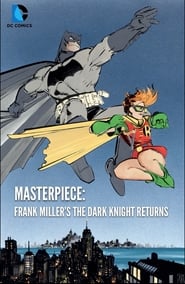
Masterpiece: Frank Miller's The Dark Knight Returns
Download English Subtitle
Release info
Tags
English subtitle preview
The first 200 lines.
"NARRATOR". Upon the 20th anniversary of the publication of The Dark Knight Returns...
...DC Comics celebrated the book with the release of the Absolute edition.
In the opening pages was an introduction written by the author himself...
...Frank Miller.
When I first, um, came into the field of comic books...
...I was a kid from Vermont. I was 17 years old.
I moved to New York City. The very generous Neal Adams...
...was happy to tell me I didn't have a prayer of getting anywhere in comics.
But I kept coming back and so he finally got me my first job.
Editor after editor would tell me the same thing:
"Why are you doing this?"
We'll be out of business in five years.
"There will be no comic books."
That was the conventional wisdom of the time.
I think Frank's reference to comics being irrelevant...
...was because, well, they were irrelevant to adults.
They were probably irrelevant to society as a whole.
In one of the low points, comics seemed to be...
...a roller-coaster.
And there have been, at least twice since I've been doing this...
...when, you know, I was betting they wouldn't survive another 10 years.
They weren't a venue for deep-layered literary conversation...
...for rich characters.
At most, they were sort of looked at as, uh, an argument between...
...whether they were just sort of colorful icons...
...or capturing something important about adolescent angst.
But that was kind of the extent of it.
Even with Batman, a lot of comics and a lot of comic book, uh, stories...
...were very, uh, unrealistic and fantasy, almost bordering on sci-fi.
They'd been gradually getting a little bit more sophisticated.
Comic book fans from, like, the '50s and '60s and even the '70s...
...had all graduated or grown up and they've kind of brought their comics with them.
Competition was coming along, you know...
...as movies began to be able to do better special effects.
That was some new competition out there.
And the comics were not evolving and growing.
So Denny O'Neil as a writer, Neal Adams as artist...
...helped introduce the world back to the original dark and serious Batman...
...to help overcome it.
Well, that was great into the '70s.
And that did help open the door to older readers.
We'd seen a great floundering of talent in comics in the '70s.
We'd seen characters being taken into directions no one could have imagined...
...and dealing with subject matter that had been impossible prior to that time.
But suddenly after around 1978 or even after the bicentennial in America...
...there was a big shift towards much more escapist material.
And, unfortunately, in the comics that meant...
...for a kind of bland recycling of the cliches that had existed prior to this...
...you know, fantastic invasion of the counter-culture in the '70s.
And between 1979 and '82, I didn't look at any comics at all.
Obviously, the comic book companies did not want that to happen.
And at Marvel Comics in the early '80s, there was kind of a resurgence.
And, uh, Frank was a big part of that.
So they got their act together...
...and DC then was suddenly finding that they needed to be competitive again.
The first huge change took place for me in 1978...
...when probably the greatest graphic storyteller in the history of comics...
...Will Eisner, introduced the graphic novel.
His first graphic novel, A Contract with God...
...shattered all of our visions...
...of what a comic book was and what a comic book could be.
I've always likened it to the auteur era in Hollywood...
...where you had Scorsese and Altman and Coppola and those people coming through.
And the type of cinema they did was very much like...
...this anti-establishment vein of comic books that was going on at the same time.
It left a way for people like me and Alan Moore to play to that audience.
To, um, do stories...
...that were beyond the understanding of an 8-year-old.
To me and to many other artists...
...it gave us the sense that what we could do would be permanent...
...and not ephemeral.
Not a monthly, um, pamphlet...
...that would come and go and be forgot.
And I remember reading that and saying, "This is what I want to do."
I want to have a shelf of work that exists forever."
"NARRATOR". Jenette Kahn, a New York publisher of a popular children's magazine...
...was tapped as the next leader of DC Comics.
Because of her dynamic energy and her ability to see the world of comics...
...as a place where incredible growth can transpire...
...she was willing to take the risk and lure the best talent possible...
...to help stabilize the fledgling business.
I always believed that we would never succeed as a comic company.
Never grow, never reach the heights that we were finally able to...
...unless we took risk.
And, uh, it was one of my maxims at DC...
...that perhaps you've heard from other people, but unless we were writing off...
...a certain amount of material every year, we weren't doing our job.
Because when you risk, you're going to also risk failure, and that comes with the territory.
You just hope that you have enough successes to far outweigh those failures you had.
But you need failure. If you don't have those failures...
...then you really aren't taking the risks that will propel you into new territory.
She and Dick Giordano who she was working with...
...were very interested in the idea of new formats in expanding comics out.
I always believed that comics were an art form...
...an art form clearly tied with commerce...
...but that, uh, they weren't just as they were as I had known them growing up...
...a disposable medium for kids.
Part of the inspiration was that I had looked with a great deal of envy...
...at the French albums that were being published.
They were published on beautiful paper, incredible art.
And seemed to be, uh, incredibly smart.
They could tell any kind of story.
They could tell very sophisticated adult stories that touched on serious subject matter...
...at the same time that they entertained.
I thought that there were a lot of things in those comics that we could adopt...
...if we could only figure out the economics.
"NARRATOR". Jenette Kahn knew that DC Comics was ready to produce...
...a more sophisticated book...
...a mature storyline for a hungry audience.
This was the approach Marvel took with Daredevil in hiring Frank Miller.
DC Comics wanted a piece of that action.
Frank Miller had been doing, um, some really interesting stuff over at Marvel with Daredevil.
Urn, it kind of started off kind of as a standard superhero comic strip with interesting visuals.
But over time it got a bit darker and more mature.
I had been doing Daredevil, you know, prior to Frank coming on board.
When Frank came on he was, uh, you know, this kid, this skinny kid from Vermont...
...who, uh, really nobody, uh, had any high expectations for.
We went through a lot of changes through those three years.
You know, Frank started out, uh, penciling and not writing.
He was in that place that guys get when they are absorbing everything.
Those that I think eventually hit the ball out of the park...
...look at everything and look at it closely.
And then spend a lot of time sitting at the drawing board.
That evolution, uh, garnered and created...
...a great deal of trust between the two of us.
I'm very proud of the work we've done on Daredevil.
"NARRATOR". The DC executives kept their finger on the pulse of the comics industry.
They learned of the success of Frank Miller at Marvel.
Miller was the perfect combined example of writer and artist...
...that Jenette knew she had to entice over to the DC side.
Although comic book writers and artists migrate back and forth from DC to Marvel...
...the intentional luring of a client was something yet to be seen.
But desperate times called for a new perspective.
If DC was to survive, it needed to find the perfect writer-and-artist team...
...that could catapult the company forward.
He was absolutely pushing the envelope.
But I felt we needed an injection of that at DC. And I asked Frank to lunch.
In those days there was a Warner dining room in New York...
...and we went to lunch and I said to Frank:
"Tell me what you most of all would want to do in comics.
Whatever it is, I will try to make it happen."
Jenette and I, um, had several conversations...
...but one of them was particularly long.
It might have been as long as three hours.
Um, and she and Joe Orlando...
...um, who was one of the editors at the time...
...um, had asked me what I wanted most.
And I said "freedom."
I also made an issue of copyright.
Had Frank tried to do that 10 years earlier...
...I'm not sure the door would've been open for him.
But at that point, comics were undergoing...
...a kind of content of revolution.
Creators had no share in their creations.
And there were no royalties, there were no reprint payments.
You didn't even get your artwork back.
And all of these seemed like just terrible inequities.
So the very first thing I wanted to do when I came to DC was to change that landscape...
...and to assure creators, and assure them in writing...
...that they would, in fact, have a share in all the things that they created.
Janette was...
...a captivating conversationalist.
And they were willing to take a chance on giving me complete freedom.
And, um, I used it to my best advantage.
Frank said, "Well, I have this idea about a ronin."
And I actually am a huge aficionado and devotee of samurai movies.
So I said, "Oh, a ronin, of course. What a great idea."
So we're talking about the ronin and he's laying it out for me...
...and he said, "I want to do this on really high-end, beautiful paper, glossy stock."
I don't want to do traditional color separations. I want Lynn Varley to do the painting."
And I said, "Let me see. Let me see if this is possible."
I came back from the lunch and I talked to Paul Levitz...
...who, uh, was one of my tremendous allies at DC.
And also we talked to Bob Rozakis and he said, "Let's try to figure this out."
Frank was clearly on his way up.
And I think he had enough ambition to see where the main chances were.
I would love to have a pint of his blood put into my arm...
...so I could have just a pint's worth of, uh, that kind of realism...
...about, you know, how the business works...
...and how you keep from starving.
Ronin would become Frank Miller's first creator-owned project for DC Comics.
It was his entrance into the world of DC...
...and a new era where he would be given artistic freedom.
Ronin, which was like this really crazy, science-fiction extravaganza thing...
...it was definitely a lot more mature, more adult.
"NARRATOR". It was a striking read for the fans...
...and something that felt like a novel.
I had done a 13-issue run on Daredevil.
Which, really, is structurally a novel.
It's an unplanned one.
But when I did Ronin...
...I was deliberately after a novel structure.
"NARRATOR". This was a raw comic book without pages of advertisements...
...presented in a way that only fans could have dreamed of at the time.
Later, Dick Giordano, um, God rest him...
...he approached me and he said:
"Do you want to take a crack at Batman?"
Well, at first I was scared shitless...
...because Batman struck me as one of the icons.
One of the sort of the triad of really big characters.
Comments
No comments yet. Be the first to leave one.