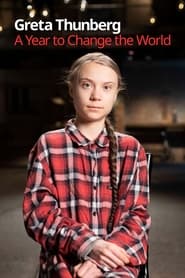
Greta Thunberg: A Year to Change the World
Download English Subtitle
Release info
Tags
English subtitle preview
The first 200 lines.
People say a lot of things about me...
Greta... you know Greta?
People call me a brat... An idiot...
And yet, for reasons I don't understand,
people listen when I talk.
You are listening to me right now.
Greta, Greta, Greta!
But I don't want that.
I don't want you to listen to me.
I want you to listen to the science.
The science is very clear.
- This is not someone else's problem. - We all need to act. Now.
This series follows Greta Thunberg
on an extraordinary year in her mission to tackle climate change.
I've been going halfway around the world the wrong way.
She took a year off school to explore our changing world
with leading climate experts.
This year, we had the fastest melt rate we've ever measured.
Six meters of ice down.
Investigating whether science can help protect our future.
From technology...
We could store all the emissions we could potentially imagine.
...to nature.
It could reduce methane by 40% overnight.
Is it really that simple?
The forest is not a vacuum cleaner that just sucks CO2 from the air.
And how we can all play our part.
We should spend time on actual solutions people could do.
We should be hopeful, but hope doesn't come from words.
Hope only comes from action.
Greta took her protest to the global stage.
World leaders are behaving like children,
so it falls on us to be the adults in the room.
Seeing more of the world
gave Greta a new level of understanding.
You try to imagine yourself in that situation.
How difficult it might have been.
But it became a story that no one could have predicted.
The risk level has risen.
The coronavirus continues to spread.
COVID-19 brought life to a standstill.
I have contracted the coronavirus.
And gave Greta an even greater challenge.
Can she convince a world reeling from one crisis...
to face another?
COVID-19 has really given the world a tremendous opportunity to reset.
How we address the climate crisis
will determine what the future of life on Earth looks like.
We can act, but we don't have time to wait.
January 2020.
The most powerful people in the world
are preparing to gather in Davos, Switzerland
for the 50th World Economic Forum.
And they've invited Greta,
who plans to use the opportunity to persuade them to abandon fossil fuels.
First, she's going to travel around Europe to witness the impact closer to home.
And meet with those looking for solutions to the issues.
Now she's traveling north to the edge of the Arctic Circle,
to see for herself the human cost of global warming.
The Sami people are actually
Europe's last and only indigenous people.
They have a very rich culture and traditions.
Because of the changing climate, their way of life is, is being threatened.
Indigenous Sami herders
like Carl-Johan Utsi
and Sanna Vanna
have been caring for reindeer for over a thousand years.
What does the reindeer mean to you,
and to, to the people here?
It's so important for us
to live with nature and also with animals.
We get everything from the reindeer.
We get the antlers, and the skins, and the meat.
But mostly it's... it is a way of living, and a way of life.
But now, the reindeer are facing starvation.
So why is climate change
making it harder for the reindeer to find food?
This lichen grows naturally in the forest area.
That's the main food for the reindeer in wintertime.
The snow could easily be one meter deep,
but the reindeer still can find it
by smelling it through the snow,
and digging it up with its hooves.
But this year we have to give them extra food,
because of the... natural food is beneath
hard-packed snow and ice.
Close to the poles,
temperatures are rising faster than anywhere else on Earth.
And warmer temperatures
mean it often rains when it used to snow.
When the rain hits the cold ground,
it forms a layer of ice, which the reindeer can't break.
What would happen to these reindeer
if, if you weren't here to give them this?
They will, uh, they would spread out
on the huge area,
and a lot of them would die from starvation.
If these pressures continue,
many Sami may be forced to abandon herding,
and this unique way of life could be lost forever.
I hope, like, that the next generation can still
have a life with the reindeer.
We've been following the reindeer for thousands of years,
and we don't want to give up just yet.
The climate crisis is a very unfair crisis.
It is the ones who are already the most vulnerable
that are going to suffer the most.
Around the world,
we are already starting to see human migration
due to climate change, and it's only going to accelerate.
My country, Bangladesh,
is now being hit by both cyclones as well as floods,
and in the longer term, sea level rise.
So I would estimate
that the number of people being forced to move
is very credibly going to go up to hundreds of thousands,
and indeed millions perhaps over the next 10 to 20 years.
If you look at Africa, for example,
you're already seeing desertification
People will have to move away from places
where they can no longer live,
which might create conflict.
Those who cannot move may well perish where they are.
We can adapt to some of this,
but the scale is such that we cannot adapt to it all.
The real injustice of this
is that these are people
who have contributed often the absolute least.
They have not been the ones burning tons of fossil fuel.
But they are bearing the brunt
of the impacts of climate change.
Greta is setting off on journey
that will take her to the World Economic Forum in Davos.
There she will demand an immediate reduction
in fossil fuel use,
putting pressure on world leaders,
particularly US President Donald Trump.
Greta usually travels with her father Svante,
but for the first time, she'll be going without him.
She's become like an adult now.
She was, you know, a child, when she started this.
And, um...
Now she's much more a... an adult. Yeah.
You know, she doesn't want me around as much.
Which is great.
This is her thing.
Now she's old enough to do it by herself.
Greta won't be completely alone;
a family friend is traveling with her.
But for Greta, it's still a big step.
Now, I'm 17.
I had my seventeenth birthday,
I celebrated with, with a strike, as usual,
outside the Swedish Parliament.
Soon I'm officially an adult. 18 years.
And I, I don't... I don't like that.
Of course I want to become more independent,
but also want to remain a child,
because life is so simple when you're a child.
Thanks.
The effects of climate change
are now being felt all over the world.
Thank you very much love, what you're doing.
Here in Europe, increasingly severe weather
is already wreaking havoc in towns and cities.
Severe flood warnings
are in place this afternoon in parts of England,
meaning there is a danger to life.
Heavy rain forced the river
right through this town in Bavaria.
Parts of France have seen the same sorts of problems.
There's clearing up to do, and there's more rain to come.
To understand more about the causes of flash flooding,
Greta is stopping off in Gdask, Poland.
She's here to meet a climatologist who studies extreme weather,
Professor Jacek Piskozub.
- Hi. - Hello.
- Hi. Greta. - It's nice to see you.
- Nice to meet you. - Very nice to meet you, too.
In 2001, torrential rain led to floods across Gdansk.
How much higher was the water level?
All this from, from this concrete channel
to this building were gone.
More flooding followed in 2016.
This is some footage from, from the last...
It's floods.
So the climate crisis, you expect,
you, you expect melting glaciers,
and you don't expect these kinds of events
in this part of Europe.
What do you think could be the cause of these, these floods?
The main reason is that, is that the warmer the air gets,
the more water vapor it can hold.
You have something like seven percent more water vapor
for every degree, uh, increase of temperature.
More water in the air means heavier,
more extreme downpours.
Warmer temperatures are also affecting air currents,
driving more storms over Northern Europe.
In the future, is this what the pattern is?
More English subtitles for Greta Thunberg: A Year to Change the World
- greta thunberg a year to change the world s01e03 480p x264-msd · 13 downloads · 2022-03-11
- greta thunberg a year to change the world s01e01 480p x264-msd · 15 downloads · 2022-03-11
- Greta Thunberg A Year to Change the World S01 720p WEB · 32 downloads · 2022-03-11
Comments
No comments yet. Be the first to leave one.