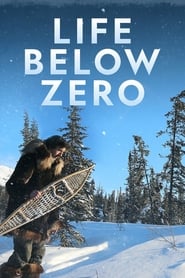
Life Below Zero
Download English Subtitle
English subtitle preview
The first 200 lines.
I recently had to leave camp,
take care of some personal business.
And while I've been gone,
we had a phase two, phase three storm blow through.
Phase two, three has a significant amount
of blowing snow, and where is it gonna stack up on?
My trailers, my runway.
That snow will crush a building if you let it.
And so, I don't know how much drifting there's been,
I don't know if it's compromised any of the buildings.
I'm kind of expecting to see a bunch of drifting.
I don't know how much drifting,
but if we can do any kind of a onesie-twosie,
it's gonna let me know how much snow has built up.
The buildings look intact.
I can see some pretty big tracks,
you know, so I'll just have to walk 'em.
Normally, when I land, you want to get down, get your gun,
same thing every time.
Go around and make sure where are the paw prints?
What kind of animal?
Is there something hiding behind something?
But in the dead of winter
with another storm barreling in on us soon,
the first priority is I need to have safe shelter and warmth.
That's camp.
And, uh, flying in, what I noticed,
Kavik seems to have dodged a bullet.
But, um, I do see some large prints.
This right here, this is wolverine.
And they're fairly fresh, we just had a storm go through.
And he's a decent-sized wolverine.
Hi, Foxy!
What up, little guy?
Oh, wow.
You're hurt.
He's got blood on his back
and blood all down his one side by his head.
There is an animal around.
It is a wolverine, I do have at least one injured fox.
They're wild foxes; they're not tame.
And things eat other things out here.
And they're doing exactly what they're supposed to do.
They're not dependent on me.
You think you're gonna get a lollipop
like they do at the doctor's?
Most important thing is, get my shelter, get my heat going.
I'll have my pistol on my side.
If something needs to come through the wall to get me,
I'm prepared for it.
When I left, I turned the oil off at the tank,
so I've got to go dig that out, turn it back on.
I've got to let that fuel flow for a minute.
The oil is now flowing, hopefully, through the lines.
Looks, uh, looks pretty good.
I arrived, I've got the heat going,
I do have tracks all over camp.
It is a wolverine.
I do have at least one injured fox.
But right now, it's cold, I'm getting on darker time,
I got to hunker down.
There's danger around every bend out here,
and I just have to be very sharp
and pay attention and know my game.
I've got to get my sled, my harnesses,
and everything in line here.
Tie it down on the top and pick out my team to take over.
Just gonna take a small team that I can have easy to control.
For Jessie Holmes,
rapidly dropping temperatures are a sign
that racing season is about to begin.
Proper training involves hundreds of miles of running,
and Jessie's first task is to prepare his trails.
Constantly doing routine maintenance on my dogs' feet,
so I know the ones that do need the booties
and the ones that don't.
While I'm out here working,
while my concern might be putting my physical work
into cutting the trail,
I'm always, biggest concern is the dogs.
Hike, let's go, let's go, let's go, let's go, let's go.
Haw, haw.
Gee, gee, gee.
Haw, haw, haw.
I'm going five, six, ten, I don't know how many miles.
Wherever the trail ends and there needs to be trail cut,
that's where I'm headed to.
So, I haven't been out here this time of year,
I don't know what to expect.
Right now, we have 64 days before our big race,
so we've got 64 days to condition these dogs out here.
There we go.
Now, we're getting into some tunnelly portages here.
Somebody's made it through here,
but you can imagine what it was like
before they punched through here,
and that's what I'm gonna be dealing with
as we get further on.
Whoa, whoa.
Alright.
I love to hear the dogs barking and screaming and howling.
That means they're ready to go, they're feeling good.
I build on that attitude.
This is why I do this. This is what I live for.
I live for the sound of the dog sled going across.
It's very quiet, it's not like a snow machine,
it doesn't smell like a machine,
it doesn't make loud noise, they just trot along.
Whoa, whoa.
Can see right here where somebody's had to cut their way
through to get through here.
These were laid over the trail.
That's what I'm gonna be encountering
as soon as I get out further.
Turning around, heading home, it's getting dark.
And dogs had a good run, though, so that's great.
They sure like being out here in a new spot.
They're really happy to be doing what they're doing.
Haw, haw, haw.
I got plenty of work to do ahead of me.
Gonna have to get a little further tomorrow
and start cutting some trail
and putting my part into getting the trail out.
Life improves as you get older and wiser.
Don't make the same mistakes.
Ah, it's a little stormy, but we'll get some willows.
We'll just pick out long, slender ones.
Well, the game plan is I'm gonna show my daughter
how to go get willows,
so we can put some snares in the willows for rabbits.
The only way you can really get 'em is by snaring,
and, you know, this is what we do at this time of year.
When you grab 'em, you bend 'em over,
and you saw 'em as you're bending 'em,
and then they'll just snap off, okay?
And you have to watch your eyes in the willows, too,
you can poke an eye out.
For Chip and Agnes Hailstone,
passing down native hunting techniques to their daughters
is a vital tradition.
With an increase in rabbit population,
Chip will teach Carol to build and set snares
to harvest the animals for meat.
Oops. Sorry, Dad!
I'm okay, I just got whacked in the eye.
What I'm looking for right now is basically the piece of wood.
I've got enough of these, that's what I'm looking for.
The willows are the kind of material we're looking for.
They're short, they're easy to get.
When we put the rabbit snares out,
the rabbit snares will be in the willows,
so they'll look like just any other willow.
And when the rabbit gets it,
and it's trying to move off somewhere,
and the noose is tightening on it, it won't break.
I want my daughter to learn
that there's both the materials that she needs down here
and the animals that she's looking for.
So, that ought to work out pretty well.
And, uh, you know, she just needs to learn
these little things, then she can go off and do her own.
I want her to learn this, and I want her to have independence,
and I want her to be self-motivated,
and I want her to be able to go down here at any time
that she needs to and use the materials for the animals
that are available.
Uh, getting slapped in the face with willows.
I think we got enough.
Uh, what's next with these?
We're gonna take 'em to the house
and we're gonna trim 'em up.
I'll probably take 'em inside the house,
'cause it's getting dark, and it's pretty nasty.
And, um, we've got to pare these things down
and get rid of the branches and get rid of the extra parts
and make 'em a uniform size and then mark 'em.
So, when all this big snowstorm stops,
what we got to do is let the snow settle for probably a day,
and the snow will compact from its fluffiness.
And the rabbits will go and make a track.
And then, where they make tracks,
they'll always try to follow their same trails
because they'll beat their trails down.
Once they've done that, we'll know where to put the snares.
Look at this, babe.
This is what I do.
I go around it twice, one time, and then two times.
I slip it through like that.
And that way, it'll never come off,
but if I want to recycle it, use it again,
and, you know, I'm done snaring,
I just come and take the snare off,
so I don't carry the stick home.
Something like that, and then put it high enough
to where their feet don't go into it.
It won't loosen up, it'll stay there.
And the more they struggle, the quicker they die.
But what we'll do is we'll just take the snow machine.
Where we find the most rabbit tracks
is where we'll set the snares.
Life Below Zero subtitles in other languages
More English subtitles for Life Below Zero
- Life Below Zero First Season · 86 downloads · 2019-10-08
- Life Below Zero S10 1080p WEB H264-EDHD · 23 downloads · 2018-09-03
- Life Below Zero S10E08 1080p WEB H264-EDHD · 21 downloads · 2018-09-03
- Life Below Zero S10E07 1080p WEB H264-EDHD · 15 downloads · 2018-09-03
- Life Below Zero S10E06 1080p WEB H264-EDHD · 13 downloads · 2018-09-03
- Life Below Zero S10E05 1080p WEB H264-EDHD · 15 downloads · 2018-09-03
- Life Below Zero S10E04 1080p WEB H264-EDHD · 14 downloads · 2018-09-03
- Life Below Zero S10E03 1080p WEB H264-EDHD · 13 downloads · 2018-09-03
Comments
No comments yet. Be the first to leave one.