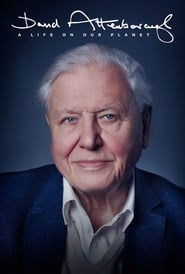
David Attenborough: A Life on Our Planet
Download English Subtitle
Release info
Tags
Download English Subtitle Files for Mobile (3)
English subtitle preview
The first 197 lines.
This city in Ukraine was once home to almost 50,000 people.
It had everything a community would need for a comfortable life.
But on the 26th of April, 1986, it suddenly became uninhabitable.
The nearby nuclear power station of Chernobyl exploded.
And in less than 48 hours, the city was evacuated.
No one has lived here since.
The explosion was a result of bad planning and human error. Mistakes.
It triggered an environmental catastrophe that had an impact across Europe.
Many people regarded it as the most costly in the history of mankind.
But Chernobyl was a single event.
The true tragedy of our time is still unfolding across the globe,
barely noticeable from day to day.
I'm talking about the loss of our planet's wild places,
its biodiversity.
The living world is a unique and spectacular marvel.
Billions of individuals, and millions of kinds of plants and animals...
...dazzling in their variety and richness.
Working together to benefit from the energy of the sun
and the minerals of the earth.
Leading lives that interlock in such a way that they sustain each other.
We rely entirely on this finely tuned life-support machine.
And it relies on its biodiversity to run smoothly.
Yet the way we humans live on Earth now is sending biodiversity into a decline.
This too is happening as a result of bad planning and human error
and it too will lead to what we see here.
A place in which we cannot live.
The natural world is fading.
The evidence is all around. It's happened in my lifetime.
I've seen it with my own eyes.
This film is my witness statement and my vision for the future,
the story of how we came to make this our greatest mistake,
and how, if we act now, we can yet put it right.
I am David Attenborough, and I am 93.
I've had the most extraordinary life.
It's only now that I appreciate how extraordinary.
I've been lucky enough to spend my life
exploring the wild places of our planet.
I've traveled to every part of the globe.
I've experienced the living world firsthand in all its variety and wonder.
In truth, I couldn't imagine living my life in any other way.
I've always had a passion to explore, to have adventures,
to learn about the wilds beyond.
And I'm still learning.
Boo!
As much now as I did when I was a boy.
It was a very different world back then.
We had very little understanding of how the living world actually worked.
It was called natural history
because that's essentially what it was all about...
history.
It was a great place to come to as a boy,
because this is, um, ironstone workings, but it was disused.
All this was absolutely clear, it was...
only just stopped being a working quarry.
When I was a boy, I spent all my spare time
searching through rocks in places like this...
for buried treasure.
Fossils.
It's a creature called an ammonite.
And in life the animal itself lived in the chamber here
and spread out its tentacles to catch its prey.
And it lived about 180 million years ago.
This particular one has a scientific name of Tiltonicerus,
because the first one ever was found near this quarry
here in Tilton, in the middle of England.
Over time, I began to learn something about the earth's evolutionary history.
By and large, it's a story of slow, steady change.
Over billions of years, nature has crafted miraculous forms,
each more complex and accomplished than the last.
It's an achingly intricate labor.
And then, every hundred million years or so,
after all those painstaking processes,
something catastrophic happens, a mass extinction.
Great numbers of species disappear and are suddenly replaced by a few.
All that evolution undone.
You can see it. A line in the rock layers.
A boundary that marks a profound, rapid, global change.
Below the line are a multitude of lifeforms.
Above, very few.
A mass extinction has happened five times in life's four-billion-year history.
The last time it happened
was the event that brought the end of the age of the dinosaurs.
A meteorite impact triggered a catastrophic change
in the earth's conditions.
75% of all species were wiped out.
Life had no option but to rebuild.
For 65 million years, it's been at work reconstructing the living world...
until we come to the world we know... our time.
Scientists call it the Holocene.
The Holocene has been one of the most stable periods
in our planet's great history.
For 10,000 years, the average temperature has not wavered up or down
by more than one degree Celsius.
And the rich and thriving living world around us
has been key to this stability.
Phytoplankton at the ocean's surface and immense forests straddling the north
have helped to balance the atmosphere by locking away carbon.
Huge herds on the plains
have kept the grasslands rich and productive by fertilizing the soils.
Mangroves and coral reefs along thousands of miles of coast
have harbored nurseries of fish species
that, when mature, then range into open waters.
A thick belt of jungles around the equator has piled plant on plant
to capture as much of the sun's energy as possible,
adding moisture and oxygen to the global air currents.
And the extent of the polar ice has been critical,
reflecting sunlight back off its white surface,
cooling the whole earth.
The biodiversity of the Holocene helped to bring stability,
and the entire living world settled into a gentle, reliable rhythm...
the seasons.
On the tropical plains,
the dry and rainy seasons would switch every year like clockwork.
In Asia, the winds would create the monsoon on cue.
In the northern regions, the temperatures would lift in March, triggering spring,
and stay high until they dipped in October and brought about autumn.
The Holocene was our Garden of Eden.
Its rhythm of seasons was so reliable
that it gave our own species a unique opportunity.
We invented farming.
We learnt how to exploit the seasons to produce food crops.
The history of all human civilization followed.
Each generation able to develop and progress
only because the living world could be relied upon
to deliver us the conditions we needed.
The pace of progress was unlike anything to be found in the fossil record.
Our intelligence changed the way in which we evolved.
In the past,
animals had to develop some physical ability to change their lives.
But for us, an idea could do that.
And the idea could be passed from one generation to the next.
We were transforming what a species could achieve.
A few millennia after this began, I grew up at exactly the right moment.
The start of my career in my 20s
coincided with the advent of global air travel.
So, I had the privilege of being amongst the first
to fully experience the bounty of life that had come about
as a result of the Holocene's gentle climate.
Wherever I went, there was wilderness.
Sparkling coastal seas.
Vast forests.
Immense grasslands.
You could fly for hours over the untouched wilderness.
And there I was, actually being asked to explore these places
and record the wonders of the natural world for people back home.
And to begin with, it was quite easy.
People had never seen pangolins before on television.
They'd never seen sloths before.
They had never seen the center of New Guinea before.
It was the best time of my life.
The best time of our lives.
The Second World War was over, technology was making our lives easier.
The pace of change was getting faster and faster.
It felt that nothing would limit our progress.
The future was going to be exciting.
It was going to bring everything we had ever dreamed of.
This was before any of us were aware that there were problems.
My first visit to East Africa was in 1960.
Back then, it seemed inconceivable that we, a single species,
might one day have the power to threaten the very existence of the wilderness.
The Maasai word "Serengeti" means "endless plains."
To those who live here, it's an apt description.
You can be in one spot on the Serengeti,
and the place is totally empty of animals,
and then, the next morning...
...one million wildebeest.
A quarter of a million zebra.
Half a million gazelle.
A few days after that...
and they're gone... over the horizon.
You can be forgiven for thinking that these plains are endless
when they could swallow up such a herd.
It took a visionary scientist,
Bernhard Grzimek, to explain that this wasn't true.
He and his son used a plane to follow the herds over the horizon.
They charted them as they moved across rivers,
through woodlands, and over national borders.
They discovered that the Serengeti herds
required an enormous area of healthy grassland to function.
That without such an immense space, the herds would diminish
and the entire ecosystem would come crashing down.
The point for me was simple: the wild is far from unlimited.
It's finite. It needs protecting.
And a few years later, that idea became obvious to everyone.
Five, four, three, two, one, zero.
I was in a television studio when the Apollo mission launched.
It was the first time
that any human had moved away far enough from the earth
to see the whole planet.
And this is what they saw...
what we all saw.
Our planet, vulnerable and isolated.
One of the extraordinary things about it was that the world
could actually watch it as it happened.
It was extraordinary that you could see what a man out in space could see
as he saw it at the same time.
And I remember very well that first shot.
David Attenborough: A Life on Our Planet subtitles in other languages
More English subtitles for David Attenborough: A Life on Our Planet
- David Attenborough A Life on Our Planet 2020 REPACK 1080p BluRay DDP5 1 x264-NTb · 98 downloads · 2023-10-23
- David Attenborough A Life on Our Planet 2020 REPACK 1080p BluRay DDP5 1 x264-NTb · 98 downloads · 2023-10-23
- David Attenborough A Life on Our Planet 2020 NORDiC REMUX 1080p BluRay AVC FLAC 2 0-LK2 · 127 downloads · 2021-12-03
- David Attenborough A Life on Our Planet 2020 720p WEBRip x264-Mkvking com · 58 downloads · 2020-10-16
- David Attenborough A Life on Our Planet 2020 WEBRip x264-ION10 · 55 downloads · 2020-10-04
- David Attenborough A Life on Our Planet 2020 WEBRip x264-ION10 · 63 downloads · 2020-10-04
Comments
No comments yet. Be the first to leave one.