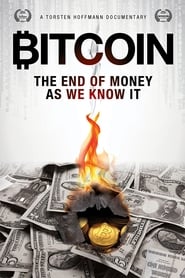
Bitcoin: The End of Money as We Know It
Download English Subtitle
Release info
Tags
English subtitle preview
The first 200 lines.
Look closely.
What do we all have in common?
No matter what corner of the world you live in,
You need food, water,
shelter and money.
Half of every transaction involves money,
in exchange for goods or services.
Stocks, a loaf of bread, illegal drugs,
You gotta pay for it.
We spend much of our live chasing money
to make a living,
and accomplish our dreams.
But it's also an instrument of destruction.
Some might say evil.
Driving criminals to lie, steal and even murder.
The existing banking system,
extracts enormous value from society
and it is parasitic in nature.
- Money is a catalyst for the worst
and the best of human endeavor.
Before civilization,
we created currency.
Fuel for wars.
The path to power.
Champion and enemy of innovation.
Money is so integral to our society,
and our global economy,
that its true nature remains a mystery to most.
This is the story of money.
Perhaps the end of money as we know it.
No matter how fat your bank account,
or how thin your wallet.
To us it's all cold, hard cash.
There are some who want to kill it.
Get rid of it.
Burn your dollars, your euros, your yen,
and transform every penny you have,
into ones and zeros.
Digital currency entrusted to the web
and computers spread across the planet.
Magic internet money.
It's called cryptocurrency, Bitcoin.
Invented in secret,
it was a gift to the world.
It's not just a currency,
but it's actually programmable money.
- A potential curse on bankers.
I mean, there's nothing
that the big banks or politicians can do to stop it.
- Breaking every governments grip
on money supply.
- What the internet did for information,
Bitcoin is doing for money.
Could it be the new gold?
No, you have to really stretch
your imagination,
to infer what the intrinsic value of Bitcoin is.
- Regulators, the Federal Reserve, the banking system,
at least understand this is a thing
that they have to take seriously.
- This going to change the economic culture.
- Bitcoin could be a micro-economic miracle worker
and it could be a macro-economic wrecking ball.
- Is Bitcoin the currency of the future,
a Godsend for criminals,
or a recipe for financial disaster?
If you trust your money just as it is,
we have a little story to share.
Once upon a time there was a big party,
with everyone standing around the punch bowl, drunk.
Politicians credited the strong economy
to their wise decisions.
Businesses jumped into new profitable markets,
ignoring risk.
If fact the experts said there was no risk.
Then, troubling market data from minor countries,
spooked the markets.
Rumors spread.
More bad news rattled housing prices,
at the heart of the financial world.
A major bank went insolvent.
Investors and businesses made a run
on the other banks,
demanding their cash deposits.
The largest financial institutions
in the center of the modern world were frozen.
Assets were seized,
banks foreclosed.
A credit crunch threatened the entire world economy,
and then finally,
the government stepped in.
The largest bank bailout ever.
Swift action by the head of state had saved the day.
Remember that?
No you don't.
It happened 2,000 years ago.
Rome, 33 A.D.
Ground zero for the first recorded liquidity crisis
and government bailout in history.
The largest empire the world had ever seen,
was brought to its knees by a banking disaster.
Emperor Tiberius used money from the National Treasury,
to bail out the country's troubled banks and companies.
History may not repeat itself,
but it certainly rhymes, badly.
People in power and their money,
have always been at the very center of it.
The story of money
is as old as civilization itself.
When we lived in small tribes,
keeping track of debt was easy.
You owed somebody a load of firewood.
A neighbor owed you a piece of meat.
Credits and debits were kept in your head.
A mental ledger.
- Currency's a language that allows us
to express transactional value between people.
It's technology that's older than the wheel.
It's as old as fire.
- When humans wanted to trade
outside their tribe or village,
they needed something,
everyone could agree had value.
Something scalable.
Enter commodity monies.
There were many kinds,
but each had to embody
the same five characteristics.
A commodity money is relatively scarce,
easily recognizable,
can be cut into smaller pieces.
You can substitute one piece for another of equal value.
And you can carry it around without too much trouble.
In ancient Rome, it was salt.
The Aztecs used Cacao beans.
It was whale teeth on Fiji.
Yak dung in Tibet.
Shells in Africa and China.
Grains, metal, ivory, rare stones,
leather, fish.
If it had the five characteristics of commodity money,
someone probably used it as currency.
And then you ask,
what value did these currencies have?
If you go into a primary school,
you'll see children exchanging rubber bands
and Tamagotchi and Poke-man cards
and baseball cards and sweets
and candy and any other form of currency.
People invent currency,
when they have no other currency.
And now they're going to invent digital currencies.
- But commodities that aren't durable,
are a lousy store of value.
A bad Cacao crop,
or a huge new salt discovery,
can throw your currency
and economy into turmoil.
A more stable system was needed.
About 2,500 years ago,
the first metal coins were minted in China,
and in what is now Turkey.
These coins shared the same five characteristics
with commodity money,
but were also very durable.
In some cases,
coins are the only thing left
of entire civilizations.
- Money does not originate with governments.
Money arises naturally,
as markets begin to develop.
And as people with a division of labor realize,
that if I have eggs,
and you have a cow,
we may need some medium of exchange,
in order for you to buy my eggs,
or for me to buy your cow.
- Coins were an objective
and universal unit of account
and they allowed people
to buy and sell goods
over vast regions.
The market economy was born.
Coins worked,
but only if people trusted
that the king or emperor,
who issued them,
wasn't cheating on the metal content.
Using coins also meant,
that an authority now controlled the supply
of your currency.
Money and political power,
were inextricably linked, centralized.
Minting coins in a steady and predictable manner,
allowed economic growth and stability.
The Wu Zhu coin in China,
retained its value for 500 years.
In Constantinople, the solidus
lasted for 700 years.
But in those times,
Bitcoin: The End of Money as We Know It subtitles in other languages
More English subtitles for Bitcoin: The End of Money as We Know It
- Bitcoin - The end of money as whe know it-ANONRIP · 61 downloads · 2015-07-17
- Bitcoin - The end of money as whe know it-ANONRIP · 60 downloads · 2015-07-16
Comments
No comments yet. Be the first to leave one.