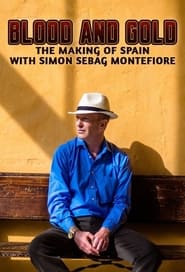
Blood and Gold: The Making of Spain with Simon Sebag Montefiore
Download English Subtitle
Release info
Tags
Download English Subtitle Files for Mobile (3)
English subtitle preview
The first 200 lines.
Spain. Al-Andalus. Iberia, Hispania.
Many names for the same country.
Spain has had more diversity
and more manifestations than any other country in western Europe.
It's a peninsula almost surrounded by water.
That's its blessing and its curse.
The road to Spain has always been the sea, from the South.
From 3000 BC onwards, the great traders of the Mediterranean -
the Greeks and Phoenicians came here
attracted by its fertile plains,
and its mines that brought forth gold and silver, tin and copper.
Spain is European, yet it looks to Africa.
Forged by rulers, armies, peoples and faiths
more exotic than elsewhere in the West.
Spain's position at the extremity of Europe has made it the borderland
and the battlefield of the continent's
many different influences.
It's joined to Europe and yet only 14km from Africa.
Everything here reflects its unique meshing
of the Jewish, Muslim and Christian cultures.
That's what makes Spain so unique.
I come both as historian and traveller.
To explore who and what shaped the soul of Spain.
From Paganism, Islam and Catholicism, via dictatorship,
to today's democracy.
I'll tell the story from the Atlantic to the Mediterranean.
I start in the South.
Cadiz, Spain's oldest living city.
Seville, Andalusia's Catholic capital.
Gibraltar, Spain's gateway.
Cordoba, capital of the Islamic Caliphate.
And Granada, home of the Alhambra.
I'll find the hidden corners, the stories we don't know, the secrets,
the titans who created the nation.
For centuries, this was Europe's Wild West.
Where caliphs and kings created palaces and cities,
where they fought wars of annihilation.
Here, a concubine could become a queen.
Here, a naked princess sparked a decisive invasion.
Blood and gold, beauty and death, persecution and tolerance.
This is the story of the making of Spain.
The Atlantic city of Cadiz is my first stop.
More than 2,000 years ago,
this was a colony of the Phoenician city of Carthage
in today's Tunisia.
In 237 BC, one of history's most famous figures was brought here.
As a ten-year-old boy, the young Hannibal came to Cadiz.
And from here, his father, Hamilcar, would conquer most of Spain
as a new Carthaginian empire.
Now Spain became the battlefield
for one of the great set-piece imperial rivalries
of the ancient world.
The Phoenicians came from the city of Tyre.
They spread out throughout the Mediterranean.
And the greatest city they founded was Carthage.
The Carthaginians started to found an empire and that brought them
into conflict with the other rising power of the Mediterranean.
Rome.
Hannibal was born into a family already at war.
Their name, Barca, meant thunderbolt.
When his father conquered Spain as his next move against Rome,
Hannibal begged to go with him.
He was 19 when his father died.
Gradually, he would assume command of his father's empire.
The coming war needed the blessing of the Gods and I've come to meet one.
Isn't it a breathtaking thought?
That as we look at this,
Hannibal himself once gazed upon this very statue.
This Cadiz museum contains some of the priceless treasures
from Hannibal's time.
And this figurine of the god Melqart
once stood on the Island of Sancti Petri.
And that's where I'm going, a few miles south of Cadiz,
just like Hannibal did.
In 218 BC, Hannibal, now 29, travelled here to Melqart's temple.
He had a plan of astonishing ambition that required Melqart's blessing.
Melqart was the God of Tyre, mother city of the Carthaginians.
And he appears in the Jewish Bible as the god Baal.
It was said that Melqart was unfaithful to his wife,
who castrated him and killed him,
at which he was miraculously brought back to life.
His resurrection made him a symbol of vim, vigour, power and virility.
Temple complexes like this were central to ancient life.
There were human sacrifices.
Priests cut the throats of bulls
and splashed blood on the naked bodies of supplicants.
As you can see, there's nothing here except seagulls
and this deserted 18th-century fort.
But this was once one of the richest, grandest
and most famous temple shrines in the entire ancient world.
It was a critical moment.
Carthaginian Spain challenged Roman mastery of the Mediterranean.
That meant a new Roman war against Carthage.
Here at Sancti Petri, Hannibal consulted the Oracle of Melqart.
Hannibal took an oath to destroy Rome.
He said, "I swear to arrest the destiny of Rome with fire and steel."
Rather than waiting for Rome to attack him,
Hannibal would take the fight to the enemy.
It would be one of the most audacious military campaigns of antiquity.
Harnessing Spain and Africa, Hannibal would attack Italy.
Here in Cadiz, Hannibal mustered a huge army of 60,000.
Including Spanish spearmen and African cavalry.
And 40 war elephants, the ultimate prestige weapon.
In 217, Hannibal marched this huge army, from Spain,
across the south of France, over the Alps - including all his elephants -
and then down into Italy.
He headed for Rome.
Hannibal's campaign would bring Rome to the edge of defeat.
Victory over Rome would change the entire history of Europe.
Knowing what we know now about the invincibility
of the future Roman Empire,
Hannibal's adventure looks reckless, if not absurd.
But Hannibal was a child of the Hellenistic or Greek culture
in the Mediterranean, unleashed by his hero, Alexander the Great.
And compared to Alexander's exploits in the East,
this invasion of Italy might be child's play.
It was Rome's supreme crisis.
Hannibal repeatedly defeated the Roman armies
and at Cannae, he routed them.
And yet, even as Hannibal was closing in, Rome did not fall.
The Romans prayed and then they rallied.
Cato the Elder, one of their statesmen, repeatedly declared,
"Carthago delenda est" - Carthage must be annihilated.
And now, they found a general almost as sublime
a strategist as Hannibal himself.
And he would take the war to Hannibal's Spain,
just as Hannibal had brought the war to Rome.
This was the moment that the Romans became Romans.
A few miles north of Seville in the heart of Andalusia,
the vicious blood feud of Carthage and Rome would be decided.
In 206 BC, the two sides met right here in a battle.
The winners would rule Europe for the next 700 years.
The Roman commander was Publius Cornelius Scipio.
It was said in Rome that only Scipio would dare to take on
the Carthaginian Empire.
Both his father and his uncle had been killed in battle
by Hannibal's family.
So, for Scipio, it was personal.
Just as Hannibal had vowed to destroy Rome,
Scipio vowed to destroy Carthage.
And his plan was as bold as it was simple.
While the brilliant Hannibal fought on in Italy for over a decade,
Spain was defended by his feuding, disunited brothers.
Scipio slipped into Spain with his small army.
Military historian Saul David is here to tell me how Scipio
faced the Carthaginians right here at Ilipa.
We're right on the spot of that battle.
Tell me what happened that day?
To give you an idea of numbers, the Romans have about 50,000
and the Carthaginians 75,000, so they're heavily outnumbered.
And for the two or three days prior to the actual battle itself,
Scipio sets his army up in a very traditional way.
So his strongest forces are in the centre,
his Roman and Italian legions, and his allies,
who he can't really rely on, are on the flank.
But on the day of the battle itself, he changes all of that.
He orders the army out very early in the morning,
he gets them into position before the Carthaginians
are ready to respond and he changes his formation
so that his elite forces are actually now on the flanks.
And this allows him to advance in a very unusual way
with a concave formation, so that his best troops are on the side.
And in a nutshell, cos you could go on about this battle
in great detail, it means that the strongest Carthaginian troops
never actually get to fight until late on during the battle.
So how did the elephants,
the Carthaginian elephants perform on the day?
You've got to imagine a scenario where once the battle starts,
the elephants don't see friend or foe.
They've got their guides, as it were,
but everyone else is fair game.
And if you get in the way of a war elephant,
particularly one who's been stung by a few javelins being thrown at him,
he's going to trample anyone.
And a four-tonne beast treading on you
is going to leave a bit of a sticky mess underneath.
So, you can see that the use of the Carthaginian war elephant
was as much of an own goal as it was a success.
Scipio was victorious.
Spain became a province of Europe, not Africa - of Rome, not Carthage.
He built this, the city of Italica, next to the battlefield,
for the veterans of his victory.
Control of the peninsula gave Scipio a springboard to attack North Africa.
This amazing mosaic here in Italica
tells the story of Scipio's wars against Carthage.
In 204, Scipio crossed to Africa, taking the war to Carthage.
As he approached, the Carthaginians recalled Hannibal from Italy.
He rushed back, but Scipio defeated him. The city fell.
Scipio was rewarded with a title, Africanus,
but his haughtiness won him many enemies.
He was prosecuted and exiled to his estates.
As for Hannibal, he roamed the East, enemy number one,
pursued by Roman agents.
Finally, he committed suicide.
As for Carthage, ultimately it was wiped off the map.
Now it was Rome's turn to colonise Spain.
The Romans loved Hispania, Roman Spain.
They found it almost more Italian than Italy.
Here, life was good and they could make great fortunes in fish paste,
olive oil and wine.
Blood and Gold: The Making of Spain with Simon Sebag Montefiore subtitles in other languages
Comments
No comments yet. Be the first to leave one.