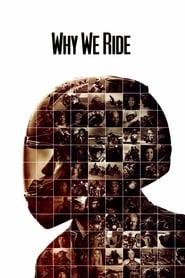
Why We Ride
Download English Subtitle
Release info
Tags
English subtitle preview
The first 200 lines.
There's a freedom about it, there's an open-air experience.
The sun in your face, the sound of the motor and the vibration,
the unobscured view of everything that's going on around you.
It's a bombardment of the senses.
I just love it, I just enjoy being on a bike.
The cliche of feeling the wind in your hair,
even though I don't have much hair anymore, is very true.
It's just... It's a wonderful feeling.
It's a built-in passion to ride a motorcycle, no matter what it is.
It's unlike anything else that you'll ever feel.
There's nothing in my life that's like it.
It's part of who I am, and what I want to be.
Motorcycle riding is such a filter for the brain for me.
I always end up singing while I'm riding because it's just me and my bike
and I'm just enjoying myself and not really thinking about anything else.
Some people paint, some people sew,
some people listen to music. I get on a motorcycle
and that really puts my mind at ease.
It's a high, it's a good high, and it's one that you can get addicted to.
In a spiritual sense you could almost say, Namaste, you know,
it's that blending of the soul of the motorcycle and you
and it's just this perfect moment.
Everybody that rides a motorcycle that's been around for a while
has got a personal connection to their motorcycle
It's a person unto itself.
We all dream about flying.
Well, when you ride a motorcycle, you are flying.
You're flying through space at the twist of a throttle.
When you ride motorcycles, people always say hi to each other, you know,
you don't see people who drive cars waving at everybody in a car.
They all have a bond, and it's a bond that they share by desire.
The common denominator is two wheels.
They are people that'll bend over backwards to help ya.
You're not going to leave a comrade on the side of the road without offering to help 'em.
There are some of the nicest people I've ever met, are motorcyclists, hands down.
Being a motorcycle guy cuts across every job description,
and you identify yourself with being a motorcyclist,
first and foremost, before you're a doctor, before you're an actor,
before you're a newspaper tycoon, you're a motorcycle guy.
And that really levels the playing field with a lot of people.
So you're talking to a guy about bikes and then you find out
that this guy's a neurosurgeon, and you're, like,
"Huh, I thought he was just some guy who rode a Honda."
If you ever get on that bike, president of a bank,
a leader of a country, you're in.
You could get out of work totally angry, take a little ride,
and boy you don't get two miles down the road, and all of a sudden,
you've let go of all of that stress, all that anxiety,
and now you're... you're free.
In my view people travel in bubbles, a lot.
The motorcycle gets you out of the bubble.
We can't know where we're going if we don't know where we've been.
In the old days, you know, there were thousands of people
that came out to watch the motorcycle races.
Some of the greatest riders of all time, Ben Campanelli,
Jimmy Phillips, Bobby Hill and Bill Tuman, and Ernie Beckman.
Ed Kretz. Ed Kretz was my hero.
They were badass, they were real men.
Like rodeoing, there was no money in it,
there was no prestige in it, you did it because you liked doing it.
I would have loved to have been around during that era.
You know, it was just throw it all out there.
It was a great time in racing for sure.
It's about tradition, I wanna keep those stories alive.
I don't want these people to be forgotten.
I think it's important
to preserve the lineage.
I mean, it's kinda funny,
you go out and buy a brand-new motorcycle,
it's hard to think that that has roots that go back to 1901.
Motorcycles literally were, you know, bicycles
that somebody finally came up with the idea of putting an engine in it.
Kind of like the peanut butter and jelly story, you know.
It's like, I think maybe these two things might work.
Of course, if you got an engine in a motorcycle,
the next thing is you gotta start racing it.
When racing really got going in the U.S. was through board track racing.
Small, circular, banked wooden track.
Literally just strips of wood laid end to end.
And all these bicycle racings, they used a pacer,
that they followed behind, which was a motorized, big, clumsy bicycle.
And then the bicyclists would actually be in the draft.
And the pacer would get to a certain speed, peel off, and then the racers would start.
Someone came up along the way one time, with, like, an intermission.
"Why don't we put all the pacers out on the track, let them have their own race?"
And they did that, and I guess it went over pretty well,
but then it wasn't long they realized the bikes themselves could go faster,
so they made them a little less big and bulky.
That's the premise for the Indian Company, the Hendees.
They were bicycle racers and created this motorized bicycle
to help set faster and faster speeds.
Then, you know, here came Harley-Davidson
and companies that, uh, went into production on the whole thing.
There were more than a hundred motorcycle manufacturers
just in the United States.
Some of the designs of some of these engines were completely insane.
They leaked. They smelt like a beast.
You couldn't go to the local store and have someone work on it.
You had to have a basic understanding of 'em.
Which means that anybody who had these early bikes,
you know, it wasn't a convenience, it was a dedication.
It was all about the racing and, predominantly,
the two major bike companies were Harley versus Indian.
And these guys were out there with these bikes with no brakes,
going around the track, close to a 100 miles an hour.
You've gotta be kidding me, horrible tires, horrible chassis,
lots of horsepower, how do you manage that stuff, you know?
Well, you just do it until you crash and then you figure out where to go from there.
It was a very dangerous sport. If they went off the outside of the track,
they went through the fence and flew through the air, into who knows what.
A lot of, lot of good racers
and young men died racing.
Until Henry Ford did his thing, cars were basically for the wealthy.
So a young enterprising man, who was a working man,
a working family, his dream would be to buy a motorcycle and a sidecar.
My great-grandfather, Fritzie Baer, had a '23 Chief with a sidecar.
Brought his pregnant wife to the hospital in a motorcycle and a sidecar,
and the newborn baby came home... in the sidecar.
Over the next five years, she had another three more children,
and all four of us were brought home in that side car.
You would had to have lived through the Depression
to know what the period was like.
People didn't have a lot of money.
I can remember when a can of pork and beans
and a roll was a wonderful meal, I'm not kidding.
Fun was hard to come by. Entertainment was expensive.
As people got into motorcycling and the club,
the club itself became their entertainment.
And this club with Fritzie running it,
there was all kinds of things to do.
They were busy, you know, four or five nights a week.
They went out on these little rides.
It just went on and on.
And, of course, back then you got dressed up.
You dress and act like a gentleman, or you got fined.
And if you couldn't abide by the rules... ...you're out.
And people are begging to get in.
Always had a waiting list for members.
And then once they started with the auxiliary,
now it became joint affairs.
Now we had boys meeting girls.
And you know how that works out.
After the Depression,
it was hard to keep those big factory things kinda going in those years,
and the AMA got together with the manufacturer and said,
"Let's create a form of racing that would be more production bikes."
So they started this thing called Class C.
And it was a bike that was based on production model bikes,
and it was basically built around Indians and Harley-Davidsons.
You can't know about racing, you can't know about Daytona,
and not know who Ed Kretz is.
What Ed was, was really one of the first champions
of that Class C era. He won all the big races.
He was always known as "Iron Man Kretz."
He was so determined, when he got on he was either gonna break the damn thing
or win the race, that was it.
Kretz would not stand for anything other than total victory,
and anything other than that was a failure.
When you look at it that way, that's when you get very successful.
Ed tried to pass everybody, so in case anything went wrong,
you had time to fix it and still win. That was his idea how to race.
When Ed Kretz finished a race,
they actually had to pry his fingers off of the handlebars,
because he physically couldn't do it.
He'd been holding for so long, for the last hundred miles,
going as fast as he could, they had to pry him off the cycle.
Dad, when he would ride, he would just do nothing but ride,
and you could tell by looking at him, that that's all he was thinking.
One of the things that Ed told me a long time ago
that really stuck in my mind, first of all,
"When everybody else is letting up to go into the corner,
I just grabbed a handful of throttle and that's where I would pass everybody."
And, boy, that just...
It sounded so hairy and so bold, but that was Ed Kretz, man.
He was the Iron Man.
Dad had a job driving a hay truck, truck and trailer.
That's where my dad made his money.
He loaded it by himself and he unloaded by himself.
That's what gave him all this upper-body strength.
Not only was he in great physical condition, but also mentally.
He'd do 18-hour days, 20-hour days,
and then go right back in and do it again.
He would come over on his motorcycle and he used to do a lot of stunts
and he would stand on his head or stand on the seat,
and just kinda showing off in front of her, you know, and...
That's how he met my mother, on a motorcycle.
Race, race, race, every day.
When he wasn't on the truck, he was on the motorcycle.
Oh, she was for it, she was always with him, always with him.
He'd take Mom, they'd ride to where the race was gonna be,
he'd take off the headlight,
he'd take everything off the bike,
and have it just bare, you know, so he could race.
And so Mom would just stand there and watch the stuff
and Dad would race, he'd put it all back together,
they'd get on it and head home.
My father was very business,
but when it came time to be home, he was home.
He was just there any time you needed something,
or he would go out of his way to help ya, you know.
Why We Ride subtitles in other languages
More English subtitles for Why We Ride
- Why We Ride 2013 1080p BluRay x264-ROVERS · 34 downloads · 2018-02-07
- Why We Ride 2013 WEBRip x264 Ac3-Blackjesus · 49 downloads · 2014-04-02
Comments
No comments yet. Be the first to leave one.