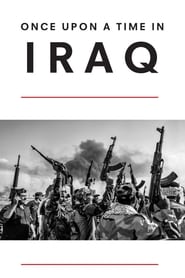
Once Upon a Time in Iraq
Download English Subtitle
Release info
Tags
English subtitle preview
The first 200 lines.
There was an SUV full of four Blackwater contractors who were,
you know, driving around Fallujah.
And they got ambushed.
SHOUTING AND CHEERING
The Iraqis gathered round, just like having a party.
SHOUTING CAR HORNS BLARING
Then they picked up what was left of the bodies and they take 'em
up to the bridge on the Euphrates and, you know, string 'em up.
It was like on television, beamed around the world
and the Iraqis are partying, and they love it
and they're making fools out of the Americans,
they're hitting them with their shoes.
And that was like... That was like the end, you know.
I mean, it was, what a frigging nightmare.
Major combat operations in Iraq have ended...
It had been a year since George Bush had claimed the Iraq war was won.
..and our allies have prevailed.
But the story was far from over.
After the toppling of Saddam Hussein,
the old regime lost its grip on power...
..but it was not about to give up without a fight.
Terrorists and regime remnants have been attacking our forces
and our forces have been going in and killing them.
America found itself struggling to keep control
as a violent insurgency took hold across the country.
And there was worse to come.
London's morning papers
are calling it a torture scandal, shocking pictures...
Another bad news day for America in the Arab world.
The battle to win hearts and minds had failed.
The US Army was feeling the strain.
I wanted to ask about the convoy campaign and to find out...
HE BREATHES HEAVILY ..if you can confirm that yest...
Get him out of the room, it's really embarrassing.
The politicians have had their say about the Iraq war.
I was going to start off tonight telling some self-deprecating jokes,
then I couldn't think of any mistakes I had made to be
self-deprecating about.
In this series, civilians, journalists
and soldiers tell their personal stories of the 2003 invasion
and how the years of chaos that followed changed the world for ever.
Who said that thing, was it Churchill?
Said the thing, like you never feel so alive...
..as when you are being shot at or when you're...
Something like that, such bullshit.
You know, call me or Dexter what you want,
but going into risky situations and inviting danger,
like almost inviting danger,
certainly wasn't some, like, thrill-seeking mission.
There were moments where both of us were scared shitless, erm,
and that wasn't the point of the work.
It was to try to find a story that we felt compelled that needed
to be told.
Ashley Gilbertson came to Iraq as a freelance photographer
at the start of the war.
After a photograph he took of an American soldier
in one of Saddam's palaces was published in Time magazine,
he began working with Dexter Filkins,
a journalist attached to the New York Times.
Working with Dexter was amazing.
There was almost nowhere that he wouldn't go
and the same went for me.
What gets me out of bed in the morning and what makes me continue
to work is this absolute fury that I have that things are wrong.
You know, he was like a kid. He was like so young.
Erm, you know, I thought, huh, you know.
But he's immensely talented and really fearless
and very enterprising so we got along really well.
In moments of extreme chaos, a bomb would go off,
gunfire,
I think my blood pressure goes down, not up,
and I think very, very clearly about what I need to do.
Was there a time when you thought you had pushed it too far?
Definitely. Erm,
more than once, erm, I felt that.
I felt that in Fallujah.
I definitely felt that in Fallujah.
There's so much that happened there,
like I've got 2,500 pictures or something from that week.
I barely remember taking any of them.
Up until November 2004, I'd been able to cover Iraq
as somebody else's war, but in Fallujah,
it turned into not just a war that I was covering,
it turned into something that I was involved in.
I am here today because another man died.
A year into the war, Fallujah, 40 miles outside Baghdad,
was a hotbed of anti-American insurgency.
Fallujah was bad, like from the beginning.
It just like wasn't a nice place to go if you were American.
It had become like a giant car bomb factory.
They were just like making car bombs and shipping them to Baghdad,
you know, like every day.
Go, go home! Go, go home!
The place was a powder keg.
Whether you were being robbed, whether you were being held up by
armed bandits, whether somebody was trying to kidnap you,
whether they were trying to kill you,
or they were trying to get under your car to do who knows what.
In Fallujah, the Americans were no longer just facing
a home-grown Iraqi resistance.
GUNFIRE AND SHOUTING
Since the war began, foreign Islamic extremists had begun
entering Iraq, bringing with them a jihadist mentality.
Led by a Jordanian named Abu Musab al-Zarqawi,
they would organise themselves into Al-Qaeda in Iraq.
Zarqawi was a bloodthirsty psychopath
but, man, he knew had to run a group like Al-Qaeda.
He set up this kind of a perfect organism.
Very few people who were in Al-Qaeda
knew other people who were in Al-Qaeda.
You could kill individual parts of it,
but the rest of it would just continue.
He kind of turned this thing loose, this perfect organism,
on Iraq and it was just a gigantic killing machine.
By November 2004,
al-Zarqawi had taken control of the city of Fallujah.
For the Americans,
an Al-Qaeda base just 40 miles from Baghdad was a propaganda disaster.
If our country shows any uncertainty or weakness
in this decade, the world will drift towards tragedy.
This is not going to happen on my watch.
CHEERING
Buoyed up by an election victory,
the Bush administration began making preparations
for a full frontal attack on Fallujah.
Civilians mostly cleared out,
I mean, certainly from what I witnessed.
It's very strange because usually when an army attacks,
it wants to have surprise.
You're not going to announce when the attack begins.
The Americans essentially did that.
They were like, on the bullhorns, we are going to attack.
The city will not be safe.
There's a good chance you will die if you stay.
ANNOUNCEMENT IN ARABIC
BOYS SHOUT
Nidhal Abed, a young wife and mother,
was one of 50,000 citizens who didn't leave Fallujah.
Like many other working-class families, hers was too poor to go.
CHEERING
Action!
What do you want me to do?
..admire my dress? Yeah.
Do you like my dress? Yes.
Why are we whispering?
Billy's still asleep.
Billy!
Did you have a good night? Huh?
Oh. Oh, you want to get in the pictures too?
Smile. Come on, smile.
You're on candid camera.
Billy was born on November the 24th, 1981.
He just sort of popped out.
I was in labour for 53 painful hours with Sabrina
so this one was like a cakewalk.
I was excited. He was excited because it was a boy.
A man always wants a boy, carry on the namesake.
I think he's Mom's favourite. She'll say no, but...he was.
Hi!
He was very outgoing, very busy.
He always looked for adventure.
He was always pushing his limits.
He definitely wasn't college material.
You know, he struggled in school
and that would have been good for him, you know,
to go into the Marines.
Miller was a great guy.
He was someone that could talk to you without the typical marine
yelling and calling you an idiot, you know.
Christian Dominguez joined the same company of Marines as Billy Miller.
I was really scrawny.
I was 130lbs and I thought that I was just going to become tough.
I was one of the first people from my high school
to join the Marine Corps and it was really great.
MILITARY MUSIC PLAYS
APPLAUSE
I was proud of the fact that this was what he wanted to do.
I was also very scared.
When he joined, it was just a peaceful little world.
It wasn't a peaceful little world any more so... Yeah.
..just over a week after 9/11 when he graduated from Boot Camp.
After he graduated and he left us, he went to Spain.
He came home December 2003 and we surprised my parents.
Is Billy in that box? No.
And I said, "Is Billy in that box?"
She said, "No, Mother."
I said, "Did y'all buy me a dog or some animal
"because I don't want any animals?"
"No, Mother, we didn't buy you any animals
"but you need to open it up now."
SHE SQUEALS HAPPILY
It was probably her best Christmas ever and her last Christmas...
..with him.
In October 2004, Billy Miller
and Christian Dominguez were deployed with
the 1/8 Marine Battalion,
just outside Fallujah, to prepare for the assault on the city.
Accompanying them would be Ashley Gilbertson and Dexter Filkins,
representing the New York Times.
No journalist likes to embed with military, it's too confining.
Once Upon a Time in Iraq subtitles in other languages
More English subtitles for Once Upon a Time in Iraq
- OnceUponaTimeinIraqS01E01-05 · 23 downloads · 2022-12-03
- BBC Once Upon a Time in Iraq 5of5 1080p HDTV x265 AAC MVGroup org · 53 downloads · 2020-10-13
- BBC Once Upon a Time in Iraq 4of5 1080p HDTV x265 AAC MVGroup org · 28 downloads · 2020-10-13
- BBC Once Upon a Time in Iraq 2of5 1080p HDTV x265 AAC MVGroup org · 32 downloads · 2020-10-12
- BBC Once Upon a Time in Iraq 1of5 1080p HDTV x265 AAC MVGroup org · 31 downloads · 2020-10-12
Comments
No comments yet. Be the first to leave one.