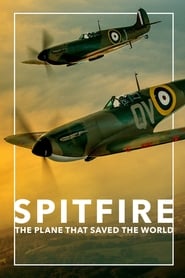
Spitfire
Download English Subtitle
Release info
Tags
English subtitle preview
The first 200 lines.
You can't fly a Spitfire and forget about it. It stays with you forever.
It stays with you forever.
The Spitfire was just like a dancing fairy.
It was gorgeous.
I can't really explain it. It was absolutely wonderful.
It was childishly simple to fly.
Before I could say "nada", I was up at 8,000 feet
in an aircraft that was doing 400 mph.
I'd never been at that speed ever.
It was the nearest thing to having wings and flying oneself.
You only had to blow on the control stick
and it seemed to do what you wanted.
It's so beautiful. It is a work of art.
But at the same time, you are aware that
the purpose of this plane was to shoot and kill.
It's a killing machine.
But it's a weapon of war, a Spitfire.
It's a weapon of war, and you've got to learn how to use it as a weapon of war.
Coningsby is home to three squadrons of RAF jet fighters.
On the shoulders of these men and women rests the air defence of Great Britain.
But it is also home to the most revered aircraft of all time:
the Spitfire.
And this was the last ever to see service.
A few of these famous aircraft have been operated
on daily met flights, helping in the task of weather forecasting.
But now, 21 years after the prototype first flew,
the last of the Spitfires are to be retired.
Their day is done,
though three Spits will be kept by the RAF for Battle of Britain flypasts,
commemorating the battle they did so much to win.
For me, and I think the British people,
these aeroplanes represent innovation, ingenuity, determination,
and an unwillingness to be bullied.
And really, the Spitfire is emblematic of that.
This beautiful machine is our Mark IIA Spitfire,
and, in my opinion,
this is the most precious flying machine on the planet,
bar maybe the Apollo 11 Command Capsule
which brought the boys back
from the first trip to the moon, the first landing on the moon.
And the reason I say that is,
this is the only Spitfire in the world still flying today
that actually fought in the Battle of Britain.
So it's a truly, truly priceless flying machine.
And it also happens to be one of the most,
if not the most beautiful machine that man has ever made, in my opinion.
I think, for most of the pilots on the flight,
this one holds a particular place in their hearts
because, of course, we grew up with the legend of the Battle of Britain.
For people who joined the Royal Air Force, it's part of our core ethos.
So to then be able to sit in this machine, or to even fly it,
is an incredible privilege.
These are the planes that saved Britain and Europe in its darkest hour.
At the height of the Second World War, a film was produced
which would forever fix the Spitfire in the public's imagination.
"The First of the Few" told the story of the famous fighter aircraft
and its creator, RJ Mitchell.
What have you been up to?
- Thinking. - Great thoughts?
- Oh, terrific. - Such as?
The birds fly a lot better than we do.
You don't say!
I do, but then they've been at it some millions of years.
We've got to learn from them if we ever want to fly properly.
The film had a huge impact
and turned a weapon of war into an international icon.
See how they wheel and bank and glide?
Perfect.
And all in one; wings, body, tail, all in one.
But you wait.
Someday I'm going to build a plane that'll be just like a bird.
Why, it is like a bird.
What a strange-looking machine.
As a child, for me, running around this place was magical.
If we were to come down at the weekend,
my father would be doing a particular job on one of the aircraft.
I was left to roam.
And it gave me a great sense of what these aircraft were about,
even at an early age.
So, looking at what it means to aviation,
and what it means to the story of the Spitfire,
this aircraft, the Supermarine S.6,
I think it's the most important aircraft we've got here.
What gets me is it's so narrow.
Even after all this time of knowing the aircraft, it's so narrow.
You appreciate, of course, they went in sideways and then turned round
so they got their shoulders under the coaming here.
Head back on here. And a very thin cushion to sit on.
So N248 was built for the Schneider Trophy Contest in 1929.
The Schneider Trophy was a race for seaplanes.
It started before the First World War as a fairly small event in Monaco.
By 1931 it was an international spectacle.
At the last race, in 1931,
a million people came down to the shores of the Solent
to watch the race happen.
These machines,
like N248, and the Italian machines and the American machines that entered
were the fastest machines on Earth.
And the pilots who flew them were the fastest men on Earth.
Fire!
When this competition started,
the speeds were around about 40 mph.
By the time it finished, they were 400 mph.
Well done indeed. Well done indeed.
Mr RJ Mitchell, of Southampton, England, will talk to you
on the design of the Schneider Trophy seaplane.
In the design of a seaplane of this type,
the one outstanding and all-important requirement is speed.
Every feature has to be sacrificed to this demand.
It is not good enough to follow conventional methods of design.
It is essential to break new ground
and to invent and evolve new methods and new ideas.
There is the myth around Mitchell
of being a genius who designed all these aircraft on his own,
with a little notebook and a pencil.
In fact there was an enormous design team for a Supermarine.
He had around him people who had superior knowledge on high-speed flight.
And that was invaluable when they went back to the drawing board
after the race in 1931 and started on the Spitfire.
It wasn't just Britain making strides in aviation.
In Germany, a new and increasingly sinister political force
was using aircraft to spread its influence.
These new developments became a powerful symbol of Nazi ambition.
By 1933, this could no longer be ignored.
For months, some of us have been trying to impress on the government
that the danger is growing.
But this is a democratic country.
The policy of the government is the will of the people.
Or it's supposed to be.
And the passionate desire of every sane, thinking person is for peace.
Well, Mitchell, what do you propose?
I want to build a fighter.
The fastest and deadliest fighting aeroplane in the world.
It's got to do 400 mph, turn on a sixpence,
climb 10,000 feet in a few minutes,
dive at 500 without the wings coming off,
carry eight machine guns.
As far as aeroplane design goes,
everybody's looking for those few percent improvements.
That slight edge in performance.
Aerodynamics, engines, structures, this type of thing.
This is the old 24-foot wind tunnel at Farnborough.
It was used basically to wind-tunnel test full-scale aeroplanes.
Various countries, particularly Germany, were heading towards a war situation,
were developing fast bombers.
So fighters had to become faster as well.
We were terribly behind.
But there was this constant cross-fertilisation
between what the Germans were doing and what we were doing here at Farnborough.
And this is the key to the whole story of the Spitfire's wing.
Beverley Shenstone was a young Canadian aeronautical engineering graduate
who came over to Britain
and then immediately got himself a job with Junkers in Germany
to try and find out what the Germans were doing in this area.
I think it has been suggested that he might have been a spy,
but I don't know about that side of things.
He met one of the great names in aerodynamics, Ludwig Prandtl.
And it turned out that in 1918, Prandtl had published
the description of all their work during the First World War,
including a wing plan form shaped as an ellipse.
But he didn't just draw a simple ellipse,
he drew two halves of two ellipses.
A bluntish ellipse here, and a much deeper ellipse there.
And that, I have to say, is not only like, similar to,
it's damn well geometrically identical to what emerged on the Spitfire.
And I think Shenstone picked up that idea and brought it back
when he came to work for Supermarine in 1933, and suggested it to Mitchell.
So, basically, the Spitfire had a German wing.
And I suspect that a lot of people
have been too embarrassed to say anything about it.
In the aircraft factories of Britain, our workmen are trained
to build to the most severe standards of accuracy in the world.
Every part has been tested and re-tested until human ingenuity can do no more.
There are over 11,000 parts in a Merlin engine.
Over 140 separate machining operations are needed
to produce the Merlin crankshaft.
Women prove themselves to be particularly adept
at this exacting work.
At each station, a sub-assembly, or component, is added to the engine.
At the end of the line, the completed engine is vetted by an inspector
who notes the numbers of individual components
and assigns a new number to the whole engine.
From now on, it has an identity.
On March the 5th, 1936,
the new fighter's prototype was ready for testing.
There is only one person alive today
who remembers the Spitfire's first test flight.
Well, I was four and a half.
My father worked at Supermarine for RJ Mitchell.
So we grew up with the aeroplanes and the Spitfire especially,
because Father was looking after the development of that.
One day he said to Mother,
"Do you want to come and see the first flight of our new aeroplane?"
So we got in the back of the car and off we all went to Eastleigh.
The pilot came out and got in.
And then off he went.
This is the latest type of single-seater fighter,
and as you can see, a monoplane.
In design and construction, she is not unlike the last Schneider Trophy winner.
We are flying along in our own plane at about 175.
Spitfire subtitles in other languages
More English subtitles for Spitfire
- Spitfire 2018 720p BluRay x265-HDETG · 38 downloads · 2021-08-02
- Spitfire 2018 LiMiTED 720p BluRay x264-CADAVER · 60 downloads · 2018-09-20
Comments
No comments yet. Be the first to leave one.