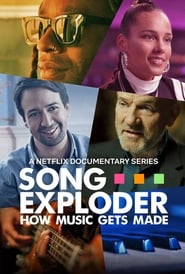
Song Exploder
Download English Subtitle
English subtitle preview
The first 174 lines.
The thing about "Hurt," more than any other song I've written,
when I wrote it, I felt alone.
You know.
Lost.
But things will be okay, you know? And…
you're okay.
Trent Reznor started making music as Nine Inch Nails in 1988.
His second album, The Downward Spiral , was a dark concept album
that hit number two on the charts and sold millions of copies.
"Hurt" is the last track on the album and the last song he wrote for it.
It feels like somebody kind of walking around the rubble,
having a chance to maybe feel a reflection.
Years later, Johnny Cash recorded a cover of it,
and that went multi-platinum too.
Nowadays, Trent Reznor is also an Oscar- and Emmy-winning composer,
along with his now-bandmate Atticus Ross.
But a couple decades earlier,
Trent Reznor was mining the darkest parts of his own life
to finish The Downward Spiral .
I'm Hrishikesh Hirway.
This is Song Exploder .
When I look back at my youth, it was not unhappy,
but alone most of the time.
I'm in rural Pennsylvania, and I feel kind of stuck.
You know, I became acutely aware that there…
was a world out there,
and I would find comfort kind of tuning into albums.
Like Pink Floyd, The Wall .
The music felt like a mystery that you needed to unravel, you know.
I could project into it what I was feeling.
And what I was hearing seemed like it was written
for me… uh, about me.
["Another Brick in the Wall, Part 1" plays]
I could relate to the loneliness and the pain,
and I could put myself in that.
And I thought, you know, I wanted to crack that code.
As a kid sitting at the piano, I could learn my classical pieces,
but sitting on my own, my hands would just play music
that felt like what I wanted to play.
It started to feel like I could channel something out.
It was another language I was able to communicate through.
Initially, it was tiptoeing around things and imitations
of stuff I liked at the time,
but what I hadn't done is really sat down and…
really tried to write.
I'd avoided that.
The experiment was to answer the question
of if I had anything to say.
It made me feel good to take these feelings I had…
Sadness, desperation,
punching a wall, a need to express something,
turn it into something that had some beauty to it.
It wasn't safe, and it didn't feel like it was coming from a protected place.
It was just kind of naked emotion.
Unexpectedly, it started to catch on with people.
We toured quite a bit on Pretty Hate Machine , the first album.
There was an agenda at the time to not be mainstream.
I want to bend you to come to me
rather than me to compromise to go to you.
But there was trouble with the record label,
and it's hard when you're writing album number two
to not think about, "Are they going to like this thing?"
You know? Should it be more like that thing?
I have to be true to what I think is right
at whatever expense that comes at.
I know what the next record is,
and I knew the title was The Downward Spiral .
It had an elaborate kind of storyline for it.
I had a timeline written out in a notebook.
Here's the arc of the story.
You know, Downward Spiral was the story of someone trying to find salvation
through sex and drugs and self-destruction and self-loathing,
and trying to find purpose and reason.
With the story of The Downward Spiral kind of at its conclusion,
the record starts to get manic and abstract…
hallucinogenic even.
Madness has set in, and it's not going to resolve itself.
"Hurt" was really kind of an afterthought.
It just felt like it could be a little coda to the end of the record
that reflects back with a sense of loss
and regret and longing
that might make the whole record feel more powerful and interesting.
So I got the original tracks from the tape,
and it's really different from what the actual, final song is.
- -There is a main piano part
running through it that isn't actually in the final song.
Did you write it on the piano?
I understand the piano more than any other instrument.
I remember sitting at a piano,
and I got out of the way,
and I just let it come out.
But I didn't want it to seem like a piano ballad.
I wanted it to feel acoustic-based
and kind of broken down, like the character.
You have to kind of lean in to even hear what's happening.
But I like the idea that you have to work harder to get to it.
There's a kind of warble on the whole track
to add to that sense of,
"I just found this recording."
Here's something that feels dusty and damaged and lacking confidence
in the rubble of whatever just happened.
I haven't listened back to this track for a while.
-What do you hear in your voice? -I'm out of tune a lot.
I'm singing it extremely quiet.
I'd guess that would have come after a number of frustrating takes
of it feeling too sung and less emotional.
That's me trying to sound quiet and sincere.
Just feeling the weird shame and exposure
of showing something intimate to the world,
but it wasn't coming across right.
And I remember being frustrated that I wish I could sing like Bowie.
I wish I had that instrument, you know.
I wanted it to feel less accessible.
I needed to kind of hide inside the music.
And I figured, I'm producing it,
so turn the vocal down, you know?
Although he works in a similar way, he was a very different person then.
Mm-hmm.
And lyrically…
-he was pretty poignant. -Yeah.
So it probably showed a little bit of vulnerability on his part about it.
But also, a credit to him that even if he was vulnerable…
He did it.
…he stepped up.
He did it himself.
With Trent, I don't know if people realize how important the lyrics are to him.
-It's the most important thing. -Yeah.
If he plays a track, he'll always put the lyrics in front of you.
The lyrics, to him, are obviously the reason for the track.
It's not in the center of the track. It's panned off to one side.
Yeah, I told you, I want to be hiding in the track.
-You've really messed up the sound. -
It's distressed in how you're hearing it.
It's something you have to lean in to kind of…
listen, if you're interested.
Is there a lyric in the song
that especially sticks with you today?
The reason I like to shy away from talking about lyrics is
it can shed too much light on what my intent was.
To me, it's about your experience with that song and what it means to you
and how it feels to you, and I've had many songs ruined
by the writer telling me what they meant by that
or correcting what I thought the lyric was, which was way better.
But was it hard to figure out how you wanted to sing those words?
What are you getting at?
Are you tricking me into just doing…
-Talking about the lyrics. -
What I was going through around the writing of Downward Spiral
was not knowing who I was anymore.
I'd see myself as the kid in the bedroom
listening to records,
and I wasn't sure who the guy on stage was.
- - You fucking pigs!
That was getting distorted and becoming accentuated
and a caricature of self, I think.
Add that to someone ill-equipped
to deal with attention or fame.
I've always had a sadness and a sense of abandonment, I think, haunting me,
and never feeling like I fit in anywhere
and always feeling like an outsider.
It's not rational. It just happens often.
Maybe I'm the guy that needs a couple beers…
-I don't give a fuck. -…or whatever it might be
to understand who I am.
And, "Now I feel better," you know?
"Now I feel more confident in this new outfit I've got on."
It was a ripe scenario for your personality to distort.
That was the best fucking time I've ever had in my life.
Exploit it any way you want it. I don't give a fuck.
I was trying to find a purpose and salvation
and sense of place and just not to feel bad.
The sound that the song actually begins with is this.
- A favorite sound of ours. -What is that?
There's a guy that tuned our studio, named Coco.
Song Exploder subtitles in other languages
More English subtitles for Song Exploder
- Song Exploder S02 720p NF WEB-DL DDP5 1 H 264-NTb · 20 downloads · 2020-12-16
- Song Exploder S02E04 eng · 15 downloads · 2020-12-15
- Song Exploder S02E02 eng · 15 downloads · 2020-12-15
- Song Exploder S02E01 eng · 16 downloads · 2020-12-15
- Song Exploder S01 720p NF WEB-DL DDP5 1 x264-BTN · 39 downloads · 2020-10-10
Comments
No comments yet. Be the first to leave one.