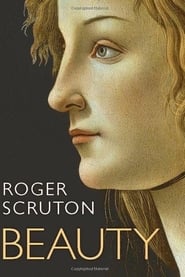
Why Beauty Matters
Download English Subtitle
English subtitle preview
The first 200 lines.
At any time between 1750 and 1930, if you had asked educated people to describe the
aim of poetry, art or music, they would have replied, beauty.
And if you had asked for the point of that,
you would have learned that beauty is a value,
as important as truth and goodness..
Then, in the 20th century, beauty stopped being important..
Art increasingly aimed to disturb and to break moral taboos.
It was not beauty, but originality,
however achieved and at whatever moral cost that won the prizes.
Not only has art made a cult of ugliness,
architecture, too, has become soulless and sterile.
And it's not just our physical surroundings that have become ugly.
Our language, our music, and our manners are increasingly raucous,
self-centered, and offensive, as though beauty
and good taste have no real place in our lives.
One word is written large on all these ugly things, and that word is me.
My profits, my desires, my pleasures.
And art has nothing to say in response to this, except, yeah, go for it.
I think we are losing beauty, and there is a danger
that with it we will lose the meaning of life.
I'm Roger Scruton, philosopher and writer.
My trade is to ask questions.
During the last few years, I have been asking questions about beauty.
Beauty has been central to our civilization for over 2000 years.
From its beginnings in ancient Greece, philosophy has reflected on the
place of beauty in art, poetry, music, architecture and everyday life.
Philosophers have argued that through the
pursuit of beauty, we shape the world as a home.
We also come to understand our own nature as spiritual beings.
But our world has turned its back on beauty.
And because of that, we find ourselves surrounded by ugliness and alienation.
I want to persuade you that beauty matters.
That it is not just a subjective thing, but a universal need of human beings.
If we ignore this need, we find ourselves in a spiritual desert.
I want to show you the path out of that desert.
And is a path that leads to home.
The great artists of the past
were aware that human life is full of chaos and suffering.
But they had a remedy for this, and the name of that remedy was beauty.
The beautiful work of art brings consolation
in sorrow and affirmation in joy.
It shows human life to be worthwhile.
Many modern artists have become weary of this sacred task.
The randomness of modern life, they think,
could not be redeemed by art.
Instead, it should be displayed.
The pattern was set nearly a century ago
by the French artist Marcel Duchamp,
who signed a urinal with a fictitious signature,
R-Mut, and entered it for an exhibition.
His gesture was satirical, designed to mock the world of art
and the snobberies that go with it.
But it has been interpreted in another way,
as showing that anything can be art.
Like a light going on and off.
A can of excrement.
Or even a pile of bricks.
No longer does art have a sacred status.
No longer does it raise us to a higher moral or spiritual plane.
It is just one human gesture among others.
No more meaningful than a laugh or a shout.
I think they're making fun of us.
It's a pile of bricks.
Art once made a cult of beauty.
Now we have a cult of ugliness instead.
Since the world is disturbing, art should be disturbing too.
Those who look for beauty in art are just out of touch with modern realities.
Sometimes the intention is to shock us.
But what is shocking first time round is boring and vacuous when repeated.
This makes art into an elaborate joke,
though one that by now has ceased to be funny.
Yet the critics go on endorsing it,
afraid to say that the emperor has no clothes.
Creative art is not achieved just like that, simply by having an idea.
Of course, ideas can be interesting and amusing,
but this doesn't justify the appropriation of the label art.
If a work of art is nothing more than an idea,
anybody can be an artist, and any object can be a work of art.
There is no longer any need for skill, taste or creativity.
What you were also attempting to do, as I understand it,
was to devalue the art as an object simply by saying,
if I say it's a work of art, that makes it a work of art.
Yeah, but the word work of art, you see, is not so important for me.
I don't care about the word art because it's been so...
you know, discredited and so forth.
But you, in fact, contributed to the
discrediting, didn't you, quite deliberately?
Deliberately, yes. So I really want to get rid of it,
because the way many people today have done away with religion.
People accepted Duchamp at his own valuation.
I think he did not get rid of art, he just got rid of creativity.
However, Duchamp's works are still influencing the course of art today.
Artist Michael Craig-Martin, who taught several of the young British artists
whose work dominates the art world,
followed Duchamp's example with his own seminal work called An Oak Tree.
This consists of a glass of water on a shelf
with a text explaining why it is an oak tree.
When I first entered St Peter's and confronted Michelangelo's Pietà,
For me, that was a transporting experience.
My life was changed by this.
Do you think that someone could have the same experience
with Duchamp's urinal or perhaps with your oak tree,
which is, after all, a similar thing?
I know that when I was a teenager and I first came upon Duchamp
and I first came upon the Ready Maids,
I was absolutely stunned and amazement.
I don't think people are overwhelmed by a sense of beauty when they see the urinal.
It's not meant to be beautiful.
But that doesn't mean that there isn't something
about it that doesn't captivate the imagination.
And I think captivate the imagination is the key to what artwork seeks to do.
Duchamp felt that art had become too interested in techniques,
too interested in optics.
He felt that it had become intellectually and morally corrupt.
Now, his reason for making an artwork that didn't fit the system
was not cynicism. It was in order to say,
I'm trying to make an art that denies all of the things
that people say art should have.
Because I'm trying to say that the central question of art rests somewhere else.
I take the point that things had to change,
and Duchamp was trying to change them,
but what was he trying to change them to?
Well, he could never, in his wildest dreams,
have imagined that what would happen would happen,
or that he himself, I'm sure he had no idea how central...
The thing was that he had stumbled upon, that he had come upon.
Essentially that work of art is a work of art because we think of it as such.
I also think it's important to say that the notion of beauty has been extended
to include things that would not have been thought of.
That's part of the artist's function, is to make beautiful,
make one see something as beautiful,
something that nobody thought was beautiful up until now.
Right, a can of shit.
Well, I'm not sure that it's beautiful,
but if you take an example that's not trying to be beautiful,
if you take, say, Jeff Koons,
Jeff Koons has done some things which are truly astoundingly beautiful.
It's like so much kitsch to me, but kitsch with sugar on.
This is the subject matter of his work, not the substance of his work.
What is the use of this art? What does it help people to do?
I think, hopefully, it allows people to see the world in which they are living in a way
that gives it more meaning to them.
And it's not the world of an ideal world, of some other world, some better place, but
of the here and now, of the world that they're
in and of trying to live more at ease within
the world that they're given.
So the art of today shows us the world as it
is, the here and now and all its imperfections.
But is the result really art?
Surely something is not a work of art just
because it offers a slice of reality, ugliness
included and calls itself art?
Art needs creativity and creativity is about
sharing. It is a call to others to see the
world as the artist sees it. That is why we find beauty in the naive art of children.
Children are not giving us ideas in the place of creative images,
nor are they wallowing in ugliness.
They're trying to affirm the world as they see it and to share what they feel.
Something of the child's pure delight in creation
survives in every true work of art.
But creativity is not enough and the skill of the true artist is
to show the real in the light of the ideal and so transfigure it.
This is what Michelangelo achieves in his great portrayal of David.
But when we encounter a concrete cast of the David, perhaps as
part of some garden arrangement, it is not beautiful at all.
For it lacks the essential ingredient of creativity.
Discussions of the kind I have been having are dangerous.
In our democratic culture, people often think it is threatening
to judge another person's taste.
Some are even offended by the suggestion that there is a difference
between good and bad taste,
or that it matters what you look at or read or listen to.
But this doesn't help anybody.
There are standards of beauty which have a firm base in human nature,
and we need to look for them and build them into our lives.
Maybe people have lost their faith in beauty
because they have lost their belief in ideals.
All there is, they are tempted to think, is the world of appetite.
There are no values other than utilitarian ones.
Something has a value if it has a use.
And what's the use of beauty?
All art is absolutely useless, wrote Oscar Wilde,
who intended his remark as praise,
For wild, beauty was a value higher than usefulness.
People need useless things just as much as
even more than they need things for their use.
Just think of it. What is the use of love, of friendship, of worship?
None whatsoever. And the same goes for beauty.
Our consumer society puts usefulness first,
and beauty is no better than a side effect.
Since art is useless, it doesn't matter what you read,
what you look at, what you listen to. I see you, baby.
Shaking that ass. Shaking that ass.
We are besieged by messages on every side,
titillated, tempted by appetite, never at rest.
And that is one reason why beauty is disappearing from our world.
Getting and spending, wrote Wordsworth, we lay waste our powers.
In our culture today, the advert is more important than the work of art,
and artworks often try to capture our attention as adverts do
by being brash or outrageous, like this bejeweled platinum skull by Damien Hirst.
Why Beauty Matters subtitles in other languages
Comments
No comments yet. Be the first to leave one.