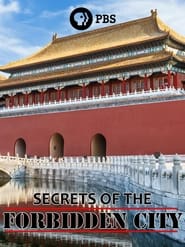
Secrets of the Forbidden City
Download English Subtitle
Release info
Tags
English subtitle preview
The first 200 lines.
It's one of the great architectural wonders
of the world...
China's Forbidden City,
a vast collection of buildings, all made mainly of wood.
It's the largest complex of palace buildings
anywhere in the world.
Said to have had more than 9,000 rooms
it was a place of staggering power.
Home to China's rulers for 500 years,
it was filled with dazzling treasures.
Planned over a decade,
major construction took just four years.
But it raises many questions.
How did they build it?
Where did the resources come from
to create something so vast?
Behind this grand edifice was a great superpower...
Ming Dynasty China.
They had the most powerful economy
and technology much more in advance of the West.
But can scientists decode this ancient wonder,
unravel its engineering secrets...
And discover how it withstood
one of nature's great forces...
Earthquakes.
Earthquakes are frequent here,
so they pose a huge threat to our heritage.
What's it going to take to knock this thing down?
Closed to the world for centuries...
Now open to reveal
the "Secrets of the Forbidden City."
Right now on "NOVA."
The Forbidden City, in the heart of Beijing.
It's about the size of about 140 football fields
and has at least 800 buildings.
Completed in year 1420, it was a pleasure palace,
an impregnable fortress, and a technological marvel.
With the top craftsmen, top carpenters, and top materials,
so it's the best example of the technology at that time.
A seat of immense power...
And mystery.
Economically important,
politically important, and militarily important.
The most important site in the whole of Asia
for the last 500 years.
That power was embodied
in the Forbidden City's awe-inspiring grandeur.
This is the largest
palace complex in the world,
and not just the largest palace complex that survives,
but the largest palace complex built at any time in history.
The scale of what we see here is unparalleled
in the world at the time.
And everyone was struck by this
because they would never, ever see anything like this
in their lives.
And they knew this.
They knew that this was unique in the world.
Built primarily of wood, the complex follows
a clearly laid-out plan, aligned on a north-south axis.
It was home to vast halls...
...the private quarters of the imperial family;
temples reflecting the many forms of worship observed there,
including Buddhism, Daoism, and Confucian philosophy.
And it was built at an incredible pace.
Major construction
of the original Forbidden City buildings took just four years.
In comparison, the great cathedrals of Europe
took decades, even centuries, to complete.
There are two pressing questions
at the heart of the Forbidden City.
How was it built on such a massive scale so quickly?
And how has it has survived the powerful earthquakes
that have repeatedly struck the region over the centuries?
China's extensive imperial documents go back
thousands of years,
recording everything from battles to earthquakes,
they enable researchers to build up a detailed picture
of China's seismic history.
This is an earthquake fault map
of northern China.
And Beijing is located here, right by this fault.
All the red stars are earthquakes
that occurred in the past 3,000 years or so,
recorded in the historical books.
So, since the construction of the Forbidden City,
we can see four large earthquakes.
They really jump around from fault to fault.
In 1976, a massive earthquake shook Beijing.
At magnitude 7.8,
it was centered in Tangshan City,
around 90 miles east of the capital.
In just 15 seconds,
it killed at least a quarter of a million people...
...the highest death toll of any earthquake
in the 20th century.
But in this earthquake-prone region,
the Forbidden City has never been brought down.
What is the secret of its resilience?
No Ming dynasty plans
for the original great structure have survived.
Builders and engineers have gained a wealth of knowledge
as they have restored this aging complex.
All of the main buildings
have a supporting wooden structural frame at their heart
with walls made of brick and great tiled roofs.
But why and how was the Forbidden City built?
It was the idea of one man...
A military commander, emperor, and visionary known as Yongle.
Without the Yongle Emperor, you simply would not have had
a Forbidden City that we see today.
Chinese history would have taken a completely different path
and China would not have a civilization that lasted
down to the present day.
Ruling from 1402 to 1424,
he was the third emperor of the Ming dynasty.
The Ming drew on earlier technologies unique to China.
Most importantly was printing, paper...
gunpowder,
and also nautical technology.
These were all things that were unknown in the West.
Even lavatory paper.
The vast Ming empire stretched
from what is now Vietnam almost to Mongolia.
Both a scholar, and a military commander,
Emperor Yongle built the Forbidden City
as the center of his new capital at Beijing.
It was an historic decision,
built to shift control into his own northern powerbase
and to be close to the troublesome border plains
occupied by the Mongols.
But unbeknownst to him, Beijing is in an earthquake zone.
Not only are earthquakes here frequent,
their causes are not clearly understood.
By contrast, a massive 20th-century earthquake
took place in 1906 in San Francisco,
followed by a deadly fire.
The city was virtually flattened,
and the reason is clear.
San Francisco sits beside the San Andreas fault,
which penetrates deep into the earth
between two tectonic plates:
the North American and Pacific.
The two plates are moving against each other,
in particular the Pacific Plate is moving northward
relative to North America.
These plates move past each other,
but when they become stuck, tension builds up.
When it's released, the result is an earthquake.
If you look
around the world, 90% of the earthquakes
occurred along boundaries between plates.
So North China, which sits in the middle of a plate,
should be stable, but it's not.
You have to keep in mind that this area is far away
from plate boundaries.
So this is a very peculiar place
to have earthquakes inside the plate.
In North China,
the earth's crust is unusually thin and weak,
giving rise to faults within the plate itself.
These are known as intra-plate faults.
The North China plate is cut into three pieces
by three long faults.
So sometimes the energy is released on this fault.
Sometimes on that one, sometimes on this one.
Over the centuries, the Beijing region has been hit
by several quakes of similar size to the San Francisco killer
and scores of smaller ones.
Dr. Zhou, the Forbidden City's resident seismologist,
believes the Forbidden City
was designed with earthquakes in mind.
They had a lot of experience with earthquakes,
which shaped the building of the Forbidden City.
In the centuries before the Forbidden City was built,
the Chinese had learned to create resilient structures
using wood.
American woodworker Richard Wiborg...
This is incredible.
...has long made a study
of China's ancient wooden structures.
I saw a photograph of a man sitting on the roof of a pagoda,
and, in comparison to the size of the timbers, he looked tiny.
And just the massive quality of the wood,
the intricacy, the number of pieces connected together.
A light went on and I said,
"I've gotta find out more about this."
A resident of San Francisco, Richard wants to understand
how the buildings of the Forbidden City
have withstood earthquakes.
Today, he's visiting Tai Miao Temple,
the temple of ancestral worship, built by Emperor Yongle in 1420.
This huge hall was where sacrifices were made
to honor the emperor's ancestors
in the hope of bringing good fortune.
Richard climbs up to the ceiling to investigate
some of the key structural elements of Ming architecture.
Here we are in a place I never imagined I'd be,
20 feet off ground in a Ming Imperial building.
High up, Richard gets right next to a set of brackets
Secrets of the Forbidden City subtitles in other languages
Comments
No comments yet. Be the first to leave one.